
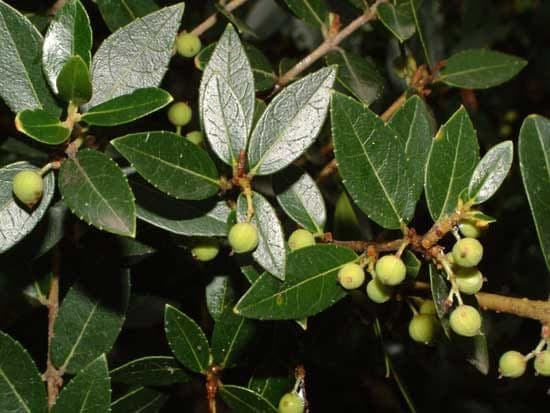
Wikimedia Commons / CC BY-SA 2.5, via Wikimedia Commons
Phillyrea latifolia: complete guide
Phillyrea latifolia
¿Quieres ver Phillyrea latifolia: complete guide en tu jardín?
1 minuto, sin tarjeta de crédito
Overview
Phillyrea latifolia, commonly known as the green olive tree, is an elegant shrub from the Mediterranean region. This plant belongs to the Oleaceae family and is a close relative of the common olive tree. The green olive tree distinguishes itself through its compact growth habit, dark green foliage, and fine yellow flowers that appear in spring.
Although many gardeners find this plant unfamiliar, it is becoming increasingly popular in European gardens due to its weather resistance and low maintenance requirements. The plant is ideal for formal gardens, Mediterranean styles, and as a hedge or screen.
Appearance and bloom
Phillyrea latifolia is a semi-evergreen to evergreen shrub that can grow 3 to 6 meters tall. The leaves are dark green, lance-shaped, and approximately 2 to 5 centimeters long. They grow opposite each other on the branches, giving the plant a very neat, formal appearance.
The flowers are small, yellow to yellowish-white, and appear in May and June in small clusters. They are not very showy but have a pleasant fragrance most noticeable in the morning. After flowering, small, round fruits develop that are first green and later turn dark purple to black. These fruits attract birds and provide food for various bird species.
Ideal location
The green olive tree thrives best in a sunny to partially shaded location. In colder climates, choose a spot where the plant receives at least 5 to 6 hours of direct sunlight. This promotes compact growth and richer flowering.
Ensure the plant is protected from strong northern winds. Although reasonably hardy, young plants appreciate some shelter in the first years after planting. A spot against a wall facing south or west is ideal.
The plant is excellent for container cultivation on terraces and balconies, provided you water regularly.
Soil
Phillyrea latifolia has few demands when it comes to soil composition. It grows well in normal garden soil as long as it is well-draining. Waterlogging must be avoided. If your soil is heavy and clayey, improve it by mixing in sand and compost.
The ideal pH is between 6.5 and 7.5. In too acidic soils, add some lime. In container cultivation, use a universal potting soil mixed with some clay and stone particles for better drainage.
The plant is also suitable for poor, chalky soils - typically Mediterranean. This is actually its strength: it can flourish where many other plants struggle.
Diseño gratis
¿Quieres ver Phillyrea latifolia: complete guide en tu jardín? Crea un diseño gratis ahora.
Watering
After planting, water the green olive tree regularly until it is well established (first 1 to 2 years). Ensure the soil remains evenly moist but never waterlogged.
Once established, the plant is very drought-tolerant and needs little extra water. During very dry periods in summer, water when the soil is dry in the top 5 centimeters.
In container cultivation, check more frequently if water is needed. In summer, you can water weekly, in winter only occasionally.
Pruning
Pruning is optional but promotes a beautiful shape. You can prune the plant in May to June after flowering. Remove dead or damaged branches and trim excess growth back above a leaf.
If you want to form a formal hedge, prune two to three times per year: in May/June, July, and August. Use a hedge trimmer for neat lines.
The plant tolerates hard pruning well, so you can cut it back severely if it has become too large. However, do not do this in winter.
Maintenance calendar
March: Check frost damage. Remove dead branches and fertilize. May: Prune after flowering. Ensure adequate water during dry weather. June-August: Regular pruning for formal shapes. Check for pests. September-October: Prepare for winter. Add mulch layer around the base. November-February: Minimal maintenance. Prune only during severe frost.
Winter hardiness
Phillyrea latifolia is hardy down to approximately minus 15 degrees Celsius. In northern European winters, the plant survives without problems. In very harsh winters with temperatures below minus 15 degrees, young plants may suffer damage.
Protect young plants in the first year with straw or burlap around the stem if it gets very cold. Once established, the plant requires no winter protection.
In containers, the plant is more sensitive to frost, as the roots are less insulated. Move containers to a sheltered, frost-free location or wrap them in burlap.
Companion plants
The green olive tree combines beautifully with other Mediterranean plants such as lavender, rosemary, and santolina. It also works excellently together with pruned boxwood and other dark green hedges in formal gardens.
For more natural gardens, plant it in groups of three to five. Combine with lower groundcovers such as cerastium or creeping thyme.
Light blue flowers such as agapanthus provide nice contrast to the dark green foliage.
Closing
Phillyrea latifolia is an underrated but very valuable addition to gardens in cooler climates. With its gray-green foliage, elegant form, and low maintenance needs, it is ideal for those who want a Mediterranean look without much fuss. Plant it in gardenworld.app designed gardens for elegance and style.
Visit gardenworld.app for inspiration in designing your Mediterranean garden with this beautiful green olive tree.
¿Quieres ver Phillyrea latifolia: complete guide en tu jardín? Crea un diseño gratis ahora.
Sube una foto, elige un estilo y obtén un diseño fotorrealista con lista de plantas en menos de un minuto.
Más de 10.000 jardines diseñados
Sin tarjeta de crédito


Plantas similares
Rough menodora: complete guide
Menodora scabra
Full guide to Menodora scabra: a drought-tolerant desert subshrub with bright yellow flowers, ideal for rock gardens and xeriscapes.
Fraxinus dipetala: complete guide
Fraxinus dipetala
California ash or two-petal ash from southwestern USA. Beautiful spring flowers, drought-tolerant. Experimental choice for warm Mediterranean front gardens.
Syringa komarowii: complete guide
Syringa komarowii
Syringa komarowii is a striking lilac from central China with elegant flower spikes and lovely foliage. Discover the complete care guide here.