
de:Benutzer:Griensteidl / CC BY-SA 3.0, via Wikimedia Commons
Beech fern: complete guide
Phegopteris connectilis
¿Quieres ver Beech fern: complete guide en tu jardín?
1 minuto, sin tarjeta de crédito
Overview
Beech fern (Phegopteris connectilis) is an elegant, fine-leafed fern that can transform the shadier, moister corners of your garden into an enchanting green landscape. This distinguished fern with its light, airy appearance reveals its preference for woodland conditions: moist soil, diffuse light, and a sheltered location. For garden designs on gardenworld.app, beech fern is an ideal choice for adding depth and grace to shade borders that struggle with light-demanding plants.
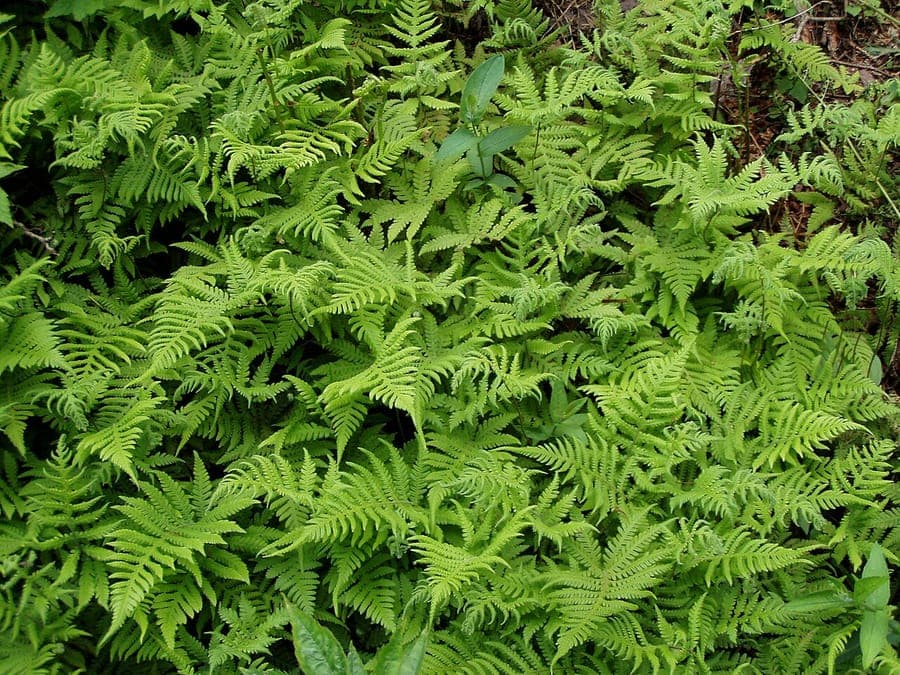
The plant has naturalized from North America and Northern Europe to European regions, growing in the wild primarily in moist, woodland areas at temperate latitudes where deciduous trees dominate. Originally from subalpine and temperate forests, it has adapted perfectly to shady forest understories. It reaches approximately 25-35 cm in height, with delicate, triangular fronds that radiate almost fan-like from a central point. This gives beech fern its characteristic, airy appearance - perfect for gardens seeking natural, unforced woodland beauty. For gardenworld.app designs, beech fern can play an essential role in creating naturally-appearing shade gardens.
Appearance and Bloom
The fronds of beech fern are twice-divided (bipinnate), meaning they branch into progressively smaller segments. Individual leaflets (pinnules) are small, about 3-5 mm long, giving the plant a very fine, delicate texture almost resembling spider webs when backlit by morning sun. Color ranges from light green in young growth to deep green on mature fronds, depending on age, light levels, and growing conditions. The translucent quality of the leaves allows beautiful patterns of light through the fronds.
With ferns, spores rather than seeds or flowers ensure reproduction. In beech fern, sporulating capsules cluster on the undersides of leaves in small, round groups called sori. These become visible when the plant matures (usually from June-July onward), adding botanical interest throughout autumn and into early winter. Garden designs on gardenworld.app can leverage this by positioning beech fern among other ferns and shade plants where natural spore dispersal can occur. The spores are lightweight and can travel considerable distances on air currents in suitable conditions.
Ideal Location
Beech fern grows best in shade to partial shade environments. Direct sun, especially in warm climates, can cause drying and browning of foliage, making the plant appear unnatural and uncared-for. The ideal spot is beneath other trees with dappled light, against a north-facing wall, or in a shaded border where other plants struggle. Locations with morning or late afternoon light are perfect for this species.
The plant thrives in cooler climates, without extreme heat. Where summers are very hot, additional shading is beneficial even if other shade requirements are met. For gardenworld.app designs in Northern Europe, this presents less challenge, but for more southern locations, careful shade planning should be undertaken. In Mediterranean climates, beech fern can only grow in very moist, heavily shaded conditions.
Soil
Beech fern demands no rich nutrients but does require moisture retention and good drainage - this is critical because the plant cannot tolerate waterlogging. The ideal soil is humus-rich, slightly acidic to neutral (pH 5.5-7.0), and contains ample organic matter such as leaf mold or peat-like particles. Soils with abundant leaf mold give beech fern the feel of its natural forest habitat.
If your soil is clay or sandy, work in 5-10 cm of leaf mold or well-rotted compost before planting. This significantly improves both moisture retention and soil structure. For pots or containers, use potting mix with added leaf mold (30-40%). Regularly adding compost around the base of the plant also helps with moisture retention. In nature, these ferns thrive in forest floors layered with years of decomposing organic material.
Diseño gratis
¿Quieres ver Beech fern: complete guide en tu jardín? Crea un diseño gratis ahora.
Watering
Beech fern loves moister soil, especially during the growing season from spring to autumn. During dry periods, water regularly - 2-3 times weekly in hot months, less in cooler periods. However, avoid waterlogging, as this leads to root rot and can encourage bacterial diseases and fungal problems.
A good rule: soil should feel like a wrung-out sponge - moist but not waterlogged. In summer, mulching (5 cm layer of leaf mold or birch bark) helps retain moisture and moderate soil temperature. In winter, watering is minimal, especially where freezing occurs. Regular mist-spraying of the foliage during dry periods promotes health and vigorous growth.
Pruning
Beech fern requires little to no pruning. The plant grows naturally into a neat form and develops a beautiful, symmetrical shape on its own. Dead or damaged fronds can be gently removed once they are fully brown. Do this best in spring before new growth starts to emerge.
If your plant outgrows its space, divide it in spring by carefully cutting the rhizome into two or more sections, each with at least two growth points. This also stimulates new growth and can rejuvenate aging plants. Spores can also be sown in water for propagation, although this requires considerable patience and consistent care.
Maintenance Calendar
March-April: Remove dead fronds from the previous year, work organic matter around the plant (without touching the crown). April-May: Begin regular watering as temperatures rise, check for new young fronds emerging. June-August: Actively maintain moisture levels, mulch as needed, check for fungal diseases in very moist conditions. September-October: Moisture remains important, no more feeding in preparation for dormancy. November-February: Minimal care, water only in very dry periods, the plant is largely dormant.
Winter Hardiness
Beech fern is hardy to approximately USDA zone 3-4, enduring temperatures down to -40°C to -35°C. In the Netherlands, Belgium, and France, winter hardiness is certainly not a concern. In German mountainous regions (above 800 m), additional protection is beneficial, especially if snow cover is lacking.
In severe winters, above-ground parts may die back, but the rhizome typically survives intact. In such cases, be patient until April-May, when new growth emerges. Autumn mulching provides extra protection and insulates the rhizome against extreme cold.
Companion Plants
Beech fern pairs beautifully with:
- Other ferns: Polystichum setiferum, Dryopteris erythrosora, Adiantum venustum, Athyrium filix-femina
- Foliage plants: Hostas, Heuchera, Epimedium, Carex oshimensis
- Spring bloomers: Trillium, Erythronium, Uvularia, Anemone nemorosa
- Ground covers: Ajuga reptans, Vinca minor, Lamium maculatum
These combinations create rich, layered shade gardens full of texture and subtle beauty. Beech fern works perfectly in woodland corners of your garden.
Closing Thoughts
Beech fern is a splendid choice for gardens with shade and moister soil. Via gardenworld.app, integrate this delicate fern into designs with true woodland character. With minimal care and abundant natural charm, beech fern deserves a prominent place in the shaded corners of your garden where other plants struggle. Purchase your beech fern from reputable garden centres for quality and advice on local variants. For more garden inspiration, visit gardenworld.app and let yourself be helped with a complete garden design that optimally showcases this beautiful plant.
Gardenworld.app creates garden designs you fall in love with - including ideal plant placement for ferns like beech fern in shaded zones.
¿Quieres ver Beech fern: complete guide en tu jardín? Crea un diseño gratis ahora.
Sube una foto, elige un estilo y obtén un diseño fotorrealista con lista de plantas en menos de un minuto.
Más de 10.000 jardines diseñados
Sin tarjeta de crédito


Plantas similares
Soft shield-fern: complete guide
Polystichum setiferum
How to grow and care for Polystichum setiferum in your garden. Ideal for shady borders, with soft, arching fronds and year-round interest.
Autumn fern: complete guide
Dryopteris erythrosora
A semi-evergreen fern with copper-red young fronds perfect for shady gardens. Ideal for ground cover applications. Very low maintenance and sustainable.
Maidenhair fern: complete guide
Adiantum capillus-veneris
Explore the maidenhair fern, a delicate fern with fine black stems. Learn cultivation of this elegant fern in shaded borders.