
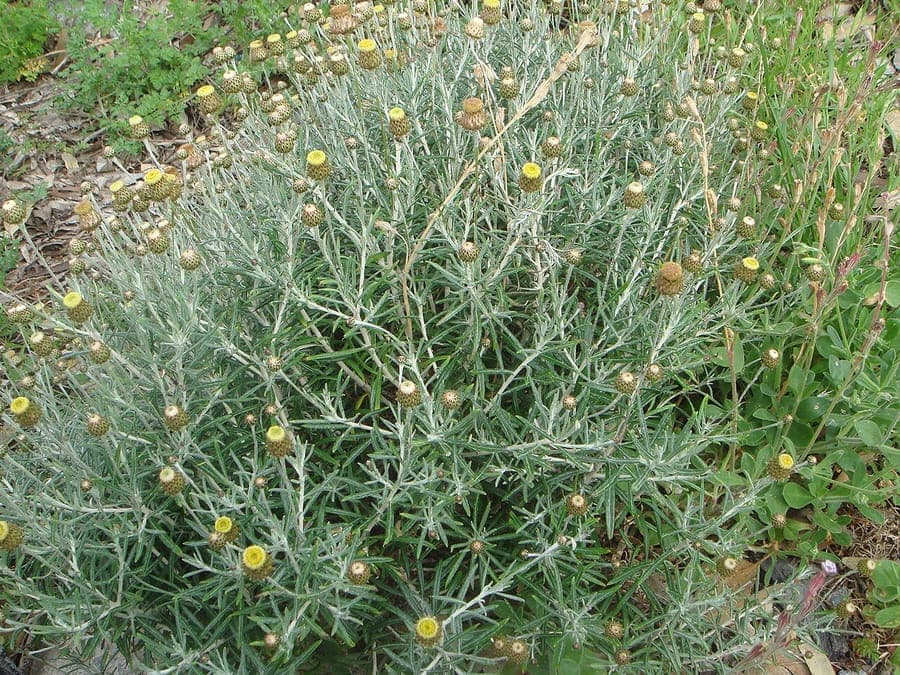
Xemenendura / CC BY 3.0, via Wikimedia Commons
Rock cudweed: complete guide
Phagnalon saxatile
¿Quieres ver Rock cudweed: complete guide en tu jardín?
1 minuto, sin tarjeta de crédito
Overview
Rock cudweed (Phagnalon saxatile), also called Immortelle des rochers in French, is a compact alpine plant from the Asteraceae family (daisy family). This low-growing, evergreen dwarf shrub naturally inhabits rocky slopes, cliff faces, and stony sites throughout the Mediterranean region.
The plant is exceptionally tolerant of drought, heat, and nutrient-poor soils, making it an excellent choice for xeriscaping and native plant gardens. It remains visually interesting year-round through its fine, silvery-grey foliage and extended bloom season.
Appearance and bloom
Rock cudweed grows as a tight, cushion-like mound reaching approximately 20-40 centimeters tall and equally wide. The plant forms a dense rosette of very fine, narrow lanceolate leaves covered in fine white hairs, giving the plant a distinctive silvery-grey appearance.
Flowers emerge from May through July in numerous tiny golden button-like florets, each just a few millimeters across. These minute flowers cluster in delicate terminal umbels that elegantly rise above the foliage. After flowering, lightweight seeds develop and are readily dispersed by wind.
Ideal location
This plant thrives on hot, fully sunny sites. Position it where it receives 6-8 hours of direct sunlight daily. Partial shade results in thinner growth and reduced flowering. The plant performs superbly in full sun conditions without stress; maximum bloom occurs there.
Ideal placements include rock gardens, dry slopes, green roofs, gravel gardens, or as an edging plant along pathways. The plant tolerates wind conditions excellently and grows equally well in exposed locations.
Soil
This plant makes minimal soil demands. Rock cudweed actually thrives best in nutrient-poor, stony, or sandy substrates. In fact, rich, fertile soil works against it, resulting in rank growth and reduced vigor.
Perfect are free-draining substrates. When planting in regular garden borders, amend the mix with sand or gravel (40-50%) to reduce water retention and improve drainage. Soil pH may be neutral to slightly acidic.
Rich, fertile soil must be avoided entirely.
Watering
Once established (after 4-6 weeks), supplemental water becomes nearly unnecessary. The plant is extremely drought-tolerant and easily endures extended dry periods. Even in mild European summers, your plant will require virtually no supplementary water.
At planting time, water the plant regularly until rootstock is well-anchored. Thereafter, water only during extreme drought periods. Overwatering is the greatest enemy: it leads to root rot.
In frost-free climates, watering can be eliminated entirely.
Diseño gratis
¿Quieres ver Rock cudweed: complete guide en tu jardín? Crea un diseño gratis ahora.
Pruning
Pruning of Rock cudweed is minimal. After flowering (August), you may deadhead spent florets for a neater appearance, though this is not essential. The plant looks attractive even with dried seed heads retained.
In spring (March-April), very carefully remove any dead wood if the plant sustained winter damage. Avoid heavy pruning; the plant is delicate and does not tolerate aggressive cutting well.
Maintenance calendar
February: Inspect for winter damage. Very carefully remove dead portions. May-June: Bloom begins. Enjoy golden flowers. No maintenance required. July-August: Peak bloom. Deadhead spent flowers if desired. September-October: Bloom ends. Seeds ripen and disperse via wind. November-December: Plant prepares for winter dormancy. No maintenance needed. January: Rest period. Plant is semi-dormant in harsh climates.
Winter hardiness
Rock cudweed is hardy to USDA zone 7-8 (roughly minus 15 to minus 20 degrees Celsius). In milder parts of the Netherlands and Belgium it can overwinter outdoors, though young plants sometimes suffer frost damage in extreme winters.
In cold continental climates, protection is beneficial: a heavy mulch of gravel or dead leaves around the plant in November enhances survival. In frost-free Mediterranean climates, the plant is fully hardy.
Companion plants
This drought-tolerant alpine combines beautifully with other xerophilous plants:
- Lavender (Lavandula) for purple color contrast
- Santolina (Santolina chamaecyparissus) for white or yellow texture
- Houseleek (Sempervivum) for form variation
- Alchemilla mollis for yellow-green dynamics
- Thyme (Thymus) for low-growing texture
- Grass sedums (Sedum) for structure
- Coreopsis for extended pink blooms
- Sunflowers (Helianthus) for bold yellow contrast
Ideal for rock gardens, gravel gardens, and xeriscaping designs.
Conclusion
Rock cudweed is a subtle yet charming alpine plant that transforms dry, hot, and difficult soil into beauty. It demands nothing except sun, dryness, and minimal feeding. Plant it in your rock or gravel garden or as edging along pathways: it will thrive effortlessly for years.
At GardenWorld we help you select low-maintenance, sustainable plant material. Learn more on gardenworld.app.
¿Quieres ver Rock cudweed: complete guide en tu jardín? Crea un diseño gratis ahora.
Sube una foto, elige un estilo y obtén un diseño fotorrealista con lista de plantas en menos de un minuto.
Sin tarjeta de crédito


Plantas similares
Calendula stellata: complete guide
Calendula stellata
Complete guide to Calendula stellata, the star-flowered marigold from Sicily: location, soil, watering and companion planting tips.
Korean chrysanthemum: complete guide
Chrysanthemum x rubellum
Chrysanthemum x rubellum is a hardy autumn perennial with single pink to copper flowers from August to November. Care and combinations.
Helianthus divaricatus: complete guide
Helianthus divaricatus
Helianthus divaricatus is a North American woodland sunflower with yellow summer blooms, ideal for naturalistic borders and shady edges.