
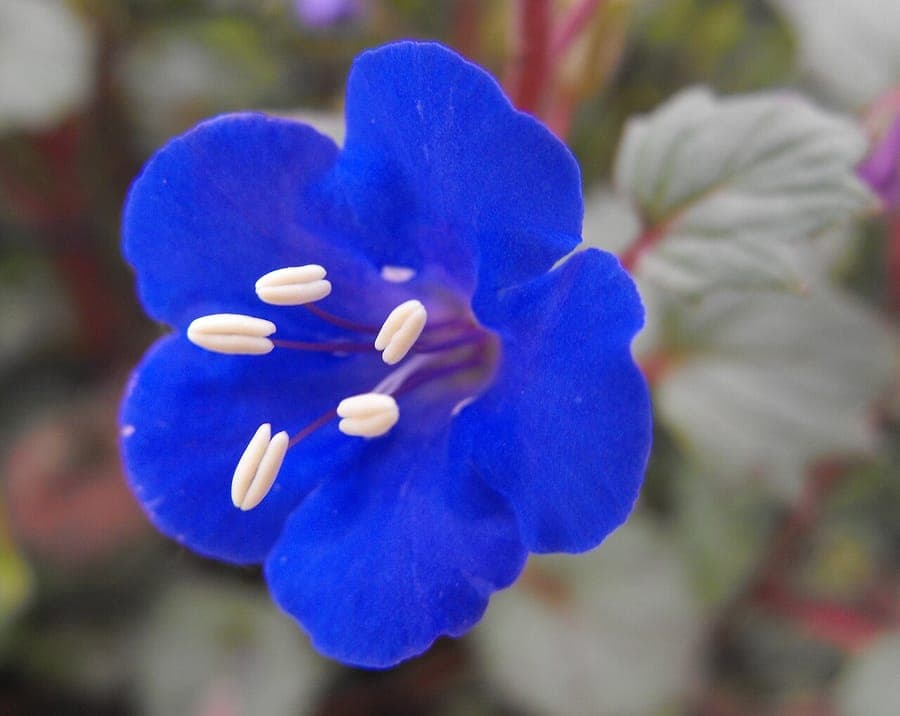
Stickpen / Public domain, via Wikimedia Commons
Phacelia campanularia: complete guide
Phacelia campanularia
¿Quieres ver Phacelia campanularia: complete guide en tu jardín?
1 minuto, sin tarjeta de crédito
Overview
Phacelia campanularia, known as California bluebell or Desert bluebell, is a fast-growing annual from the driest regions of California and Arizona. This relatively unknown gem deserves far more garden attention. With its deep blue, bell-shaped flowers and compact growth, it delivers rapid, spectacular color to places where many other plants struggle.
What makes Phacelia remarkable is its speed. Sow it in early summer and within weeks you have abundant floral display. Pollinators especially wild bees cannot get enough of it. Many organic farmers also use this plant as a green manure crop, turning plants back into soil for nutrient improvement.
Appearance and Bloom
Phacelia campanularia forms a compact, hairy plant of 30-50 cm height. Leaves are deeply lobed and roughly hairy, with a bristly texture. The entire plant bears spines or fine hairs.
The flowers are the true attraction: deep indigo-blue, bell to trumpet-shaped, gathered in dense clusters. Each flower has white stamens that project fascinatingly from the center. Blooms from June through October, depending on sowing date. April sowing yields July-August flowers. June sowing produces August to first frost flowers.
Ideal Location
Phacelia campanularia loves full sun to partial shade. For maximum flowering, ensure at least six hours of sun daily. It also tolerates partial shade and flowers even in notably shadowy gardens, though less profusely.
Wind is not a problem; this plant is extremely tough. It thrives beautifully on warm walls, south-facing building sides, and in dry corners where other plants fail. Afternoon shading in extremely hot climates (above 35 degrees Celsius) can be beneficial.
Soil Requirements
Phacelia is unfussy about soil. It grows on virtually any ground: poor, rich, acidic, alkaline, slightly clayey. In fact, it thrives better on lean soil than very fertile ground, as excess nutrients stimulate foliage at the expense of flowers.
What it requires is reasonable drainage. Stagnant water damages roots, especially in winter. For container culture use standard potting compost without extra feeding. In gardens you can sow directly into garden soil.
Watering
Once established, Phacelia campanularia requires very little water. During growing and flowering season provide moderate water slightly more often in extreme heat, but never drench. Ensure soil dries somewhat between waterings.
In normal years without extreme drought, rainfall suffices. Excessive watering, especially in containers, leads to waterlogging and root rot. Young seedlings must be kept moderately moist until they develop at least two pairs of true leaves.
Diseño gratis
¿Quieres ver Phacelia campanularia: complete guide en tu jardín? Crea un diseño gratis ahora.
Pruning and Growth
Phacelia requires virtually no pruning. Remove only spent flower heads or dead stems. This encourages continued flowering. In severe heat, pinching growing tips can force more compact, fuller plants.
No matter how you cut it, growth remains vigorous throughout. The plant tolerates cutting for bouquets without problems. Cut flowers keep several days in water.
Cultivation and Propagation
Phacelia is grown exclusively from seed. Sow directly in place in April to May for July to August flowering, or in June-July for August to October flowering. Do not cover seeds in soil; just press them lightly onto earth, adding a thin layer of sand or grit.
Germination occurs within 7-10 days. When seedlings develop two pairs of true leaves, thin to about 15 cm spacing for best results. Early sowing under glass (March-April) delays flowering by several weeks.
Maintenance Calendar
March-April: Sow under glass or directly outdoors. May: Thin seedlings, water regularly. June-July: First flowers appear, second sowing in gardens. August-September: Peak flowering for both generations. October: Final flowers, seed collection possible. November: Season ends.
Winter Hardiness
Phacelia campanularia is strictly annual and not winter-hardy in temperate zones. After first frost it dies. This means no replanting next spring simply resow in April-May. In many warm regions (Mediterranean, southern Europe) it may spontaneously reseed in mild winters.
Special Uses
Phacelia excels for floral arrangements: cut the entire above-ground plant with flowers, place in vase, and it provides weeks of color. Many beekeepers and organic farmers grow large quantities due to its nectar and pollen richness. It is also a popular green manure crop, as its deep roots break soil compaction.
In specialty flower markets and florist stalls, you increasingly see it offered as a cut flower.
Closing
If you want quick results without complications, Phacelia campanularia is your plant. Sow in April, enjoy in July-August, stop when frost comes. Next season, repeat gladly. Its intense blue color is unique among annuals and its ease makes it ideal for beginners or busy gardeners.
Seed is very affordably available. Check garden centers or online seed suppliers for stock. A few seed packets per garden yield enormous flowering!
¿Quieres ver Phacelia campanularia: complete guide en tu jardín? Crea un diseño gratis ahora.
Sube una foto, elige un estilo y obtén un diseño fotorrealista con lista de plantas en menos de un minuto.
Más de 10.000 jardines diseñados
Sin tarjeta de crédito


Plantas similares
Western waterleaf: complete guide
Hydrophyllum occidentale
Full growing guide for western waterleaf (Hydrophyllum occidentale): shade tolerance, soil needs, watering, winter hardiness and naturalistic garden use.
Limestone phacelia (Phacelia affinis): complete guide
Phacelia affinis
Full guide to Phacelia affinis, the limestone phacelia: sowing tips, purple-blue bee flowers, drought tolerance and uses in dry or wildlife gardens.
Pyrenean viper's bugloss: complete guide
Echium asperrimum
Echium asperrimum is a striking biennial from the western Mediterranean with rough bristly stems and vivid blue flowers. A magnet for bees and a bold border plant.