
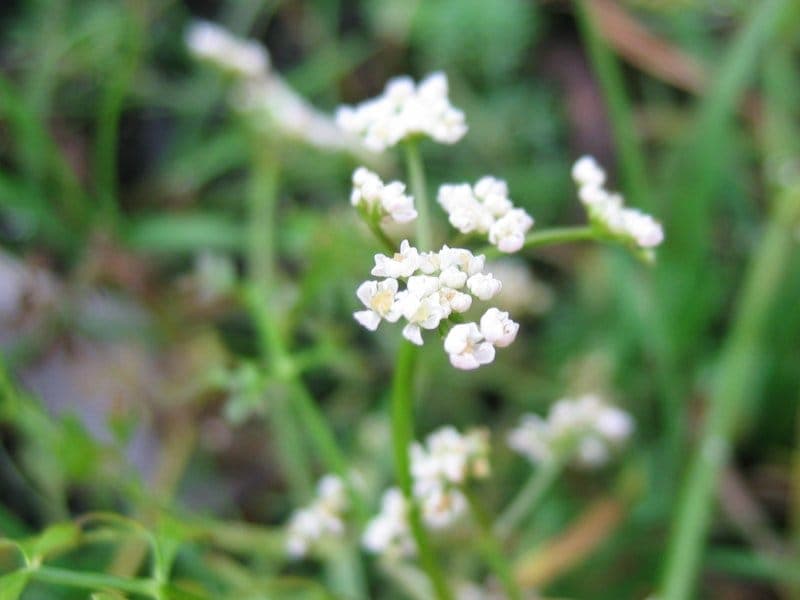
Kristian Peters -- Fabelfroh 13:44, 15 December 2005 (UTC) / CC BY-SA 3.0, via Wikimedia Commons
Hogfennel: complete guide
Peucedanum palustre
¿Quieres ver Hogfennel: complete guide en tu jardín?
1 minuto, sin tarjeta de crédito
Overview
Hogfennel (Peucedanum palustre) is an elegant wildflower native to Europe through central Siberia. This distinctive plant reaches 80-150 centimeters in height and represents a valuable element for wet meadows and wetland landscapes. The plant produces white flowers in complex umbel structures.
Appearance and Bloom
The plant has dark green, doubly pinnate leaves with narrow, linear leaflets. Stems are smooth, grooved, and sometimes slightly reddish. Flowers appear July through August, white or pale yellow, arranged in large, complex compound umbels. The plant reaches full bloom in its second growing year.
Ideal Location
Hogfennel grows best in damp to wet locations with consistent groundwater levels. The plant tolerates both full sun and light shade. Ideal for fens, marshes, reedbeds, and drainage ditches. In gardens: bog gardens and wetland zones.
Soil
Damp to wet soils are essential. The plant grows optimally on clay, peat, and loamy soils with high groundwater. Heavy, nutrient-rich soils are favorable. In dry soils the plant fails to thrive.
Diseño gratis
¿Quieres ver Hogfennel: complete guide en tu jardín? Crea un diseño gratis ahora.
Watering
Consistent moisture is crucial. The plant tolerates standing water. Never allow soil to dry completely. In gardens: regular irrigation or wetland settings. First year: provide extra moisture until deep rooting.
Pruning
No pruning needed for healthy growth. Yellowed foliage can be carefully removed. After flowering the plant can be entirely cut back for second-year regeneration.
Maintenance Calendar
YEAR 1: Leaf growth, no flowers. YEAR 2 APRIL-MAY: Leaf expansion. JULY-AUGUST: Full flowering. SEPTEMBER-OCTOBER: Seed ripening. NOVEMBER-MARCH: Winter rest.
Winter Hardiness
Hogfennel is fully hardy to zone 4. Throughout northern and central Europe it grows without protection. Wet winters prevent desiccation. Grows naturally in wetlands throughout the UK, Belgium, and northern Germany.
Companion Plants
Pair with other wetland plants like reed grass, purple loosestrife, and marsh-mallow. Beautiful with broad clover and marsh verbena. In bog gardens with sedges and marsh marigold.
Closing
Hogfennel represents a valuable ecosystem element for water-rich gardens and natural wetlands. Its doubly pinnate foliage, white flowers, and bird food value make it highly useful. Discover on gardenworld.app how hogfennel can enrich your wetland garden at gardenworld.app/en.
¿Quieres ver Hogfennel: complete guide en tu jardín? Crea un diseño gratis ahora.
Sube una foto, elige un estilo y obtén un diseño fotorrealista con lista de plantas en menos de un minuto.
Más de 10.000 jardines diseñados
Sin tarjeta de crédito


Plantas similares
Whorled carrot: complete guide
Daucus involucratus
Daucus involucratus is a Mediterranean umbellifer with white flower heads framed by lacy bracts. Growing this gravel garden gem.
Daucus muricatus: complete guide
Daucus muricatus
Daucus muricatus, the spiny wild carrot, grows wild on Mediterranean coasts. Discover sowing, June-July bloom, and wildflower meadow use.
Daucus pumilus: complete guide
Daucus pumilus
Daucus pumilus is a dwarf wild carrot relative with white lacy umbels, thriving on dunes and coastal rock in poor, fast-draining soil.