
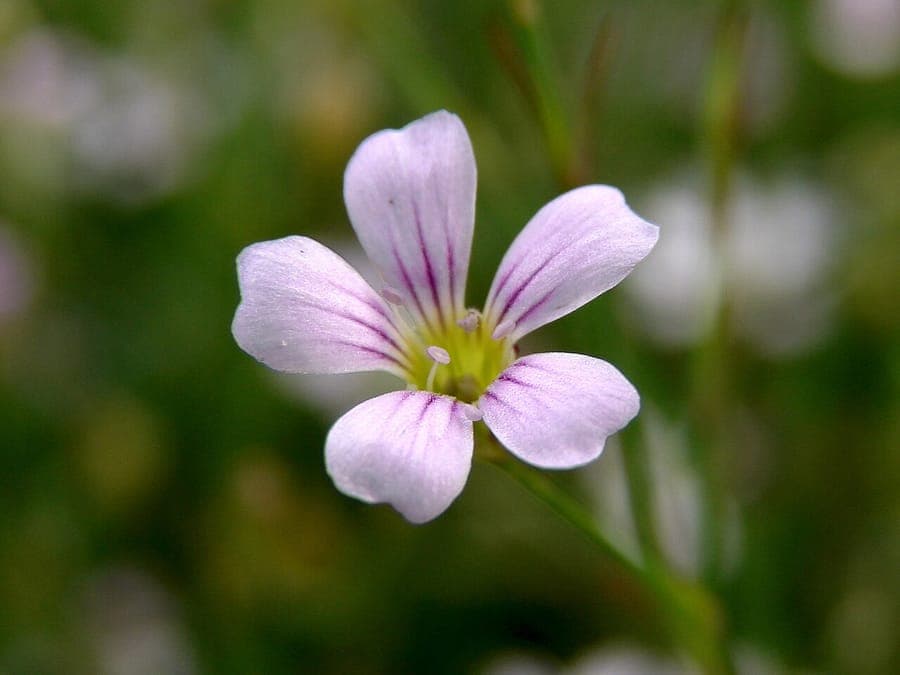
Chrumps / CC BY-SA 3.0, via Wikimedia Commons
Saxifrage-pink: complete guide
Petrorhagia saxifraga
¿Quieres ver Saxifrage-pink: complete guide en tu jardín?
1 minuto, sin tarjeta de crédito
Overview
Saxifrage-pink (Petrorhagia saxifraga), tunic-flower or coatflower, is an intriguing alpine gem from the Caryophyllaceae family from central to southern Europe. This miniature specialist excels in rock gardens due to compact stature and abundant blooms. Highly prized for demanding alpine positions.
Appearance and Bloom
Saxifrage-pink reaches merely 10 to 25 cm tall, forming tight mounded cushions. Tiny linear gray-green leaves create dense tufts. Flowers appear July through September in surprisingly rich clusters of delicate pink. Uniquely, each tiny bloom exhibits papery-textured sepals.
Ideal Location
Saxifrage-pink demands full sunlight with 6 to 8 hours direct sunshine daily. Shade produces elongated, poorly blooming specimens. Protect from fierce autumn winds. Position on elevated rock faces, in alpine troughs, or steep, well-drained slopes.
Soil
This plant requires extraordinarily well-drained, impoverished soil. Sandy, stony, lime-rich substrates prove ideal. Heavy clay proves fatal. pH tolerates neutral to basic (6.5-8.0). Plant in pure stone aggregate with minimal soil addition.
Watering
Water extremely sparingly. This plant endures drought superbly and prefers desiccation over moisture. Minimal irrigation during growth. During blooming, slightly more water, but excellent drainage prevents waterlogging.
Diseño gratis
¿Quieres ver Saxifrage-pink: complete guide en tu jardín? Crea un diseño gratis ahora.
Pruning
Pruning unnecessary. Plant maintains naturally compact form. Remove faded flower clusters post-bloom for tidier appearance. No aggressive cutting. Remove damaged foliage spring.
Maintenance Calendar
Spring: Plant awakens. No feeding necessary. Summer: Blooming period. Minimal watering. Enjoy blooms! Autumn: Blooming concludes. Remove faded flowers. Reduce water significantly. Winter: Plant dormant. Minimal care.
Winter Hardiness
Saxifrage-pink is exceptionally cold-hardy in Netherlands (USDA zones 4-5), withstanding -20C without damage. However, wet winters prove more damaging than severe frost. Excellent drainage is critical. Plant proves reliably durable in dry winters.
Companion Plants
Other alpine cousins like Saxifraga species and phlox prove perfect neighbors. Silver-foliaged Senecio combines beautifully. Sedums and other succulents integrate well in rock gardens. Dwarf lobelia varieties suit perfectly.
Closing Thoughts
Saxifrage-pink is a precious jewel for dedicated alpine gardeners. Though diminutive, it offers tremendous character in alpine displays. For discerning gardeners struggling with dry situations, this is your plant. Available at specialty alpine nurseries.
Explore more plant guides at gardenworld.app!
¿Quieres ver Saxifrage-pink: complete guide en tu jardín? Crea un diseño gratis ahora.
Sube una foto, elige un estilo y obtén un diseño fotorrealista con lista de plantas en menos de un minuto.
Más de 10.000 jardines diseñados
Sin tarjeta de crédito


Plantas similares
Dianthus karami: complete guide
Dianthus karami
Dianthus karami is a rare Lebanese mountain pink with fringed pink blooms on limestone cliffs, ideal for rock gardens and troughs.
Sicilian pink: complete guide
Dianthus siculus
Discover Dianthus siculus, an elegant purple bloomer from Sicily. Cultivation, June-September flowering and garden combinations.
Alpine mouse-ear chickweed: complete guide
Cerastium pedunculatum
Full growing guide for Cerastium pedunculatum: ideal location, soil, watering, winter hardiness, and companion plants for rock gardens.