
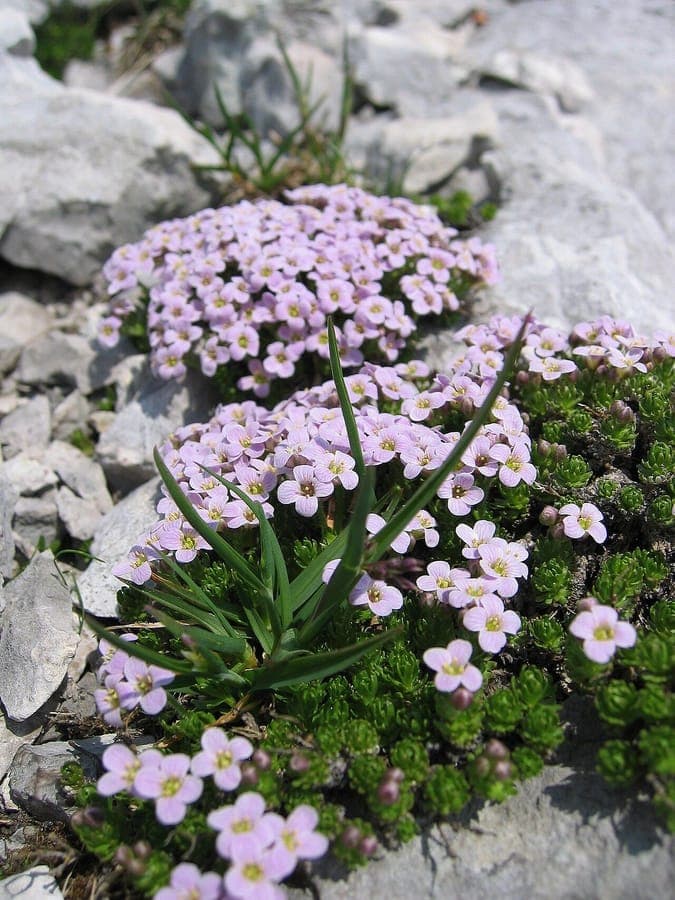
Wikimedia Commons / CC BY-SA 3.0, via Wikimedia Commons
Petrocallis pyrenaica: complete guide
Petrocallis pyrenaica
¿Quieres ver Petrocallis pyrenaica: complete guide en tu jardín?
1 minuto, sin tarjeta de crédito
Overview
Petrocallis pyrenaica, commonly known as Pyrenean whitlow-grass or the Alps stone-flower, is a delightful alpine gem native to the rocky slopes and meadows of the Pyrenees, Alps, and Carpathian Mountains. This botanical treasure has long been cherished by rock gardening enthusiasts for its neat, cushion-like growth, charming purple flowers, and exceptional hardiness.
Belonging to the Brassicaceae family (the same family as cabbage), Petrocallis pyrenaica belies its delicate appearance with remarkable vigor and reliability. Garden designers seeking a low-maintenance groundcover that thrives in challenging conditions will find this plant an excellent solution for sunny, well-drained sites.
Appearance and Bloom
Petrocallis pyrenaica forms tight, neat cushions that rarely exceed 5 to 10 centimeters in height. The leaves are small, linear, and finely divided, deep green in color, giving the plant an elegant, fine-textured appearance. The plant gradually spreads to approximately 15-20 centimeters wide, perfect for gravel gardens and rockeries.
The blooms are where this plant truly shines. From June through August, countless tiny four-petaled flowers appear in vibrant purple or magenta tones. These flowers are held in dense clusters above the foliage, creating a stunning color display that attracts bees and butterflies. Each individual bloom is only a few millimeters across, yet the profusion of flowers creates an impressive spectacle.
Following flowering, small seed pods develop, though the plant is primarily cultivated for its flowers and architectural form.
Ideal Location
Petrocallis pyrenaica performs best in full sun. The plant requires at least six to eight hours of direct sunlight daily for optimal flowering. In shaded conditions, growth will be sparse and blooming significantly reduced.
This plant is ideally suited for:
- Rock gardens and stone gardens
- Gravel gardens and dry landscapes
- Borders with stonework and hardscaping
- Crevices in stone or paving (in excellently drained environments)
- Steep, rocky slopes where water drainage is assured
Avoid locations prone to standing water, puddling during heavy rain, or areas subject to winter waterlogging. The plant tolerates exposed, windy positions well and can even flourish in severe alpine conditions.
Soil
Soil quality is paramount for Petrocallis pyrenaica's success. The plant demands exceptionally well-drained soil. Heavy clay soils will inevitably lead to root rot and plant death.
Ideal soil composition:
- Gritty, mineral-rich mix
- pH 7.0 to 7.5 (neutral to slightly alkaline)
- Low nutrient content (lean substrate)
- Excellent drainage
- Amend regular garden soil with 40 to 50 percent grit, lava rock, or perlite
The plant accepts calcareous soils without hesitation. Regularly add coarse sand and small stones around the plant base to enhance drainage and maintain its alpine character.
Diseño gratis
¿Quieres ver Petrocallis pyrenaica: complete guide en tu jardín? Crea un diseño gratis ahora.
Watering
Once established, Petrocallis pyrenaica is remarkably drought-tolerant and requires minimal water. This drought-hardiness is key to its success:
Watering schedule:
- After planting: provide modest water until roots are established (4-6 weeks)
- Growing season (spring-summer): water only during prolonged dry spells
- Fall-winter: virtually no supplemental water needed; rainfall is usually sufficient
- Prevent all waterlogging and ensure rapid drainage
Overwatering is the most common cause of failure with this plant. The rule is simple: err on the side of dryness.
Pruning
Pruning is largely unnecessary for Petrocallis pyrenaica. The plant grows slowly and maintains a neat form naturally. After flowering, spent flower stems may be removed, though this is optional:
- Remove dead and withered stems in autumn
- Remove any severely damaged or diseased foliage
- The plant will self-shape naturally
- No vigorous pruning needed
In areas of vigorous growth, light shearing may be performed to maintain shape.
Maintenance Calendar
Spring (March-May):
- Check drainage and remove accumulated dead foliage
- Add fine gravel where needed
- Begin gentle watering
Summer (June-August):
- Peak bloom period - enjoy the purple flowers
- Minimal maintenance required
- Water only during extreme drought
Fall (September-October):
- Remove dead stems after flowering
- Seed pods may be observed
- Prepare plant for winter dormancy
Winter (November-February):
- Plant is completely dormant
- No supplemental water needed (winter rainfall is sufficient)
- Protective snow cover helps the plant
- Monitor for water accumulation
Winter Hardiness
Petrocallis pyrenaica is fully hardy to -15 to -20 degrees Celsius and often lower. This is one of the hardiest alpine plants available:
- USDA Hardiness Zone: 3-4 (-40 to -30 degrees Celsius)
- Excellent for alpine and subalpine climates
- Snow cover provides insulation from extreme cold
- Prevention of winter moisture is more critical than cold tolerance
Companion Plants
Petrocallis pyrenaica combines beautifully with other alpine rockery plants:
- Saxifraga species (saxifrages)
- Silene species (catchfly)
- Armeria maritima (thrift)
- Acaena microphylla (red bidi-bidi)
- Sedum species (stonecrop)
- Sempervivum species (houseleek)
- Ajuga reptans 'Atropurpurea' (bugle)
Combine with contrasting foliage for striking visual effect.
Conclusion
Petrocallis pyrenaica is an excellent choice for dry, sunny locations, especially in rock gardens and gravel gardens. With its tidy, cushion-like form, stunning purple flowers, and minimal maintenance requirements, this alpine treasure provides years of uncomplicated enjoyment. The plant tolerates even severe mountain conditions and slowly develops into a rewarding display, especially when provided with ideal growing conditions.
Both novice and experienced gardeners will appreciate how reliable and attractive this plant is. Seek out Petrocallis pyrenaica from specialist nurseries, particularly in English and European rock garden centers. This is a plant that repays your investment in its selection.
Visit gardenworld.app for more inspiration on designing Alpine rock gardens and discovering other exceptional low-growing plants. Your garden design can become even more beautiful with thoughtfully selected alpine specimens.
¿Quieres ver Petrocallis pyrenaica: complete guide en tu jardín? Crea un diseño gratis ahora.
Sube una foto, elige un estilo y obtén un diseño fotorrealista con lista de plantas en menos de un minuto.
Sin tarjeta de crédito


Plantas similares
Brassica cretica: complete guide
Brassica cretica
Brassica cretica, the Cretan cabbage, grows wild on Aegean cliffs. Discover how to grow this drought-tolerant, yellow-flowered Mediterranean perennial.
Corsican cabbage: complete guide
Brassica insularis
Corsican cabbage is a rare Mediterranean rock cabbage with white flowers and blue-green leaves. Location, soil and winter protection.
Prostrate cabbage: complete guide
Brassica procumbens
Prostrate cabbage is a creeping North African cliff plant with yellow flowers. Discover location, soil type and winter protection.