
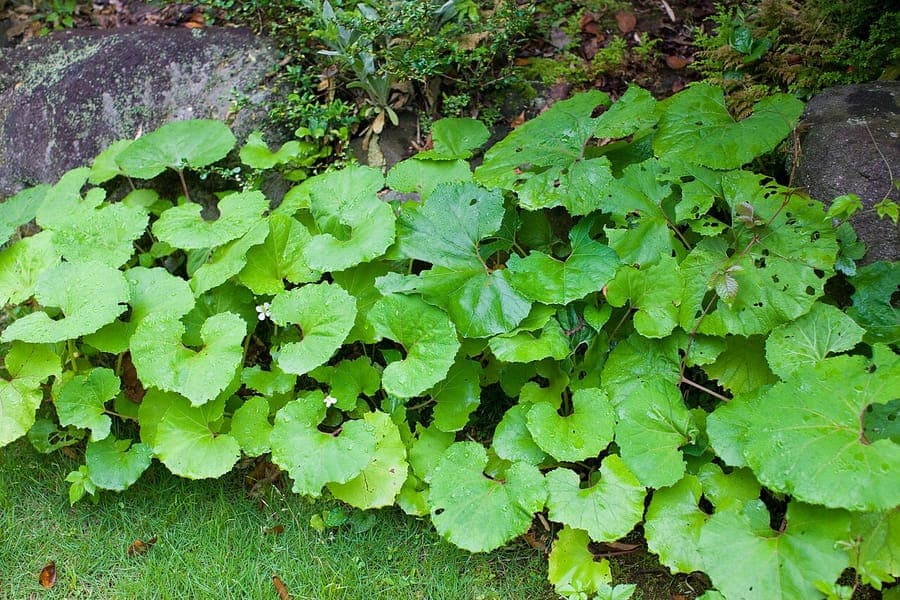
Joi Ito / CC BY 2.0, via Wikimedia Commons
Great butterbur: complete guide
Petasites japonicus
¿Quieres ver Great butterbur: complete guide en tu jardín?
1 minuto, sin tarjeta de crédito
Overview
Great butterbur (Petasites japonicus) is a remarkable perennial from the Asteraceae family. This architectural plant earns its name from enormous, umbrella-like leaves. In European gardens, it transforms shaded spaces into living theater with year-round visual interest.
Appearance and Bloom
Great butterbur reaches 80 to 150 cm tall with broad leaves to 50 cm wide. Upper surfaces are deep green. The unexpected beauty emerges in early spring when dense, pale yellow to creamy-white flower clusters appear before foliage fully expands.
Ideal Location
This plant thrives in partial to full shade, perfect for challenging dark corners. While tolerant of dappled sunlight, direct afternoon sun causes leaf scorch. Position it beneath trees or on the north side of buildings. Provide ample space as this is vigorous.
Soil
Great butterbur demands humus-rich, consistently moist soil. Ideal pH ranges from neutral to slightly acidic (6.0-7.0). Amend areas generously with compost or peat. Although water-loving, ensure drainage prevents stagnation.
Watering
Water regularly and generously from April through October. During dry spells, water twice weekly. Mulching conserves moisture. Reduce watering in winter but never allow complete drying.
Diseño gratis
¿Quieres ver Great butterbur: complete guide en tu jardín? Crea un diseño gratis ahora.
Pruning
Pruning is unnecessary. Remove withered foliage in autumn. Inspect spring growth for frost damage and remove carefully. Allow natural growth patterns.
Maintenance Calendar
Spring: Add compost around emerging stems. Monitor for slugs. Flowers appear. Summer: Water consistently during dry periods. Refresh mulch. Scout for diseases. Autumn: Gradually reduce watering. Remove dead foliage. Winter: Minimal maintenance. Check drainage after snowmelt.
Winter Hardiness
Great butterbur is extremely cold-hardy (USDA zones 4-5), withstanding -20 to -25C without damage. Foliage may suffer slight frost injury but the rhizome survives. Plant remains reliably perennial year after year.
Companion Plants
Spotted pulmonaria thrives beneath this plant. Christmas roses and woodland ferns complement perfectly. Hosta varieties provide vertical contrast. Anemones bloom before this colossus takes over.
Closing Thoughts
Great butterbur transforms challenging shaded gardens into bold living sculptures. Its massive foliage provides year-round structure. Once established, it requires minimal intervention. For adventurous gardeners, this is essential. Available at specialty nurseries.
Explore more guides at gardenworld.app and discover perfect plants for your garden!
¿Quieres ver Great butterbur: complete guide en tu jardín? Crea un diseño gratis ahora.
Sube una foto, elige un estilo y obtén un diseño fotorrealista con lista de plantas en menos de un minuto.
Más de 10.000 jardines diseñados
Sin tarjeta de crédito


Plantas similares
Calendula stellata: complete guide
Calendula stellata
Complete guide to Calendula stellata, the star-flowered marigold from Sicily: location, soil, watering and companion planting tips.
Korean chrysanthemum: complete guide
Chrysanthemum x rubellum
Chrysanthemum x rubellum is a hardy autumn perennial with single pink to copper flowers from August to November. Care and combinations.
Helianthus divaricatus: complete guide
Helianthus divaricatus
Helianthus divaricatus is a North American woodland sunflower with yellow summer blooms, ideal for naturalistic borders and shady edges.