
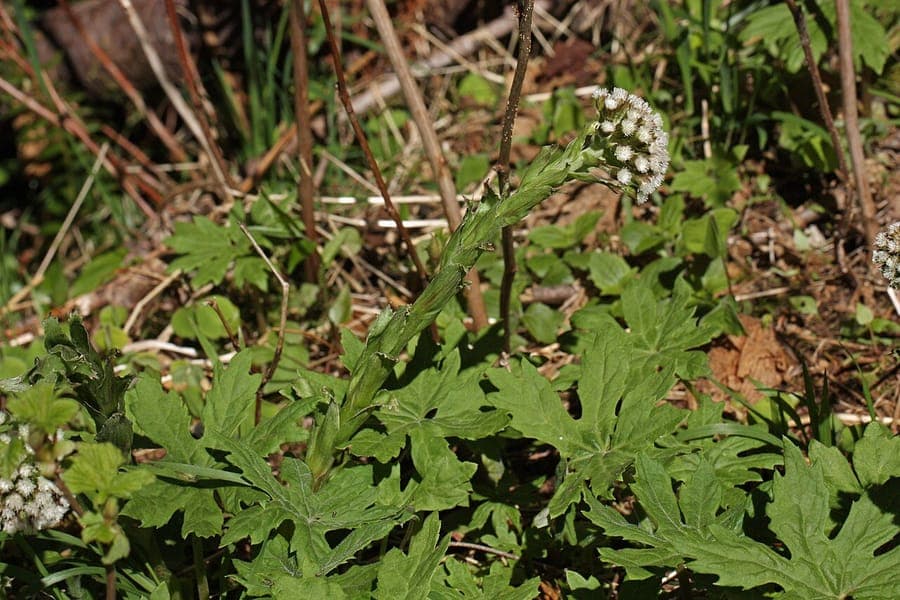
Walter Siegmund (talk) / CC BY-SA 3.0, via Wikimedia Commons
Arctic Butterbur: complete guide
Petasites frigidus
¿Quieres ver Arctic Butterbur: complete guide en tu jardín?
1 minuto, sin tarjeta de crédito
Overview
the Arctic Butterbur, scientifically known as Petasites frigidus, is a remarkable alpine perennial from the Asteraceae family. This hardy plant grows naturally in subarctic and northwestern American regions, thriving in cold, moist locations. Thanks to its impressive foliage and sturdy constitution, it's an excellent choice for gardens in cool climates and shaded mountain landscapes.
Appearance and Bloom
the Arctic Butterbur is primarily noted for its large, heart-shaped leaves that can reach 30 cm wide. The leaves emerge from the plant's base, creating an architectural form in the garden. In spring, dense flower clusters appear in yellow to white, adding contrast to the green foliage. Flowers emerge from thick stems that grow directly from the ground. By late summer, interesting seed heads form with fluffy seeds that disperse in the wind.
Ideal Location
Petasites frigidus thrives in partial shade to full shade. It reaches medium height, particularly in mountain areas and arctic zones. Ensure your planting location is protected from strong winds. In warmer climates, your plant can tolerate deeper shade. In cold mountain regions, the plant may tolerate slightly more sunlight if the soil remains sufficiently moist.
Soil
This plant prefers rich, humus-based soils with good water retention capacity. A soil pH between 5.5 and 7.0 is ideal. Ensure you add well-draining mountain soil or compost before planting. If your soil is very clayey, work in some organic material to improve structure. The plant does not tolerate dryness well, so always ensure consistent moisture.
Diseño gratis
¿Quieres ver Arctic Butterbur: complete guide en tu jardín? Crea un diseño gratis ahora.
Watering
Keep the soil around your Petasites frigidus regularly moist, especially during the growing season from spring to autumn. Water deeply to encourage root development. During warm periods, you may water twice daily. However, avoid waterlogging, which can damage roots. In winter, you can reduce watering frequency, but ensure the soil never dries completely.
Pruning
Pruning is a minimal activity for Petasites frigidus. Remove damaged or dead leaves in spring when new growth begins. Remove faded flowers after blooming to prevent seed formation (unless you want to save seeds for sowing). Cut dead stems back to the ground in late autumn.
Maintenance Calendar
Spring: Begin feeding with organic fertilizer. Remove dead winter flowers. Summer: Water regularly. Monitor for pests. Autumn: No special care needed unless you want to collect seed heads. Winter: Protect against extreme frost where needed with mulch.
Winter Hardiness
Petasites frigidus is exceptionally winter-hardy and can withstand temperatures down to -40 degrees Celsius. The plant is ideal for USDA hardiness zones 2 to 7. In warmer zones, it will perform less well. Protect against heavy snow loads by carefully removing snow from stems.
Companion Plants
Petasites frigidus combines well with other alpine plants such as Sedum, Sempervivum and Luzula. Pair with grassy structures for contrast. In shadier situations, add earthy groundcovers like Mazus reptans or Acaena.
Closing Thoughts
the Arctic Butterbur is an excellent choice for gardeners in cool climates seeking robust, architecturally interesting plants. With minimal care and exceptional winter hardiness, this plant delivers years of structure and beauty in alpine gardens. Visit your local garden center for plant material.
GardenWorld.app helps you create ideal garden designs with climate-appropriate plants like the Arctic Butterbur.
¿Quieres ver Arctic Butterbur: complete guide en tu jardín? Crea un diseño gratis ahora.
Sube una foto, elige un estilo y obtén un diseño fotorrealista con lista de plantas en menos de un minuto.
Más de 10.000 jardines diseñados
Sin tarjeta de crédito


Plantas similares
Calendula stellata: complete guide
Calendula stellata
Complete guide to Calendula stellata, the star-flowered marigold from Sicily: location, soil, watering and companion planting tips.
Korean chrysanthemum: complete guide
Chrysanthemum x rubellum
Chrysanthemum x rubellum is a hardy autumn perennial with single pink to copper flowers from August to November. Care and combinations.
Helianthus divaricatus: complete guide
Helianthus divaricatus
Helianthus divaricatus is a North American woodland sunflower with yellow summer blooms, ideal for naturalistic borders and shady edges.