
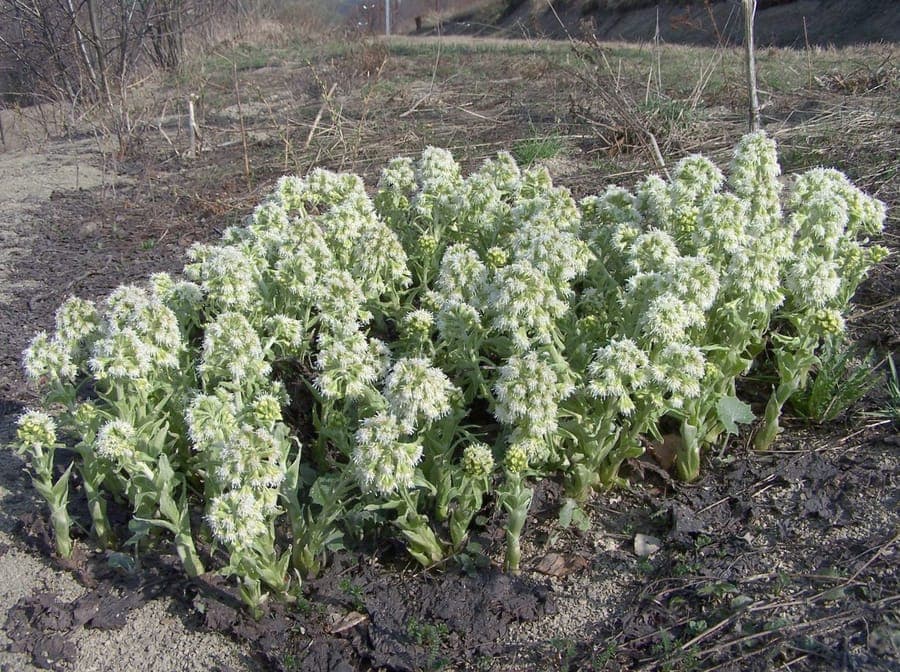
Opioła Jerzy / CC BY 2.5, via Wikimedia Commons
White butterbur: complete guide
Petasites albus
¿Quieres ver White butterbur: complete guide en tu jardín?
1 minuto, sin tarjeta de crédito
Overview
White butterbur (Petasites albus) is a remarkable perennial plant native throughout Europe, from the Mediterranean to Siberia. This powerful ground cover is known for its large, distinctive leaves and elegant white flowers that bloom in April and May. The butterbur is an underrated specimen that reclaims challenging ground faster than almost any other plant, making it ideal for problem areas in your garden.
Appearance and bloom
The characteristic leaves of white butterbur are large, heart-shaped, and can reach 30-40 cm wide in mature growth. They emerge directly from the ground on long petioles, giving the plant a tropical appearance despite its European origin. The flowers appear before the leaves fully expand, in dense, upright clusters of small white flowers. This blooming period from April to May attracts early butterflies and other pollinators. The fresh fragrance of the flowers is subtle and pleasant.
Ideal location
White butterbur grows best in shade to partial shade. It accepts full sun but the leaves may dry out and lose their luster. The plant is highly suitable for moist spots, along water features, under trees, and in other difficult shaded corners where almost nothing else will grow. Don't plant it in the front row of your border unless you enjoy large leaves that cover underlying plants.
Soil
White butterbur is not fussy about soil type, but thrives best in moist to moderately damp, nutrient-rich soil with a pH between 7 and 7.5. The plant accepts heavier, clay-based soils much better than many other perennials. Add compost or leaf mold for improved drainage and nutrient content. Stagnant wet soil can cause leaf rot, so ensure some drainage.
Watering
Once well-established, white butterbur requires little water. During dry periods, however, you should water regularly, especially when the plant is in full growth. The large leaves evaporate considerable moisture, so in summers with little rainfall, extra water produces better growth and leaf quality. In natural conditions, butterbur grows along streams and in moist meadows.
Diseño gratis
¿Quieres ver White butterbur: complete guide en tu jardín? Crea un diseño gratis ahora.
Pruning
White butterbur requires virtually no maintenance pruning. You can remove spent flowers for tidiness, but this is not necessary. In autumn the leaves may turn yellow and can then be cut back. Do not prune the plant too hard, as this disturbs its natural growth form.
Maintenance calendar
April-May: Blooming period. Check for weeds and adequate moisture. June-August: Full leaf growth. Provide extra water during dry periods. Remove damaged leaves. September-October: Leaves begin to yellow. Remove dead leaves. November-March: Winter dormancy. Minimal maintenance needed. Plant remains active underground.
Winter hardiness
White butterbur is fully hardy through zone 4 (USDA). The plant disappears completely underground after autumn and survives cold well via its root system. It even adapts to extreme frost, making it an ideal plant for alpine gardens and cold regions.
Companion plants
White butterbur pairs well with other moisture lovers such as meadowsweet, spiderwort, and snakeroot. In shade it combines beautifully with ferns, bracken fern, and forget-me-nots. Avoid combinations with soft-growing plants that might be overwhelmed by the large leaves of butterbur.
Conclusion
White butterbur is an unusual but valuable addition to many gardens. The plant handles difficult shaded spots without any problem and offers beautiful flowers in spring. Whether you want to plant a moist spot or simply seek a vigorous grower, white butterbur delivers results.
Purchase white butterbur online or at specialized garden centers. Many reputable retailers stock quality perennials year-round. Visit gardenworld.app for more plant recommendations and garden design inspiration. Discover more about native plants at gardenworld.app.
¿Quieres ver White butterbur: complete guide en tu jardín? Crea un diseño gratis ahora.
Sube una foto, elige un estilo y obtén un diseño fotorrealista con lista de plantas en menos de un minuto.
Más de 10.000 jardines diseñados
Sin tarjeta de crédito


Plantas similares
Calendula stellata: complete guide
Calendula stellata
Complete guide to Calendula stellata, the star-flowered marigold from Sicily: location, soil, watering and companion planting tips.
Korean chrysanthemum: complete guide
Chrysanthemum x rubellum
Chrysanthemum x rubellum is a hardy autumn perennial with single pink to copper flowers from August to November. Care and combinations.
Helianthus divaricatus: complete guide
Helianthus divaricatus
Helianthus divaricatus is a North American woodland sunflower with yellow summer blooms, ideal for naturalistic borders and shady edges.