
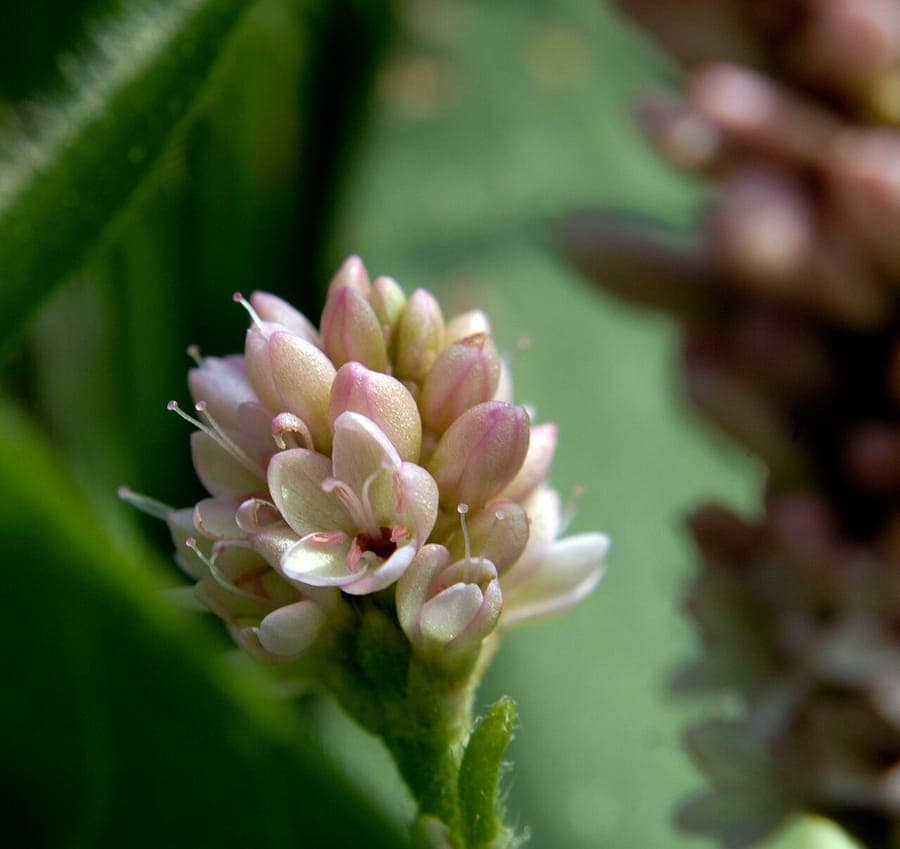
Frank Mayfield / CC BY-SA 2.0, via Wikimedia Commons
Pennsylvania smartweed: complete guide
Persicaria pensylvanica
¿Quieres ver Pennsylvania smartweed: complete guide en tu jardín?
1 minuto, sin tarjeta de crédito
Overview
Persicaria pensylvanica, commonly called Pennsylvania smartweed, pinkweed, or pink knotweed, is a graceful annual herb native to North America. This plant flourishes in moist habitats and wet banks, producing delicate pink flowers. In gardens, it serves as a reliable wildflower contributing natural beauty to landscape designs.
With its hardy, self-seeding capacity, this plant appeals to gardeners experimenting with natural planting and native species cultivation.
Appearance & bloom
Persicaria pensylvanica is a slender, upright herb typically growing 30-90 cm tall. Stems are brownish, often tinged with red. Foliage is lanceolate, glossy green.
Flowers are the most characteristic feature. They appear in fine, compact spikes in delicate pink to white tones. The blooming period extends from July through October, providing extended seasonal color and interest. Small insects, especially bees and butterflies, are attracted to the nectar-rich flowers.
Ideal location
Pennsylvania smartweed thrives on moist sites. Ideal growing locations include:
- Banks and wet meadows
- Areas around ponds and water features
- Moist, low-lying garden beds
- Partial shade to full sun
The plant tolerates moderate drought but flourishes on moist locations. In gardens with good water retention and regular watering, this plant will prosper.
Soil
The plant prefers rich, moist soil. An ideal soil type comprises:
- Moist to wet potting mix
- Organic matter-rich soil (compost, leaf mould)
- Heavy clay soils work well
Universal moist potting mix with extra compost works well in containers. In gardens, you can create wet beds by adding organic matter.
Diseño gratis
¿Quieres ver Pennsylvania smartweed: complete guide en tu jardín? Crea un diseño gratis ahora.
Watering
Water regularly, maintaining consistent moisture. The plant prefers wet feet over dry. During dry periods, provide extra water to prevent drought stress.
In containers, check daily if soil is moist and water as needed. The plant can even grow in waterlogged conditions, so excess moisture is less problematic than for many other plants.
Pruning
Pruning is rarely necessary:
- Remove spent flower spikes as needed
- This encourages continued blooming
- The plant grows compactly without much intervention
Maintenance calendar
Spring (March-May): Sow seeds directly after last frost. Germination occurs quickly in warm, moist soil.
Summer (June-August): Water regularly. Weekly feeding in containers is optional. Blooming peaks.
Autumn (September-October): Blooming continues. Seeds form. Allow self-seeding for next year.
Winter (November-February): Plant dies (annual). Seeds overwinter in soil.
Winter hardiness
Persicaria pensylvanica is annual and cannot tolerate frost. The plant regrows from seeds that self-seed in autumn. In temperate climates, the plant will return each year from previous season's seeds.
You can collect seeds from the previous year and resow them in spring.
Companion plants
Pennsylvania smartweed adds interest alongside:
- Other native wetland plants
- Forget-me-nots in moist sections
- Other native smartweeds and dock plants
- Wildflower borders
Conclusion
Persicaria pensylvanica is ideal for gardeners creating wetland zones, natural gardens, or native plant collections. With consistent moisture, growth is assured. Discover more wildflowers and natural garden ideas on gardenworld.app for inspiration and professional design. Create an ecologically responsible garden with native plants.
¿Quieres ver Pennsylvania smartweed: complete guide en tu jardín? Crea un diseño gratis ahora.
Sube una foto, elige un estilo y obtén un diseño fotorrealista con lista de plantas en menos de un minuto.
Más de 10.000 jardines diseñados
Sin tarjeta de crédito


Plantas similares
Crosby's wild buckwheat: complete guide
Eriogonum crosbyae
Full guide to growing Eriogonum crosbyae: ideal site, soil, watering, winter hardiness and companion plants for this rare western wild buckwheat.
Spreading buckwheat: complete guide
Eriogonum effusum
Full guide to growing Eriogonum effusum: ideal site, soil, watering, winter hardiness and companion plants for this prairie subshrub from the American West.
Tall woolly buckwheat: complete guide
Eriogonum elatum
Full guide to Eriogonum elatum: siting, soil, watering, pruning and companion plants for this elegant white-flowered buckwheat from the western United States.