
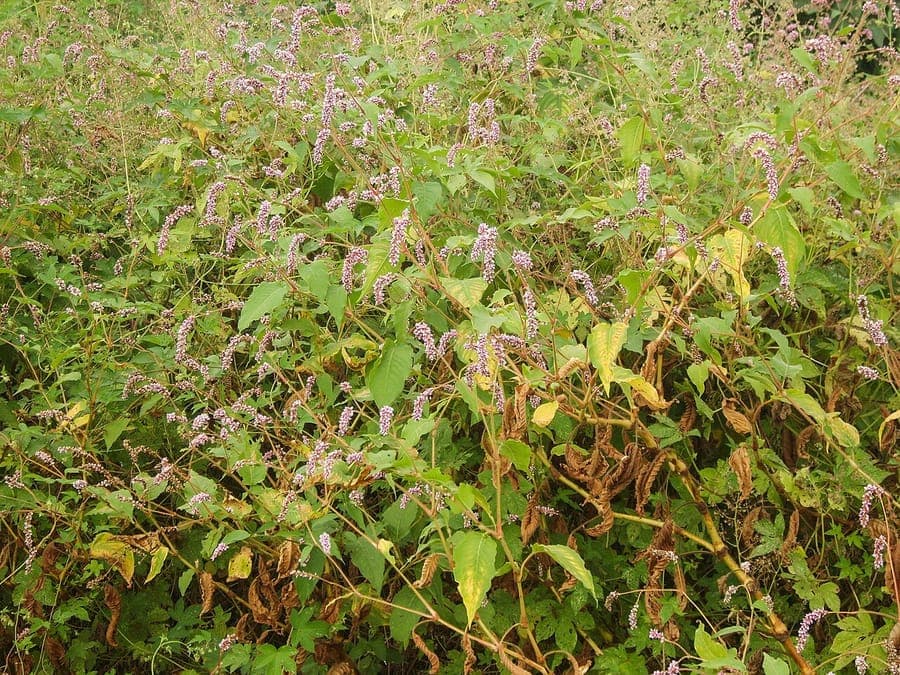
Dalgial / CC BY-SA 3.0, via Wikimedia Commons
Persicaria orientalis: complete guide
Persicaria orientalis
¿Quieres ver Persicaria orientalis: complete guide en tu jardín?
1 minuto, sin tarjeta de crédito
Overview
Persicaria orientalis, known as Prince's feather, Oriental bistort, or Oriental persicaria, is a striking herbaceous to semi-woody plant that originates from southern Asia. This species grows wild from India through the Russian Far East and northern and eastern Australia. The plant has since been spread to many gardens worldwide and is highly valued for its spectacular purple flower spikes and elegant foliage.
This is a robust, fast-growing plant that is perfect for summer blooming and color accenting in gardens. The plant can be grown as both an annual and perennial, depending on climate. In cold climates, it grows as an annual, while in warm regions it can survive multiple years. The plant is very popular in cottage gardens and modern garden designs.
Appearance and bloom
Persicaria orientalis grows quickly to a height of 60-150 centimeters, depending on growing conditions and maintenance. The plant forms an upright, bushy form with numerous thin branches. The leaves are lanceolate, dark green to purplish-brown in color, especially on the undersides. The leaves are typically 5-15 centimeters long.
The flowers are the most characteristic part of this plant. They appear in long, dense, drooping flower spikes (spikes) that are usually 5-15 centimeters long and have an intense purple to magenta color. The small flowers are actually very numerous and together form the spectacular flower spike. Flowering period runs from July to October, sometimes earlier in very warm climates.
After flowering, small brown seeds form which allow self-seeding if the plant is not deadheaded.
Ideal location
Persicaria orientalis grows best in sunny locations with at least 6-8 hours of direct sunlight daily. The plant can also manage with light shade, although flowering will be less abundant. A south- or west-facing location is ideal for maximum flower production.
The plant loves warm locations and grows faster in tropical and subtropical regions. In temperate climates, it also grows well during the warm summer months.
Soil
Persicaria orientalis grows in diverse soils but prefers moist, nutrient-rich soils. The plant grows better in well-prepared soils with the addition of organic material. pH can range from acidic to neutral (pH 6.0-7.0 is ideal).
The plant tolerates both dry and very wet soils reasonably well, although moderate moisture is optimal. In dry soils, supplementation with compost or mulch can help.
Diseño gratis
¿Quieres ver Persicaria orientalis: complete guide en tu jardín? Crea un diseño gratis ahora.
Watering
Persicaria orientalis needs regular moisture during the growing season. Water when the soil surface feels dry. In warm and dry conditions, daily misting may be necessary. The plant can, however, tolerate drought reasonably well once established.
In rainy regions, extra water is usually not needed. Avoid water excess which can lead to diseases.
Pruning
Pruning is useful to keep the form compact and stimulate more flowers. Pinch the tips of young plants when they are 15-20 centimeters high; this promotes branching. Deadheading (removing withered flowers) significantly extends the flowering period.
In autumn, you can cut back the plant after flowering. In warm climates where the plant overwinters, you can gently remove dead material in spring.
Maintenance calendar
In winter (December-January), the plant rests or dies off, depending on climate.
In spring (March-April), you can sow seedlings indoors or gently prune old plants.
During the growing season (May-October), regular watering, possible support, and deadheading are needed.
In autumn (October-November), it is time for seed harvesting or preparation for winter dormancy.
Winter hardiness
Persicaria orientalis is not cold-hardy in temperate climates (zones 6-8). The plant is usually grown as an annual in northern regions. In warm regions (zones 8-11), the plant can overwinter and grow for multiple years.
In very cold areas, you can sow seeds indoors in spring and plant seedlings outdoors when frost danger has passed.
Companion plants
Persicaria orientalis combines beautifully with other summer bloomers and yellow or green foliage plants. Possible combinations are sunflowers, Cosmos, Zinnias, and silver foliage plants such as Senecio or Artemisia. The contrast of purple flowers against yellow or silver-green foliage is very effective.
The plant also works well in mixed borders and container gardens.
Conclusion
Persicaria orientalis is a beautiful choice for those seeking spectacular summer blooming with minimal maintenance requirements. The long, purple flower spikes are an asset to any garden design from June to October. Despite its exotic origin, the plant is very easy to grow and very reliable in performance.
Want to discover more spectacular summer-blooming plants? Visit gardenworld.app for personalized garden designs and advice for your growing zone.
¿Quieres ver Persicaria orientalis: complete guide en tu jardín? Crea un diseño gratis ahora.
Sube una foto, elige un estilo y obtén un diseño fotorrealista con lista de plantas en menos de un minuto.
Más de 10.000 jardines diseñados
Sin tarjeta de crédito


Plantas similares
Crosby's wild buckwheat: complete guide
Eriogonum crosbyae
Full guide to growing Eriogonum crosbyae: ideal site, soil, watering, winter hardiness and companion plants for this rare western wild buckwheat.
Spreading buckwheat: complete guide
Eriogonum effusum
Full guide to growing Eriogonum effusum: ideal site, soil, watering, winter hardiness and companion plants for this prairie subshrub from the American West.
Tall woolly buckwheat: complete guide
Eriogonum elatum
Full guide to Eriogonum elatum: siting, soil, watering, pruning and companion plants for this elegant white-flowered buckwheat from the western United States.