
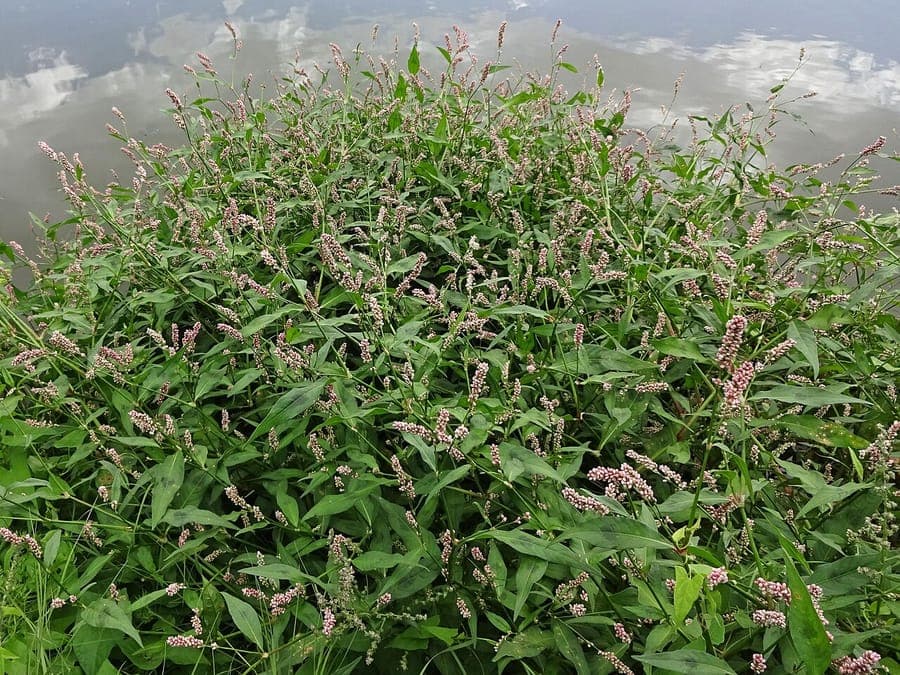
Original: Andrey Zharkikh from Salt Lake City, USADerived: Peter Coxhead / CC BY-SA 4.0, via Wikimedia Commons
Spotted lady's-thumb: complete guide
Persicaria maculosa
¿Quieres ver Spotted lady's-thumb: complete guide en tu jardín?
1 minuto, sin tarjeta de crédito
Overview
Spotted lady's-thumb (Persicaria maculosa), commonly called Jesusplant, is an annual plant from the knotweed family (Polygonaceae). This distinctive garden plant is renowned for the characteristic dark-red blotch in the centre of many of its leaves - hence the name "maculosa". With its pink flowers and attractive leaf morphology, spotted lady's-thumb is an interesting choice for front gardens and wild corners.
The plant grows rapidly and fulfils an ecological role as a food plant for insects. It is also highly bird-friendly, especially for insectivores that collect butterfly and beetle larvae. Spotted lady's-thumb adds colour and movement to summer borders.
Appearance and Bloom
Spotted lady's-thumb grows to approximately 30-80 centimetres high with slender, branching stems. The stems are green to reddish-tinged, especially as they age. The most characteristic feature is the foliage: elongated to elliptic leaves, approximately 5-12 centimetres long, with many specimens bearing a dark-red to black blotch in the middle.
Flowers appear from August in narrow, upright inflorescences of pink to white. These flowers are small but extremely numerous and remain visible for extended periods. They attract numerous bees and butterflies. The seeds are small, glossy, and brown-black.
Ideal Location
Spotted lady's-thumb thrives best in locations with full sun to partial shade. In shaded environments, the plant becomes taller and leaner. Shelter from strong wind is pleasant, though not essential. The plant can grow both in ground and in containers.
Plant it along borders, in grass-like borders, or in wild garden corners for best effect.
Soil
Spotted lady's-thumb is not particularly fussy and grows on most soils. It has a preference for nutrient-rich, moist soils, but accepts poorer soils equally well. The pH can range from neutral to acidic. Heavy clay can be improved with sand or compost.
In container cultivation, use humus-rich potting soil with good drainage.
Diseño gratis
¿Quieres ver Spotted lady's-thumb: complete guide en tu jardín? Crea un diseño gratis ahora.
Watering
Spotted lady's-thumb loves regularly moist soil without waterlogging. Water during dry spells, especially during hot periods. In containers, water when the top centimetre feels dry. The plant is relatively drought-tolerant once established.
Pruning
Spotted lady's-thumb requires minimal pruning. Remove spent flowers to encourage longer flowering. Trim back straggling stems for a more compact form. At season's end, allow the plant to die back; the seeds naturally shed and reseed themselves the following spring.
Maintenance Calendar
Spring: Sow seeds in April-May or use pre-sown seedlings. Provide adequate water. Summer: Water regularly, especially during drought. Many pollinators will visit. Autumn: Allow seeds to ripen and naturally fall. Seeds from this plant follow next spring. Winter: Plant does not survive. Prepare soil for next crop.
Winter Hardiness
Spotted lady's-thumb is not cold-hardy. It is an annual that dies back in autumn. However, seeds can survive overwintering in soil and spontaneously grow the following spring. This makes it a very reliable annual return plant.
Companion Plants
Spotted lady's-thumb grows beautifully alongside other annual flowers such as sunflowers, cosmos, and zinnias. Combine it with gazanias and calendulas for extra colour contrast. In grass-like borders, it adds texture.
Closing Thoughts
Spotted lady's-thumb is an unappreciated gem that deserves more attention in front gardens. The striking red leaf markings, numerous pink flowers, and effortless care make it a winner. It attracts butterflies and insects and adds biological value. For those who love simple, beautiful flowering plants, this is a perfect choice.
You will find seeds and plants at garden retailers. Visit gardenworld.app for more tips about annual flowers. Enjoy growing this fascinating plant!
¿Quieres ver Spotted lady's-thumb: complete guide en tu jardín? Crea un diseño gratis ahora.
Sube una foto, elige un estilo y obtén un diseño fotorrealista con lista de plantas en menos de un minuto.
Más de 10.000 jardines diseñados
Sin tarjeta de crédito


Plantas similares
Crosby's wild buckwheat: complete guide
Eriogonum crosbyae
Full guide to growing Eriogonum crosbyae: ideal site, soil, watering, winter hardiness and companion plants for this rare western wild buckwheat.
Spreading buckwheat: complete guide
Eriogonum effusum
Full guide to growing Eriogonum effusum: ideal site, soil, watering, winter hardiness and companion plants for this prairie subshrub from the American West.
Tall woolly buckwheat: complete guide
Eriogonum elatum
Full guide to Eriogonum elatum: siting, soil, watering, pruning and companion plants for this elegant white-flowered buckwheat from the western United States.