
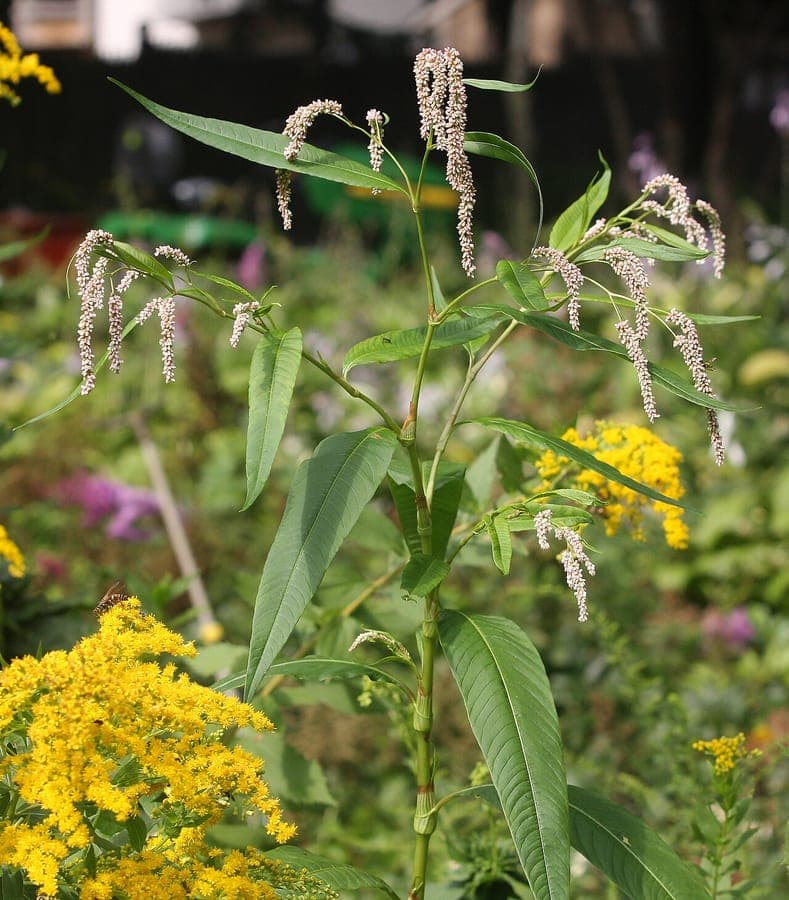
Hardyplants at English Wikipedia / Public domain, via Wikimedia Commons
Pale knotweed: complete guide
Persicaria lapathifolia
¿Quieres ver Pale knotweed: complete guide en tu jardín?
1 minuto, sin tarjeta de crédito
Overview
Pale knotweed (Persicaria lapathifolia) is an annual plant from the knotweed family (Polygonaceae). This robust crop thrives on wet and boggy soils, along ditches and in marshy areas. With its distinctive curled foliage and pink flowers, this plant forms an attractive element in natural gardens.
The plant is exceptionally resilient and adaptable. It tolerates considerable disturbance, germinates rapidly from seed, and is excellent for bird gardens. Pale knotweed is also a food plant for many insects, making it a valuable addition to ecological gardens.
Appearance and Bloom
Pale knotweed is a substantial plant reaching 30-100 centimetres in height. The stems are green to red and sometimes speckled with dark-red blotches. The leaves are lance-shaped to elliptic, approximately 5-15 centimetres long, with distinct curling or wrinkling that explains the common name.
Flowers appear from July through October in striking, dense spikes that are pink to white. These spikes extend vertically and are highly visible. Following bloom, small glossy seeds develop and are easily dispersed by wind and water.
Ideal Location
Pale knotweed thrives optimally in full sun to partial shade. The plant can grow in full shade but becomes more straggly. Position it in wet, boggy locations where water stagnates. Along pond edges, ditches, and in wetlands, this plant is ideal.
The plant tolerates both acidic and neutral soils. It also flourishes on highly nutrient-rich soils, making it suitable for land restoration and ecological management.
Soil
Pale knotweed is distinctive; it grows on nearly all soils provided they contain sufficient moisture. Heavy clay soils, silty substrates, and muddy banks are all suitable. Even nutrient-rich, contaminated soils can still support this plant.
For improved growth, add compost, but this is not essential. The plant germinates from almost any scenario when conditions are moist.
Diseño gratis
¿Quieres ver Pale knotweed: complete guide en tu jardín? Crea un diseño gratis ahora.
Watering
Pale knotweed demands consistently moist conditions. Keep soil regularly moist throughout the growing season. During extremely dry periods, supplemental water may be provided, but this plant actually prefers boggy standing water.
The plant can adapt to periodic flooding, making it ideal for water margins and low-lying areas.
Pruning
Pale knotweed requires very little pruning. Remove spent flowers and damaged branches as needed. At season's end, you may mow the entire plant or allow it to die back and use as mulch. This adds organic matter to the soil.
Maintenance Calendar
Spring: Sow seeds in April-May or allow natural germination from previous year. Check soil moisture. Summer: Water as needed for boggy conditions. Allow flowering plants to flourish for pollinators. Autumn: Seed ripens and naturally sheds. Remove dead plant material or leave for winter feeding. Winter: Plant does not survive; seeds overwinter in soil.
Winter Hardiness
Pale knotweed is not cold-hardy. It is an annual that dies back in autumn. However, seeds can remain in soil and naturally regenerate the following spring, making it a highly reliable returning plant.
Companion Plants
Pale knotweed grows beautifully with other waterside plants such as water mint, reed canary grass, and watertorkruid. This combined effect attracts insects and birds. The combination creates a complete, natural aquatic ecosystem.
Closing Thoughts
Pale knotweed is an incredibly valuable plant for wet gardens and nature management. Its effortless care, rapid growth, and ecological benefits make it unmatched. With distinctive curled foliage and pink flowers, it brings something special to any water-rich garden.
You will find seed and plants at major garden retailers. For additional information about wetland plants, visit gardenworld.app. Enjoy discovering this remarkable plant!
¿Quieres ver Pale knotweed: complete guide en tu jardín? Crea un diseño gratis ahora.
Sube una foto, elige un estilo y obtén un diseño fotorrealista con lista de plantas en menos de un minuto.
Más de 10.000 jardines diseñados
Sin tarjeta de crédito


Plantas similares
Crosby's wild buckwheat: complete guide
Eriogonum crosbyae
Full guide to growing Eriogonum crosbyae: ideal site, soil, watering, winter hardiness and companion plants for this rare western wild buckwheat.
Spreading buckwheat: complete guide
Eriogonum effusum
Full guide to growing Eriogonum effusum: ideal site, soil, watering, winter hardiness and companion plants for this prairie subshrub from the American West.
Tall woolly buckwheat: complete guide
Eriogonum elatum
Full guide to Eriogonum elatum: siting, soil, watering, pruning and companion plants for this elegant white-flowered buckwheat from the western United States.