
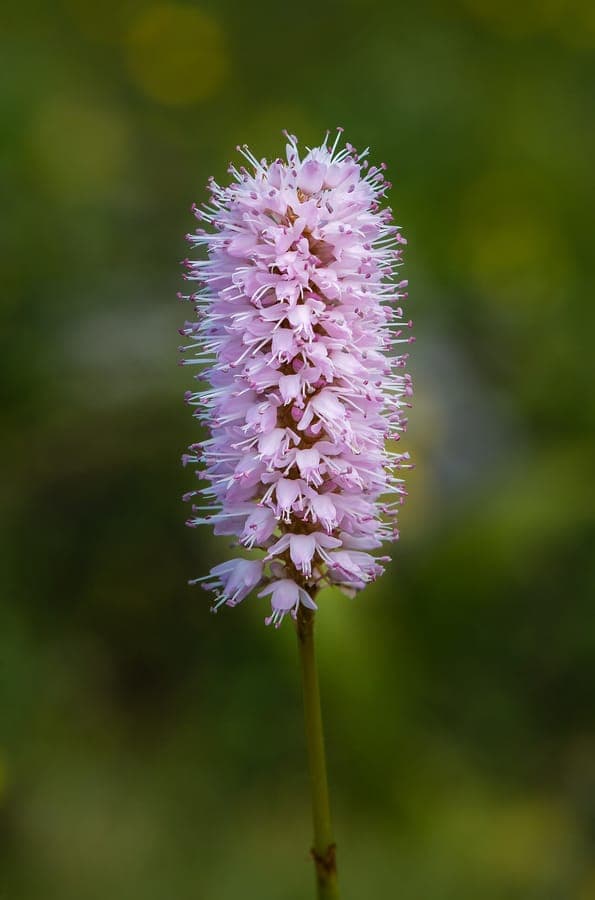
Uoaei1 / CC BY-SA 3.0, via Wikimedia Commons
Persicaria bistorta: complete guide
Persicaria bistorta
¿Quieres ver Persicaria bistorta: complete guide en tu jardín?
1 minuto, sin tarjeta de crédito
Overview
Persicaria bistorta, commonly known as Common Bistort or Snakeweed, is a versatile meadow plant in the Polygonaceae family. This plant grows naturally on damp mountain meadows, marshes and waterside areas throughout Europe into Asia. With characteristic pink to purple flower spikes and attractive foliage, Common Bistort is a reliable choice for damp borders, water gardens and natural garden areas.
This is a highly adaptable plant thriving in many different environments. From wet marshes to dry hillsides, from full sun to half shade, Common Bistort succeeds almost anywhere. This makes it an excellent choice for gardeners wanting low maintenance.
Appearance and Bloom
Persicaria bistorta forms strong clumps of oblong-oval leaves with distinct, reddish-brown markings on foliage - hence the name "bistorta" (twice twisted). The leaf is glossy, green, with striking red vein marking. The leaf stalks are red-yellow.
From May to August (and sometimes longer), compact, cylindrical flower spikes of 3-5 cm long appear, usually pink to purple-pink, sometimes nearly white. These spikes are highly attractive to bees and butterflies. After blooming, small, dark seed pods form. The plant reaches 40-80 cm height and gradually spreads into sturdy clumps.
Ideal Location
Common Bistort grows in full sun to full shade, though it will bloom most in full sun. Ideal situations:
- Damp borders and percolation zones
- Waterside areas of ponds and streams
- Marshes and bog gardens
- Natural gardens and roadsides
- Half-shade beneath trees
- Mountain meadow simulations
The plant prefers moist soil, but can tolerate reasonably dry periods once established.
Soil
Persicaria bistorta grows in virtually all soil types, but prefers moist, organic-rich soil. Ideal growing conditions:
- Moist to marshy soil
- Organic material (compost, leaf mold) incorporated
- Neutral to slightly acidic pH (5.5-7.0)
- In dry gardens: add compost and water-retaining materials
- In waterside areas: plant directly in wet soil
The plant is highly forgiving and grows even in poor, heavy clay soils if moist.
Diseño gratis
¿Quieres ver Persicaria bistorta: complete guide en tu jardín? Crea un diseño gratis ahora.
Watering
Common Bistort needs abundant water, especially during growth period. Regular watering is essential for best results.
Guideline:
- Growth period (April-October): Water regularly, keep soil moist
- Sunny locations: Give more water, especially in dry periods
- Shaded locations: Less water needed
- After bloom: Water can be less, but don't let it dry
- In water gardens: Plant can grow permanently in shallow water
- Winter: Minimal water needed
Common Bistort is one of few garden plants that can handle structurally wet soil. This is its strength.
Pruning
Common Bistort requires minimal pruning. Simply:
- Remove dead leaves in early spring
- Cut off spent flower spikes for neater appearance and possible second bloom
- After first night frost, stems may die back - this is normal
- To prevent explosive growth: cut stems halfway through after bloom
Maintenance Calendar
Spring (March-April): Plant awakens, water, feed for growth, remove dead parts. Summer (May-July): Enjoy bloom, cut spent spikes, water regularly. Autumn (August-October): Plants withdraw, less water, allow seed formation. Winter (November-February): Rest period, minimal water, plant protected underground.
Winter Hardiness
Persicaria bistorta is very hardy to zone 4 (-34°C). The plant overwinters easily and tolerates all Dutch and German winters without protection. Snow and frost pose no problem.
Winter care:
- No special protection needed
- Good drainage against prolonged wet winters
- Plant returns naturally in spring
Companion Plants
Common Bistort combines beautifully with:
- Other water plants: Lysichiton (Skunk cabbage), Rodgersia, Gunnera
- Waterside plants: Iris, Astilbe, Hosta, Filipendula
- Full-shade partners: Helleborus, Epimedium, Pulmonaria
- Shrubs: Cornus alba, Sambucus
- Specimen: Can also work beautifully as solo planting
Closing
Persicaria bistorta is an incredibly versatile, reliable plant for virtually any damp-group situation in the garden. With regular water and organic material, Common Bistort grows gratefully and continuously during growing season. The plant is ideal for gardeners wanting something robust and reliable requiring little maintenance. You'll find ornamental water plants regularly at garden centers.
Common Bistort deserves place in every gardener's garden, especially if you have damp, marshy or waterside areas. This is a plant you plant, forget, and it does well.
Visit gardenworld.app for more plant overviews and ideas on how to use this versatile plant in your garden design, water feature or natural garden.
¿Quieres ver Persicaria bistorta: complete guide en tu jardín? Crea un diseño gratis ahora.
Sube una foto, elige un estilo y obtén un diseño fotorrealista con lista de plantas en menos de un minuto.
Sin tarjeta de crédito


Plantas similares
Crosby's wild buckwheat: complete guide
Eriogonum crosbyae
Full guide to growing Eriogonum crosbyae: ideal site, soil, watering, winter hardiness and companion plants for this rare western wild buckwheat.
Spreading buckwheat: complete guide
Eriogonum effusum
Full guide to growing Eriogonum effusum: ideal site, soil, watering, winter hardiness and companion plants for this prairie subshrub from the American West.
Tall woolly buckwheat: complete guide
Eriogonum elatum
Full guide to Eriogonum elatum: siting, soil, watering, pruning and companion plants for this elegant white-flowered buckwheat from the western United States.