
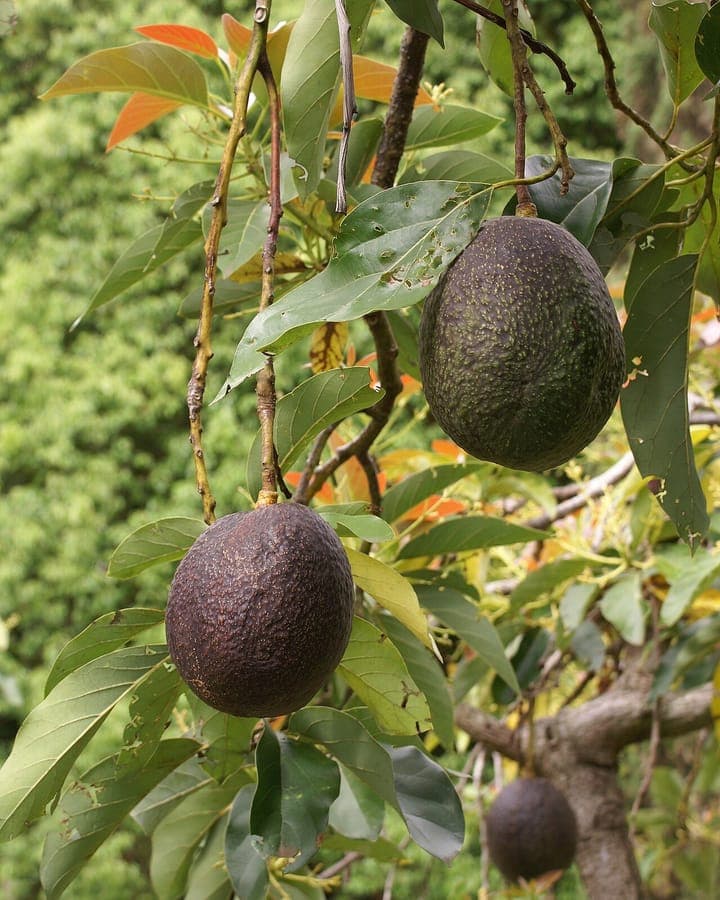
B.navez / CC BY-SA 3.0, via Wikimedia Commons
Avocado: complete guide
Persea americana
¿Quieres ver Avocado: complete guide en tu jardín?
1 minuto, sin tarjeta de crédito
Overview
The avocado (Persea americana) is a tropical fruit tree originating from Mexico and Central America. This tree is known for its nutritious fruit full of healthy fats and vitamins. Growing an avocado tree offers not only a beautiful green plant but also the opportunity to harvest your own organic avocados.
Although avocados are naturally at home in subtropical climates, they can grow in temperate climates in greenhouses or sunny indoor locations. This is a rewarding plant for patient gardeners.
Appearance and Bloom
Avocado trees can grow up to 20 meters tall in their natural habitat, but usually 4-6 meters in gardens. The leaves are large, glossy green and lance-shaped. They are persistent (stay on the tree in winter) and provide foliage year-round.
The flowers are small, inconspicuous yellow-green flowers that appear in clusters. They give way to the familiar pear-like fruits that are green and yellow-green when ripe. The fruits contain a large seed and creamy flesh.
Ideal Location
Avocado trees need at least 6-8 hours of direct sunlight daily. In the UK, a protected, sunny location is needed, preferably against a warm wall or in a greenhouse. The tree is frost-sensitive and cannot tolerate temperatures below -3 degrees Celsius.
In subtropical areas, avocado trees can be planted outdoors in full sun. The tree needs protection from strong winds, as heavy fruits can break branches.
Soil
Avocado trees thrive in nutrient-rich, well-draining soil. The pH should be between 5.5 and 7.0. Heavy clay soil should be improved with sand and organic material. Good drainage is essential as the tree doesn't like wet feet.
Add compost or leaf mold and provide a mulch layer to improve moisture retention.
Diseño gratis
¿Quieres ver Avocado: complete guide en tu jardín? Crea un diseño gratis ahora.
Watering
Avocado trees need regular watering, especially during growth and fruit production periods. Keep the soil moist but not waterlogged. Daily watering may be needed in dry periods. Water less in winter.
Excess water causes foot rot and root rot. Ensure good drainage and allow excess water to drain.
Pruning
Avocado trees don't need much pruning. Remove dead or damaged branches and shape the tree as desired. Regular pruning stimulates branching and creates a fuller tree. Pinch off the top when the plant is small to encourage side growth.
Overgrown branches can be pruned to maintain shape.
Maintenance Calendar
Spring: Start regular feeding with nitrogen-rich fertilizer. Begin increasing watering. Summer: Keep soil moist, feed every 4 weeks. Fall: Gradually reduce feeding and watering. Winter: Minimal care, no feeding.
Winter Hardiness
Avocado trees are not winter hardy in temperate climates. They cannot tolerate temperatures below -3 degrees Celsius. In frost-prone areas, trees must be kept indoors or in a greenhouse. Young trees are more frost-sensitive than older specimens.
Companion Plants
Avocado trees can be self-pollinating but produce more fruit with two different varieties. Other tropical trees like mango or fig can grow well together. Underplant with herbs like basil.
Closing
Growing avocados is a patient and rewarding project. Whether you work in a greenhouse or on a sunny windowsill, this fruit tree will bring you enjoyment for years. Visit gardenworld.app/en for more garden inspiration. Discover more fruit trees for your garden at gardenworld.app/en.
¿Quieres ver Avocado: complete guide en tu jardín? Crea un diseño gratis ahora.
Sube una foto, elige un estilo y obtén un diseño fotorrealista con lista de plantas en menos de un minuto.
Más de 10.000 jardines diseñados
Sin tarjeta de crédito


Plantas similares
Ocotea floribunda: complete guide
Ocotea floribunda
All about Ocotea floribunda, a tropical laurel tree from Central and South America: growing in temperate climates, containers, pruning, and care in greenhouses.
Redbay: complete guide
Persea borbonia
A full guide to redbay (Persea borbonia), a fragrant evergreen tree native to the southeastern United States, related to avocado and laurel.
Swamp bay: complete guide
Persea palustris
A full guide to swamp bay (Persea palustris), an evergreen tree native to the wetlands and coastal swamps of the southeastern United States.