
Wikimedia Commons / Public domain, via Wikimedia Commons
Periploca graeca: complete guide
Periploca graeca
¿Quieres ver Periploca graeca: complete guide en tu jardín?
1 minuto, sin tarjeta de crédito
Overview
Periploca graeca, known as Grecian silkvine or simply silkvine, is an elegant, woody climbing plant originating from southern and eastern Europe through northern Iran. This plant grows wild on rocky cliffs, forest edges, and other natural habitats of the Mediterranean region through Central Asia. The name 'periploca' refers to the winding growth habit of the plant, while 'graeca' indicates its Greek origin.
This is a classic climbing plant that has been cultivated in European gardens for centuries. The plant produces small but highly elegant flowers with a characteristic crown of purple-blue color. The plant grows quickly and can create dense coverage of walls, pergolas, and fences. It is a favorite for gardeners seeking a hardy, frost-tolerant climbing plant.
Appearance and bloom
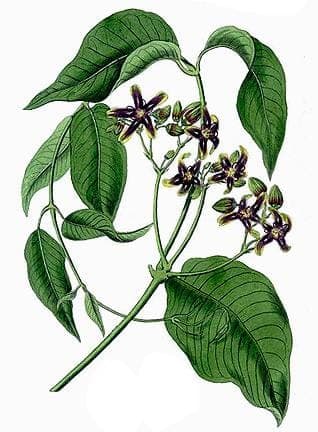
Periploca graeca grows as a woody vine that can reach 5-10 meters in length under ideal conditions. The leaves are opposite, lanceolate (linear), approximately 4-8 centimeters long, with a dark green glossy surface. In autumn, the leaves can turn yellow before falling.
The flowers are the highlight of this plant. They are approximately 1.5-2 centimeters in diameter and form small clusters. The characteristic color is pale yellow with dark purple or blue accents on the crown of stamens. These unique flowers are highly attractive to insects, especially bees. The flowering period is May through August with peak activity in June-July.
After flowering, narrow, elongated pods (3-8 centimeters) form containing seeds.
Ideal location
Periploca graeca grows best in sunny to lightly shaded spots with at least 4-6 hours of direct sunlight daily. The plant can also grow in significant shade but will flower less abundantly. A south- to west-facing warm surface is ideal.
The plant is well-suited to sheltered gardens but can also be moderately wind-resistant once well-established. Avoid very windy or very cold-sensitive locations.
Soil
Periploca graeca is very tolerant of diverse soil types. The plant grows well in dry to moderately moist soils, sandy, clay, and loamy grounds. The pH can range from acidic to alkaline (pH 6.0-7.5 is ideal). The plant can also grow on poor soils but grows faster on well-prepared soils with moderate organic material.
Ensure good drainage; the plant cannot tolerate very wet soils for extended periods.
Diseño gratis
¿Quieres ver Periploca graeca: complete guide en tu jardín? Crea un diseño gratis ahora.
Watering
Once well-established, Periploca graeca is relatively drought-tolerant and requires little additional water. However, during the first growing season and in very dry conditions, regular watering should be given.
In rainy regions, additional water is usually not needed. In dry periods, you can skip watering for months, but water during the growing season (May-August) can stimulate growth and flowering.
Pruning
Pruning is important for maintaining shape and limiting growth. Prune the plant after the flowering period (August-September). This also helps form new flowering shoots for the following year. You can shorten side shoots mid-season for more branching.
In spring (February-March), you can also remove dead or frost-damaged parts. Avoid drastic pruning in autumn in very cold regions.
Maintenance calendar
In winter, maintenance work is minimal. The plant may prefer dormancy.
In spring (April), you can gently remove dead material.
During the growing season (May-August), you can perform regular watering and pruning as needed.
After flowering (September), it is the ideal time for shape pruning.
Winter hardiness
Periploca graeca is highly winter-hardy and can tolerate temperatures down to -15°C (5°F), making it suitable for USDA zones 5-10. This is a significant advantage for Northern European gardeners. Frost damage is minimal in temperate climates.
The plant can, however, be sensitive to severe frost shocks (sudden freezing after warm weather). Mulching can help in very cold regions.
Companion plants
Periploca graeca combines well with other classic climbing plants such as clematis and ivy. The plant also works well with underplantings such as creeping thyme and other ground cover plants.
The plant is also suitable as a solitary climbing plant on walls and pergolas.
Conclusion
Periploca graeca is an unparalleled choice for those seeking a frost-hardy, classic climbing plant with elegant flowers and minimal maintenance requirements. The plant is ideal for Northern and Central European gardens where many other subtropical climbing plants cannot survive. The elegant flowers and slender growth habit make this a valuable element in any garden design.
Want to discover more classic plant choices? Visit gardenworld.app for personalized garden designs adapted to your climate and growing conditions.
¿Quieres ver Periploca graeca: complete guide en tu jardín? Crea un diseño gratis ahora.
Sube una foto, elige un estilo y obtén un diseño fotorrealista con lista de plantas en menos de un minuto.
Más de 10.000 jardines diseñados
Sin tarjeta de crédito


Plantas similares
Asclepias speciosa: complete guide
Asclepias speciosa
Showy milkweed: striking pink-white flowers, fragrant blooms. Essential monarch butterfly host plant.
Plumeria obtusa: complete guide
Plumeria obtusa
Discover the Singapore graveyard flower: an exotic evergreen with mesmerizing white blooms and exquisite fragrance. Expert cultivation, care, and maintenance tips.
Wrightia arborea: complete guide
Wrightia arborea
Wrightia arborea, known as doodhi, is an elegant tree from South Asia with delicate white flowers. Discover how to cultivate this exotic plant.