
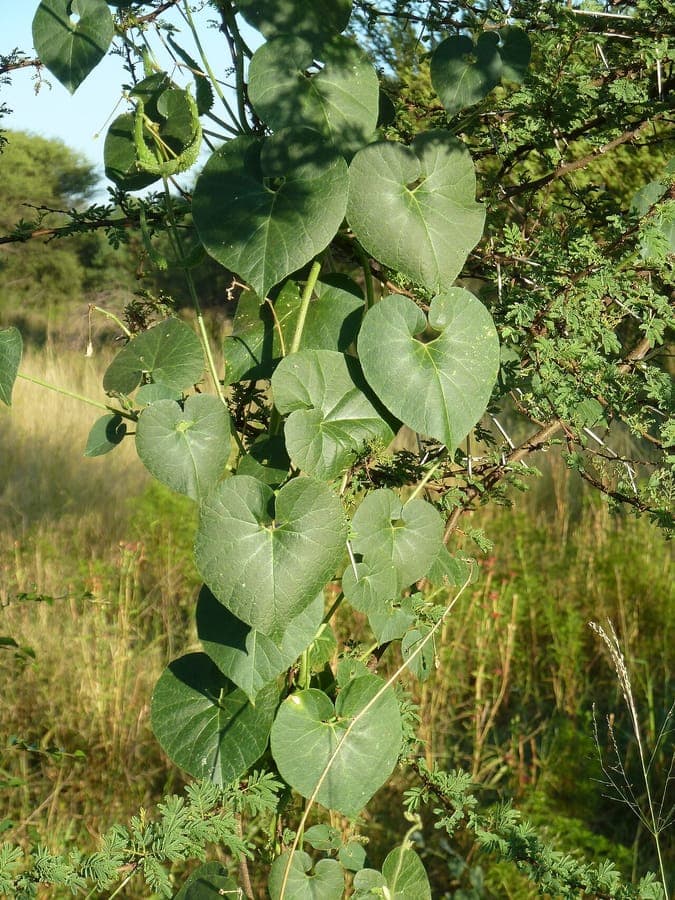
JMK / CC BY-SA 3.0, via Wikimedia Commons
Pergularia daemia: complete guide
Pergularia daemia
¿Quieres ver Pergularia daemia: complete guide en tu jardín?
1 minuto, sin tarjeta de crédito
Overview
Pergularia daemia, also known as Trellis-vine, is a fascinating tropical and subtropical climbing plant from Africa and Asia. This plant belongs to the Apocynaceae family, the same family as Asclepias (milkweed).
The name "Pergularia" refers to pergolas that this climbing plant loves to twine around. The plant is valued for its pleasant fragrance, interesting seed pods, and its climbing growth habit. It is an excellent choice for gardeners who want to grow exotic, climate-adapted plants.
Appearance and bloom
Pergularia daemia is a vigorous climbing plant that can grow 3-4 meters long in ideal conditions. The stems are slender and flexible, providing perfect attachment opportunities to supports.
The flowers are the main feature: they are small, about 1 centimeter in diameter, but very fragrant. The flower is yellow to yellow-orange in color and has a unique honeycomb texture. The flowers appear in clusters along the stems.
After flowering, distinctive, elongated seed pods develop that can reach 5-10 centimeters in length. These pods have a ribbed structure and contain numerous seeds with silky hairs, adding an interesting biological element.
The leaves are lance-shaped, slightly hairy, and have a pleasant scent when crushed. They are 5-10 centimeters long and give the plant a fine texture.
Ideal location
Pergularia daemia thrives best in warm, sunny locations with at least 6-8 hours of direct sunlight daily. The plant loves warmth and grows slowly in cool conditions.
This climbing plant is ideal for pergolas, fences, trellises, and walls where it can elegantly wind. In tropical and subtropical gardens, it can grow permanently outdoors. In temperate zones, it can be grown in containers and brought indoors in winter.
The plant works well in coastal areas and has some salt tolerance. It can also tolerate harsh wind conditions, though shelter is beneficial.
Soil
Pergularia daemia is not fussy about soil type, but thrives best in well-draining, slightly sandy soil with organic matter. It can grow in relatively poor soil, but responds well to feeding.
Add compost or organic matter to the planting hole. For container growing, use general potting soil with perlite addition for drainage. The plant can tolerate acidic to neutral pH.
Diseño gratis
¿Quieres ver Pergularia daemia: complete guide en tu jardín? Crea un diseño gratis ahora.
Watering
Once established, Pergularia daemia is fairly drought-tolerant, though regular water promotes growth. Water regularly during the growing and flowering season, allowing the soil to dry slightly between waterings.
In winter, when growth slows, give much less water. The plant can endure short dry spells. In very hot climates, daily watering can be beneficial.
Water at the base of the plant, not over the foliage, to prevent fungal disease.
Pruning
Pruning is used to control growth pattern and encourage compact growth. In early spring, long vines can be cut back drastically. This stimulates branching and more flowering.
Remove dead or damaged stems annually. Excess growth can be removed during the growing season.
Maintenance calendar
Spring: Begin watering as temperatures rise. Prune back for shape. Start applying fertilizer with a low-salt program.
Summer: Water regularly. Enjoy fragrant flowers and interesting seed pods. Add support as needed.
Fall: Gradually reduce watering as temperatures drop. Harvest seed pods before they fall.
Winter: Give minimal water. In subtropical climates, growth may continue. In temperate zones, bring indoors before frost threatens.
Winter hardiness
Pergularia daemia is not hardy in frosty climates. It dies back at temperatures below approximately 5 degrees Celsius. The plant is best suited for tropical and subtropical climates (zones 10-11).
In temperate zones, it can only be grown as a container plant. Bring it indoors before frost threatens.
Companion plants
Pergularia daemia combines well with other tropical and subtropical climbing plants:
- Jasminum (Jasmine) for double fragrance
- Passiflora (Passionflower) for dramatic bloom
- Clematis for textural difference
- Bougainvillea for color contrast
- Ipomoea (Morning glory) for full coverage
These combinations create an exotic, fragrant pergola or fence.
Closing thoughts
Pergularia daemia is a unique climbing plant that gives gardens an exotic atmosphere. With its fragrant flowers and interesting seed pods, it offers much visual appeal. It is ideal for warm-climate gardeners or as a container plant in temperate zones. Visit gardenworld.app for advice on tropical garden designs and climbing plants.
Seeds can be purchased from specialized tropical plant nurseries. Young plants are available at garden centers in warm climates.
¿Quieres ver Pergularia daemia: complete guide en tu jardín? Crea un diseño gratis ahora.
Sube una foto, elige un estilo y obtén un diseño fotorrealista con lista de plantas en menos de un minuto.
Más de 10.000 jardines diseñados
Sin tarjeta de crédito


Plantas similares
Asclepias speciosa: complete guide
Asclepias speciosa
Showy milkweed: striking pink-white flowers, fragrant blooms. Essential monarch butterfly host plant.
Plumeria obtusa: complete guide
Plumeria obtusa
Discover the Singapore graveyard flower: an exotic evergreen with mesmerizing white blooms and exquisite fragrance. Expert cultivation, care, and maintenance tips.
Wrightia arborea: complete guide
Wrightia arborea
Wrightia arborea, known as doodhi, is an elegant tree from South Asia with delicate white flowers. Discover how to cultivate this exotic plant.