
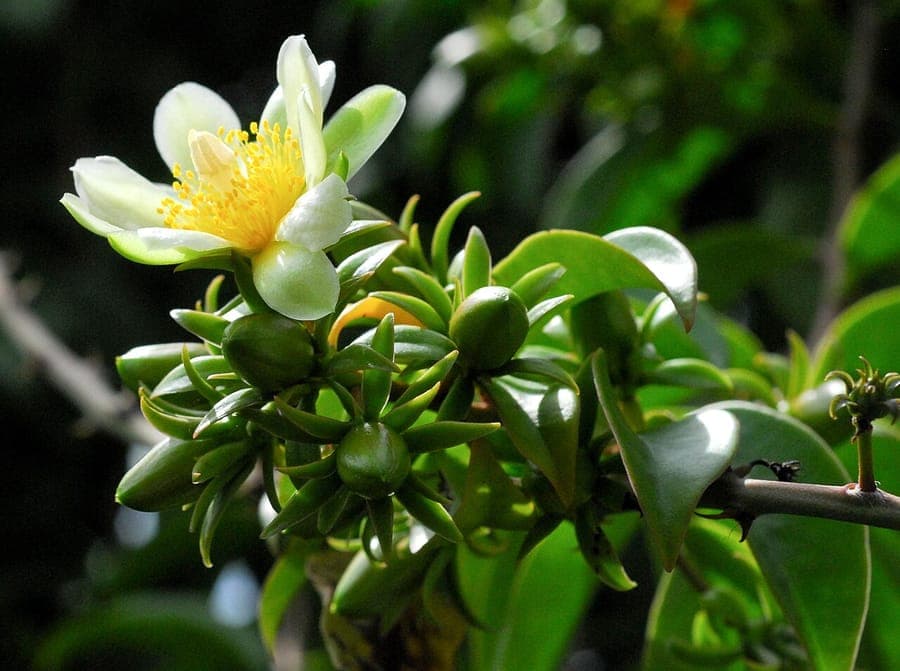
Pereskia_aculeata4.jpg: Kauderwelsch derivative work: Peter coxhead (talk) / CC BY-SA 3.0, via Wikimedia Commons
Leaf cactus: complete guide
Pereskia aculeata
¿Quieres ver Leaf cactus: complete guide en tu jardín?
1 minuto, sin tarjeta de crédito
Overview
Pereskia aculeata, better known as leaf cactus, Barbados gooseberry, or lemonvine, is a unique Latin American cactus that distinguishes itself by having real leaves instead of only spines. This primitive cactus member grows as a climbing plant and produces small edible fruits. It is a fascinating addition to warm gardens and can also be cultivated as a container plant.
Appearance and bloom
Pereskia aculeata grows as a vigorous, thin climber with sharp spines along the stems. The leaves are green, glossy, approximately 2-5 centimeters long. The plant produces creamy to pink flowers in clusters during the growing period. After the flowers follow small orange to red berries that are edible (sour in taste). This unique character makes this cactus fascinating for collectors.
Ideal location
Give the leaf cactus a warm location with plenty of sun. Plant it against a wall, pergola, or other support where it can spread. Protect from strong wind. In warm climates (zones 9-11), it can grow permanently outdoors. In colder areas, it must be kept in a greenhouse or indoors during winter.
Soil
Excellent drainage is essential. Cactus potting soil or a mixture of garden soil with gravel and sand works best. pH can range from 6.0 to 8.0. Ensure water does not accumulate; roots rot quickly in wet conditions.
Watering
During the growing period (spring-summer), water regularly but let the soil dry somewhat between waterings. Use water carefully - excess is the problem. In winter, keep almost dry. If you overwinter the plant indoors, give minimal water.
Diseño gratis
¿Quieres ver Leaf cactus: complete guide en tu jardín? Crea un diseño gratis ahora.
Pruning
Pruning can be done to maintain shape and limit growth. Prune after the blooming period (August-September). The plant grows quickly, so monthly inspections and adjustments help. Remove damaged parts immediately.
Maintenance calendar
April-May: Growth begins, normal watering, start feeding. June-July: Bloom, regular feeding (monthly), normal water. August-September: Bloom ends, reduce feeding, reduce water somewhat. October-March: Rest period, very little water, no feeding, frost protection.
Winter hardiness
Pereskia aculeata is not winter hardy. Temperatures below 5-10 degrees cause damage. In zone 9+, it can overwinter outdoors with protection. In colder regions, it must come indoors for winter or be treated as an annual plant. Even in a greenhouse, you must prevent frost danger.
Companion plants
Combine with other heat-loving plants and other cacti. As a container plant, beautiful in a mix with succulents and other drought-tolerant species. Ensure neighbors have the same water preferences.
Closing
The leaf cactus is for plant enthusiasts who want something unusual. With proper care - warmth, drainage, sun - it grows prosperously and blooms annually. Its edible fruits and attractive climbing growth make it special. Seek starting material from specialized cactus nurseries. For warm garden designs with exotic plants, check gardenworld.app.
Visit gardenworld.app for warm garden designs with exotic plants.
¿Quieres ver Leaf cactus: complete guide en tu jardín? Crea un diseño gratis ahora.
Sube una foto, elige un estilo y obtén un diseño fotorrealista con lista de plantas en menos de un minuto.
Más de 10.000 jardines diseñados
Sin tarjeta de crédito


Plantas similares
Plains prickly pear: complete guide
Opuntia polyacantha
All about plains prickly pear cactus: hardiness, soil, placement and care. One of the most cold-tolerant cacti for temperate gardens.
Saguaro: complete guide
Carnegiea gigantea
Everything about growing saguaro cactus: container care, watering, overwintering, and companion plants for this iconic desert giant.
Cylindropuntia imbricata: complete guide
Cylindropuntia imbricata
The Tree Cholla offers distinctive segmented stems and vibrant red flowers. A unique ornamental succulent perfect for sunny, dry gardens and large containers.