
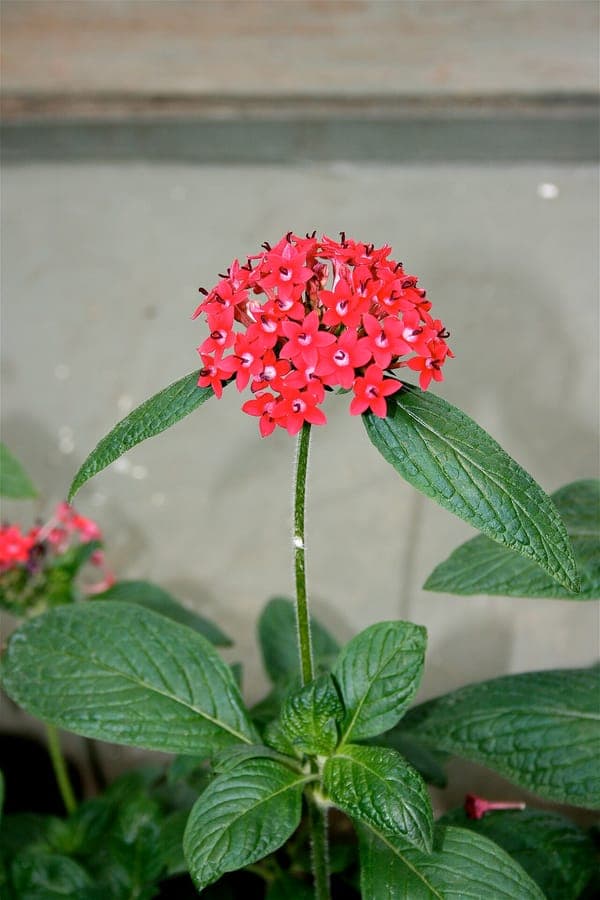
Cody Hough / CC BY-SA 3.0, via Wikimedia Commons
Egyptian star-cluster: complete guide
Pentas lanceolata
¿Quieres ver Egyptian star-cluster: complete guide en tu jardín?
1 minuto, sin tarjeta de crédito
Overview
Pentas lanceolata, better known as Egyptian star-cluster or pentas, is a tropical shrub from Africa that has become an enthusiastic garden favorite worldwide. With its continuous, vibrant flower clusters in bright red and other colors, it attracts butterflies and bees. This plant blooms from May to October, making it a valuable addition to summer gardens.
Appearance and bloom
Pentas lanceolata grows as a vigorous shrub to about 60 centimeters to 1 meter tall. The plant has glossy, green lance-shaped leaves. The real highlight is the flowers: small, five-pointed stars in red, pink, white, or bicolor, arranged in dense, rounded clusters. These flowers bloom continuously from May to first frost. The plant constantly attracts butterflies, bees, and hummingbirds.
Ideal location
Pentas want full sun - at least 6-8 hours of direct sunlight per day for optimal blooming. In very warm climates, afternoon partial shade can be pleasant. Ensure well-ventilated locations, as stagnant air can cause mold.
Soil
Well-draining, fertile soil is ideal. Add plenty of compost or humus when planting. A mixture of garden soil, compost, and some sand gives excellent results. The plant thrives in slightly acidic to neutral pH (6 to 7.5). Ensure good drainage but maintain nutrition levels.
Watering
Pentas need regular watering, especially in warm months. Keep soil evenly moist but not waterlogged. In extremely warm periods, watering possibly twice daily. In cold months (October-April), significantly reduce water. Check moisture daily in hot weeks.
Diseño gratis
¿Quieres ver Egyptian star-cluster: complete guide en tu jardín? Crea un diseño gratis ahora.
Pruning
Regular pinching promotes denser growth. Pinch young plants back around 10-15 centimeters in height. In summer, light pruning of overlapping shoots prevents them. In fall, after blooming season, aggressive pruning back brings more flowers next season. Remove dead flowers regularly.
Maintenance calendar
April-May: Plant adjustment, light watering, start feeding slowly. June-August: Full bloom, weekly feeding (liquid feeding is better), intense watering. September-October: Bloom slowly decreases, feed less, gradually reduce water. November-March: Rest period, little water (prevent drying only), no feeding, frost protection.
Winter hardiness
Pentas are tropical plants and tolerate no frost. In zones 10 and warmer, they can overwinter outdoors. In colder regions, they must go indoors during winter or be treated as annual plants. Temperatures below 10 degrees can cause damage. Protect from wind that can desiccate.
Companion plants
Combine pentas with other summer bloomers such as coneflower, Mexican sunflowers, or salvia. At the base, you can place low summer bloomers. Red pentas combine beautifully with purple or white bloomers.
Closing
The Egyptian star-cluster is a simple, reliable plant for those who want continuous, brightly-colored blooms. With minimal care - water, sun, feeding - it blooms non-stop all summer. Buy healthy plants in May. Plant them in full sun locations and enjoy months of butterfly visitors. For complete garden design with summer bloomers, check gardenworld.app.
Visit gardenworld.app for complete garden design with summer bloomers.
¿Quieres ver Egyptian star-cluster: complete guide en tu jardín? Crea un diseño gratis ahora.
Sube una foto, elige un estilo y obtén un diseño fotorrealista con lista de plantas en menos de un minuto.
Más de 10.000 jardines diseñados
Sin tarjeta de crédito


Plantas similares
Oregon bedstraw: complete guide
Galium oreganum
Everything about Oregon bedstraw (Galium oreganum): shade planting, soil requirements, care and use as a low groundcover in woodland and shade gardens.
Awned woodruff: complete guide
Asperula aristata
Full guide to growing Asperula aristata, the awned woodruff: sunny location, alkaline soil, minimal watering, and companion plants for dry or rock gardens.
Purple woodruff: complete guide
Asperula purpurea
Full guide to Asperula purpurea, purple woodruff: sunny sites, chalky soil, watering, pruning, winter hardiness and companion plants for rock and dry gardens.