
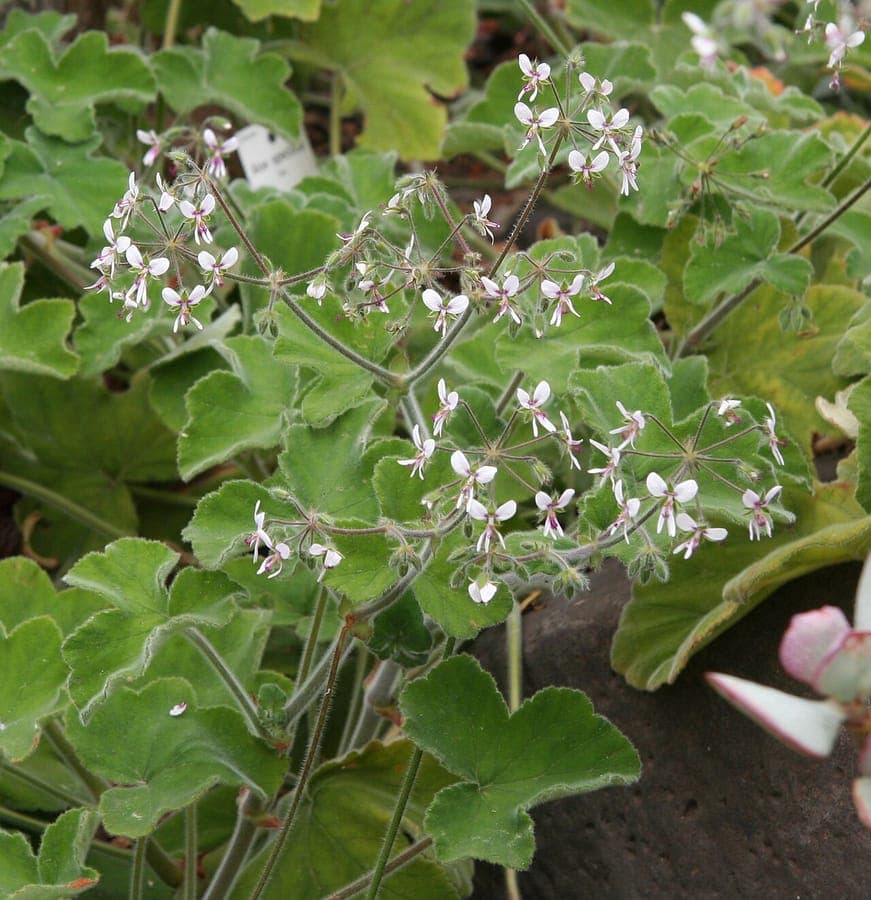
Michael Wolf / CC BY-SA 3.0, via Wikimedia Commons
Pelargonium tomentosum: complete guide
Pelargonium tomentosum
¿Quieres ver Pelargonium tomentosum: complete guide en tu jardín?
1 minuto, sin tarjeta de crédito
Overview
Pelargonium tomentosum, commonly called peppermint-scent geranium or peppermint-scent pelargonium, is a fascinating plant native to the Cape Province of South Africa. Unlike many of its showy, flower-rich relatives, this Pelargonium is primarily prized for its scent and tactile qualities rather than spectacular flowers. The plant belongs to the Geraniaceae family (the same family as garden geraniums) and distinguishes itself through velvety-soft, densely hairy leaves that release an unexpected peppermint-like fragrance when touched.
This plant represents the apothecary use of aromatic Pelargonium species long cultivated in southern Africa. For Dutch enthusiasts of scented plants and sensory garden experiences, this species offers a unique dimension.
Appearance and Bloom
Pelargonium tomentosum is a compact to half-size growing plant, typically 30 to 60 centimeters tall, though it may reach larger dimensions under optimal conditions. The plant forms a dense, rounded mound or dwarf shrub. The most striking feature is the foliage: exceptionally large for a potted specimen, often 5 to 10 centimeters across, heart-shaped to rounded, deeply serrated or dentate at the margins.
The leaves are clothed in fine hairs that feel softer than velvet. These hairs are producers of the fragrant substance: when you gently stroke the leaf surface, a strong peppermint-like fragrance emerges that also contains hints of wild caraway and herbal notes. This aromatic element makes the plant exceptionally interesting for aromatherapy enthusiasts and those wishing to create fragrant gardens.
The flowers are small, typically white to very pale pink, appearing in clusters during late spring and summer. Though not showy, these blooms add elegance to the plant. The flowering period extends from May through October under favorable conditions.
Ideal Location
Pelargonium tomentosum performs best on warm, sunny sites receiving 4 to 6 hours direct sunlight daily. The plant also tolerates partial shade and thrives on locations with afternoon shade in extremely hot climates. Good air circulation is important: position the plant on sites with gentle air movement, avoiding stagnant, humid corners.
The plant is not winter-hardy in northern Netherlands and requires frost protection. For container culture, the plant can remain outdoors during spring and summer but must winter indoors. In warmer southern Netherlands regions, winter protection might suffice.
The plant requires no rigid support and grows naturally compact without active training.
Soil
Pelargonium tomentosum grows optimally in loose, well-draining potting mix. Standard horticultural potting soil works well, especially when mixed with 20 to 30% sand or perlite for extra drainage. The plant accepts pH ranges of 6.0 to 7.5.
Excellent drainage is essential; waterlogging quickly leads to root rot. Ensure ample drainage holes in containers. Annually refreshing the top layer of potting soil with fresh mix helps maintain structure.
Fertilization is moderately needed. Half-strength feeding monthly during the growing season suffices. Excessive fertilization leads to excessive foliage growth and fragrance may decline.
Watering
Pelargonium tomentosum requires regular watering but tolerates drought better than many potted plants. Allow soil to dry somewhat between waterings; the medium can be drier before watering again. This mimics the natural dry conditions of South Africa.
During winter dormancy, drastically reduce watering. Water only when the top 2 centimeters of potting soil feel completely dry. Excessive moisture in winter causes leaf drop and diseases.
Avoid spraying water directly on the dense foliage, as this promotes fungal problems and can affect fragrance. Soil watering is preferred.
Diseño gratis
¿Quieres ver Pelargonium tomentosum: complete guide en tu jardín? Crea un diseño gratis ahora.
Pruning and Maintenance
Pelargonium tomentosum requires minimal pruning. The plant grows naturally compact without invasive pruning requirements. Simply remove obviously dead leaves and stems as you notice them, and perhaps trim growing tips in early spring to encourage more compact formation.
If the plant becomes too tall, gentle cutting back to approximately half its size in spring helps stimulate compactness. This can also improve flowering production.
Annual inspection for pests and diseases is advisable. Mealybugs can sometimes be problematic in warm, humid conditions.
Maintenance Calendar
JANUARY-MARCH: Dormant period. Minimize watering. Light pruning in March.
APRIL-MAY: Growing season begins. Gradually increase watering. Start monthly half-strength feeding.
JUNE-AUGUST: Peak growth season and flowering. Regular but not excessive watering. Watch for pests.
SEPTEMBER-OCTOBER: Prepare for dormancy. Gradually reduce watering.
NOVEMBER-DECEMBER: Winter time. Minimal watering. Cooler temperatures preferred.
Winter Hardiness
Pelargonium tomentosum is not winter-hardy in Netherlands conditions. Frost will destroy all above-ground growth. The plant must be overwintered indoors in environments with temperatures between 8 and 15 degrees Celsius. A sunny windowsill or well-lit room is ideal.
In very southern Netherlands regions (the mildest winter extremes in Limburg), outdoor overwintering with heavy protection might be attempted, but this is unreliable. Container cultivation with relocation indoors remains most practical.
The plant can continue slow growth through winter if temperature and light are adequate, though growth ceases when temperature falls below 10 degrees.
Companion Plants
Pelargonium tomentosum combines well with other aromatic potted plants such as other Pelargonium species, potted Mentha plants, Rosmarinus (rosemary), and lavender. In garden design, it works beautifully alongside other scented elements to create an aromatic theme.
The plant is compact enough to grow in groups with different aromatic species in larger containers. It forms lovely combinations with visually interesting but neutrally colored plants.
Avoid companions with heavy moisture requirements, as this conflicts with this drought-tolerant species.
Closing Thoughts
Pelargonium tomentosum represents a different approach to gardening: not focused on spectacular flower production, but on sensory experiences. The combination of soft texture and strong, pleasant fragrance makes this plant valuable as an interactive potted specimen that engages the senses and invites intimate care and interaction.
For the Dutch plant enthusiast, this species represents an unexpected botanical discovery that challenges conventional ideas about what garden plants should be. Growing can occur in container culture both indoors and outdoors during summer months. With proper attention to moisture requirements and climate management, one can enjoy years of fragrance and tactile pleasure.
Seek this plant through specialized online retailers or garden centers specializing in aromatic and scented plants. Gardenworld.app also provides inspiration for integrating fragrant elements into garden designs.
¿Quieres ver Pelargonium tomentosum: complete guide en tu jardín? Crea un diseño gratis ahora.
Sube una foto, elige un estilo y obtén un diseño fotorrealista con lista de plantas en menos de un minuto.
Más de 10.000 jardines diseñados
Sin tarjeta de crédito


Plantas similares
Pelargonium acetosum: complete guide
Pelargonium acetosum
Discover the Sorrel-leaf Geranium: a South African plant with aromatic foliage. Perfect for containers and warm locations. Learn cultivation and care.
Erodium foetidum: complete guide
Erodium foetidum
Rock stork's-bill is a delicate alpine plant with purple flowers and fine foliage. Learn how to grow this Mediterranean charmer in your front garden.
Pelargonium crithmifolium: complete guide
Pelargonium crithmifolium
Discover Samphire-leaf pelargonium: an exotic South African geranium with distinctive foliage. Growing tips, care advice and garden inspiration.