
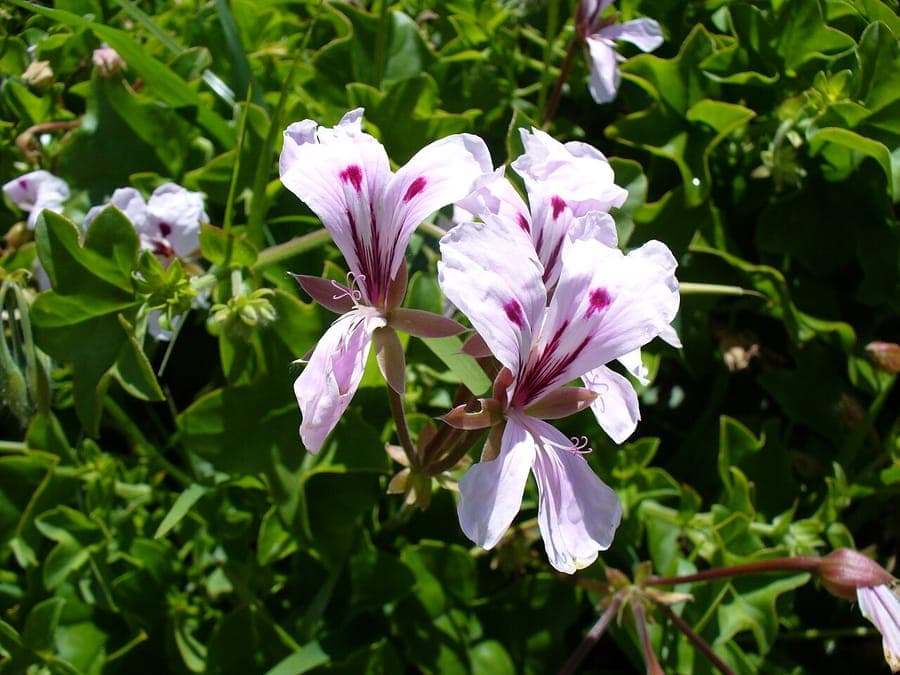
Andrew Massyn / Public domain, via Wikimedia Commons
Ivyleaf geranium: complete guide
Pelargonium peltatum
¿Quieres ver Ivyleaf geranium: complete guide en tu jardín?
1 minuto, sin tarjeta de crédito
Overview
Ivyleaf geranium (Pelargonium peltatum), also known as ivy geranium or ivy-leaf pelargonium, is a very popular hanging plant from the Geraniaceae family. This plant originates from South Africa and is now naturalized in gardens throughout Europe. With its elegant trailing growth habit, long flowering period and preference for sunny locations, ivyleaf geranium is a classic choice for balconies, terraces and hanging baskets.
Appearance and Bloom
Ivyleaf geranium grows as a trailing to creeping plant, typically reaching 30 to 100 centimeters of hanging length. The leaves are small, smooth and have a characteristic shield-shaped form (peltate), hence the scientific name. The flowers are numerous, appearing in rosettes, and range from purple, pink to white, depending on cultivar. Flowering runs from May to October and is very abundant. The plant has graceful trailing foliage and a full cascading form.
Ideal Location
Ivyleaf geranium grows best in locations with at least 6 hours of full sun daily. Full sun gives the most flowers and the most beautifully colored blooms. The plant can grow in light shade but will produce fewer flowers. Plant on balconies, terraces, in hanging baskets or against warm south-facing walls. The plant is perfect for containers and hanging planters.
Soil
Ivyleaf geranium prefers well-draining potting soil. Use a universal potting soil mixed with perlite or shells for better drainage. The pH can be neutral to alkaline. For container planting add nutrient-rich potting soil. The plant is not very fussy about soil composition as long as drainage is good. Heavy soils without drainage cause root rot.
Diseño gratis
¿Quieres ver Ivyleaf geranium: complete guide en tu jardín? Crea un diseño gratis ahora.
Watering
Water ivyleaf geranium regularly during the growing season, but ensure the soil dries out between waterings. Overwatering is the leading cause of death for this plant. In very warm periods, daily watering is needed. In cooler periods or with normal rainfall, watering can be less frequent. Water from below, not from above, to keep foliage dry.
Pruning
Ivyleaf geranium tolerates pruning well. Cut back in early spring to about half the size to encourage more compact growth. Remove dead or damaged stems. Remove faded flowers regularly to stimulate more blooming. After severe frost periods, heavily damaged parts can be removed.
Maintenance Calendar
Spring: Start feeding once growth begins. Summer: Water regularly and remove faded flowers. Fall: Gradually reduce watering as temperature drops. Winter: Give minimal water during rest period.
Winter Hardiness
Ivyleaf geranium is not winter hardy and will die at frost below about -5 degrees Celsius. In temperate climates, the plant must be brought indoors before winter. The plant can be stored in a cool, light room during the off-season with minimal watering. In warm, frost-free regions it can stay outdoors.
Companion Plants
Ivyleaf geranium combines beautifully with other trailing plants in mixed planters. White-flowering groundcovers contrast nicely with the pink or purple geranium. Silver-leaf plants add contrast. In containers it works well with wallflower and bakopa. Group planting of multiple geraniums creates a more dramatic effect.
Closing
Ivyleaf geranium remains a classic, reliable hanging plant for sunny terraces and balconies. With its long flowering period, minimal requirements and sophistication, it's an essential plant for summer garden design. For more plant advice and designs, visit gardenworld.app/nl and gardenworld.app/en.
¿Quieres ver Ivyleaf geranium: complete guide en tu jardín? Crea un diseño gratis ahora.
Sube una foto, elige un estilo y obtén un diseño fotorrealista con lista de plantas en menos de un minuto.
Más de 10.000 jardines diseñados
Sin tarjeta de crédito


Plantas similares
Pelargonium acetosum: complete guide
Pelargonium acetosum
Discover the Sorrel-leaf Geranium: a South African plant with aromatic foliage. Perfect for containers and warm locations. Learn cultivation and care.
Erodium foetidum: complete guide
Erodium foetidum
Rock stork's-bill is a delicate alpine plant with purple flowers and fine foliage. Learn how to grow this Mediterranean charmer in your front garden.
Pelargonium crithmifolium: complete guide
Pelargonium crithmifolium
Discover Samphire-leaf pelargonium: an exotic South African geranium with distinctive foliage. Growing tips, care advice and garden inspiration.