
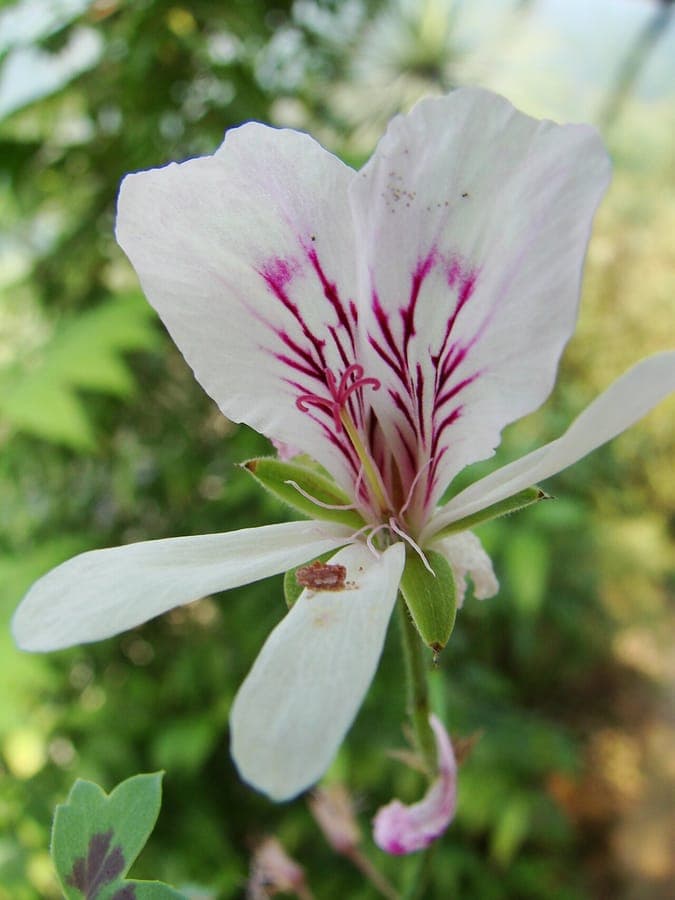
Guérin Nicolas (messages) 20:12, 25 September 2008 (UTC) / CC BY-SA 3.0, via Wikimedia Commons
Pelargonium grandiflorum: complete guide
Pelargonium grandiflorum
¿Quieres ver Pelargonium grandiflorum: complete guide en tu jardín?
1 minuto, sin tarjeta de crédito
Overview
Pelargonium grandiflorum, or the Large-flower pelargonium, is a beautiful potted plant native to the South African Cape Province. This elegant species belongs to the Geraniaceae family and is known for its strikingly large, colorful flowers that are much larger than those of common geranium.
Despite its elegant appearance, the Large-flower pelargonium is relatively easy to maintain. The plant is perfect for cultivation in pots on patios, balconies or indoors. Thanks to its spectacular flowering period, it is a favorite among flower lovers and interior designers.
Appearance and bloom
Pelargonium grandiflorum distinguishes itself by its very large flowers that can reach 5 cm in diameter. The flowers come in many different colors: red, pink, purple, white and bicolor. The petals are silky and often underlined with contrasting veins.
The leaves are wrinkled and have a soft green color. The plant grows compact to round, making it an ideal shaped plant. The flowering period extends from late spring to summer, with sometimes repeated flowering waves when the plant is well cared for.
Ideal location
Pelargonium grandiflorum thrives best in full sunlight. Place the plant in a location where it receives at least 6 hours of direct sunlight daily. A sunny window sill is ideal.
Ensure good air circulation around the plant. This helps prevent fungal diseases and promotes healthy growth. Protect the plant from cold drafts and sudden temperature changes.
Indoors, a bright location near a window is best. Outdoors, the plant can stand on a balcony or patio, provided it is protected from excessive wind.
Soil
Use light, well-draining potting soil for Pelargonium grandiflorum. Mixing standard potting soil with sand or perlite improves drainage. A mixture of 60% potting soil and 40% sand works well.
Ensure that water drains well from the pot. Add drainage chips to the bottom of the pot. A pH of 6.0 to 6.5 is ideal for this species.
Watering
Water Pelargonium grandiflorum carefully. The plant prefers dry to wet. Check before watering whether the top layer is dry. Water thoroughly, but do not leave water in the saucer.
Avoid spraying water on the leaves, as this promotes fungal diseases. Water preferably at the base of the plant. In winter, watering can be drastically reduced.
Overwatering is the most common cause of problems with this plant. Guess less rather than more.
Diseño gratis
¿Quieres ver Pelargonium grandiflorum: complete guide en tu jardín? Crea un diseño gratis ahora.
Pruning
Prune Pelargonium grandiflorum in spring to promote branching. Remove dead flowers regularly (deadheading) to encourage further blooming.
After winter, some growth may be withered. Pruning helps keep the plant in shape and makes it fuller. Use sharp scissors to make clean cuts.
Remove yellowed or damaged leaves immediately. This helps keep the plant healthy and attractive.
Maintenance calendar
Spring: Begin season with pruning and shaping. Start weekly feeding. Check for pests. Place outside when frost danger has passed.
Summer: Regular watering (but not too much). Feed biweekly. Ensure good air circulation. Remove faded flowers.
Autumn: Gradually reduce feeding. Bring plant indoors before first frost danger. Water less.
Winter: Cool conditions (50-59 F / 10-15 C) are ideal. Minimal watering. Little or no feeding. Provide as much light as possible.
Winter hardiness
Pelargonium grandiflorum is not frost-hardy and cannot tolerate frost. In temperate climates, the plant must be brought indoors when temperatures drop below 41 F (5 C).
A cool, bright location indoors (such as an unheated veranda or cool window) is ideal for overwintering. The plant can go dormant and require less water.
Special characteristics
The Large-flower pelargonium is famous for its abundance of large, colorful flowers. Many hybrid varieties are available with different flower colors. Some varieties have double flowers (with double petals).
The plant is non-toxic and can be safely grown in households with children and pets. The leaves have a characteristic scent when you brush against them.
Closing thoughts
Pelargonium grandiflorum is the ideal potted plant for those who want to see large, colorful flowers without much effort. With good drainage, careful watering, and regular pruning, this elegant plant flowers abundantly throughout the summer.
Looking for more information about flowering potted plants? Visit gardenworld.app for more guides, plant combinations and garden design inspiration.
¿Quieres ver Pelargonium grandiflorum: complete guide en tu jardín? Crea un diseño gratis ahora.
Sube una foto, elige un estilo y obtén un diseño fotorrealista con lista de plantas en menos de un minuto.
Más de 10.000 jardines diseñados
Sin tarjeta de crédito


Plantas similares
Pelargonium acetosum: complete guide
Pelargonium acetosum
Discover the Sorrel-leaf Geranium: a South African plant with aromatic foliage. Perfect for containers and warm locations. Learn cultivation and care.
Erodium foetidum: complete guide
Erodium foetidum
Rock stork's-bill is a delicate alpine plant with purple flowers and fine foliage. Learn how to grow this Mediterranean charmer in your front garden.
Pelargonium crithmifolium: complete guide
Pelargonium crithmifolium
Discover Samphire-leaf pelargonium: an exotic South African geranium with distinctive foliage. Growing tips, care advice and garden inspiration.