
Hajotthu / CC BY 3.0, via Wikimedia Commons
Pedicularis sylvatica: complete guide
Pedicularis sylvatica
¿Quieres ver Pedicularis sylvatica: complete guide en tu jardín?
1 minuto, sin tarjeta de crédito
Overview
Pedicularis sylvatica, commonly known as Heath Lousewort or Small Lousewort, is a delicate woodland herb from the Orobanchaceae family. Native to forested mountain areas throughout Europe from Scandinavia to the Mediterranean, this plant is celebrated for its graceful purple flowers and ecological importance in natural heathland and woodland ecosystems.
Appearance and Bloom Time
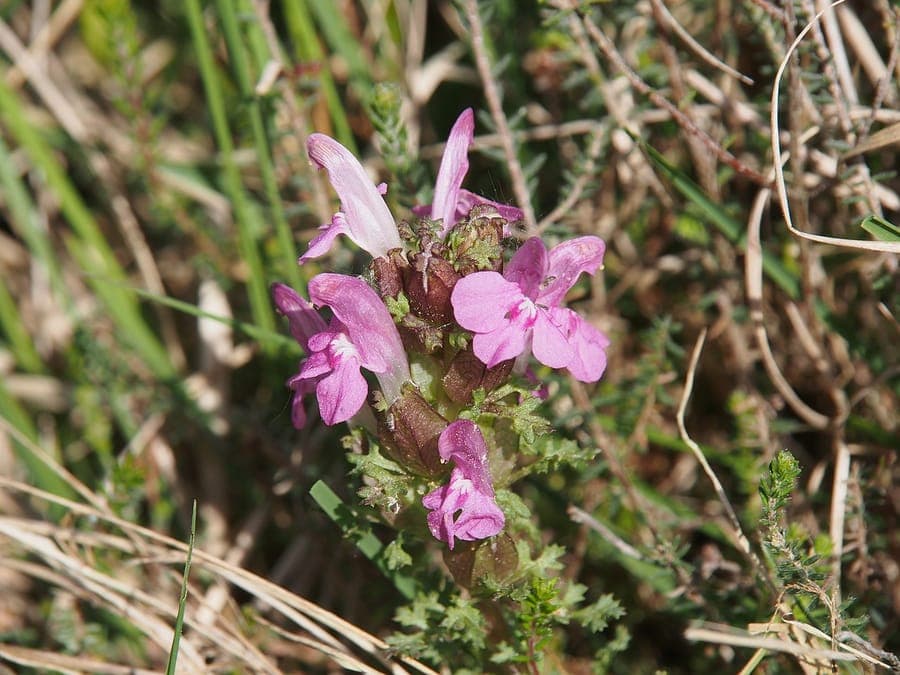
Pedicularis sylvatica is a small herb typically reaching only 15 to 30 centimeters in height. The plant forms low, compact rosettes with finely divided foliage displaying an elegant appearance. The flowers are purple to reddish-purple, small but distinctly arranged in dense flower clusters.
The blooming period extends from April through June, making it one of the earliest Pedicularis species to flower. This early spring bloom establishes it as an excellent pioneer plant for seasonal color.
Ideal Location
This plant prefers open, sunny to lightly shaded locations. A minimum of four hours direct sunlight daily is ideal. The plant grows well on slopes and in dappled shade between low shrubs. In protected garden microclimates, it performs best.
For garden applications, it excels in heathland plantings, along pathways, and in specially created heathland environments.
Soil
Pedicularis sylvatica thrives in poor, acidic soils. Heavy clay soils are unsuitable. An ideal medium combines sand, shale, and peat with minimal compost. The pH should be weakly acidic, between 5 and 6.
Nutrient-poor ground is preferred; artificial fertilization can damage the plant. The species is adapted to marginal growing conditions.
Diseño gratis
¿Quieres ver Pedicularis sylvatica: complete guide en tu jardín? Crea un diseño gratis ahora.
Watering
The plant prefers lightly moist soils that never dry completely. Water regularly during the growing season, ensuring water doesn't stagnate. Extra drainage attention is critical in wet winters.
Both extreme drought and waterlogging are poorly tolerated.
Pruning
Minimal pruning is necessary. Remove spent flowers after blooming. The plant perpetuates itself through self-seeding and requires minimal maintenance.
Maintenance Calendar
- April-May: Beautiful purple blooming period, enjoy early spring color
- June: Seed maturation, allow seeds to naturally disperse
- July-September: Plant dormancy, minimal watering
- October-March: Winter rest, plant prepares for next season
Winter Hardiness
Pedicularis sylvatica is very winter hardy, tolerating extremely low temperatures. Snow and frost variation pose no problems. Winter drainage is most critical to prevent moisture damage.
Companion Planting
Heath Lousewort works perfectly in heathland plantings with other low-growing plants like Calluna, Erica, and Empetrum species. Purple flowers contrast beautifully with yellow alpine plants. In larger heath and natural gardens, plant in groups.
Closing Thoughts
Pedicularis sylvatica is a delightful, rarely cultivated plant adding significant value to natural heathland and woodland margins. With properly adapted acidic soil and good drainage, this charming plant rewards you with years of early spring color. Discover with gardenworld.app how to design an ecological heathland and natural garden.
With gardenworld.app, you can design your complete front garden with professional guidance. Learn how to create authentic heathland and woodland character in your garden and receive expert recommendations.
¿Quieres ver Pedicularis sylvatica: complete guide en tu jardín? Crea un diseño gratis ahora.
Sube una foto, elige un estilo y obtén un diseño fotorrealista con lista de plantas en menos de un minuto.
Más de 10.000 jardines diseñados
Sin tarjeta de crédito


Plantas similares
Northwestern Indian paintbrush: complete guide
Castilleja angustifolia
All about Castilleja angustifolia, the northwestern Indian paintbrush from dry western US steppes. Growing, care, and companion plant advice.
Wavyleaf Indian paintbrush: complete guide
Castilleja applegatei
Everything about Castilleja applegatei, the wavyleaf paintbrush from Oregon and California. Host plants, care, location, and garden use covered.
Bushy bird's-beak: complete guide
Cordylanthus ramosus
Complete guide to Cordylanthus ramosus, the hemiparasitic annual of western US steppes: ecology, host plants, cultivation and uses.