
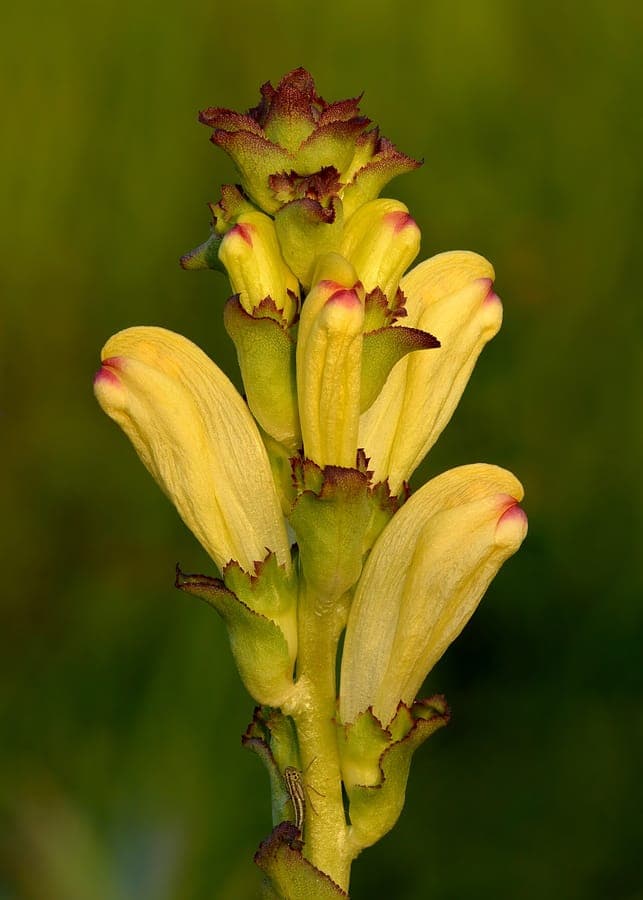
Ivar Leidus / CC BY-SA 4.0, via Wikimedia Commons
Moor-king lousewort: complete guide
Pedicularis sceptrum-carolinum
¿Quieres ver Moor-king lousewort: complete guide en tu jardín?
1 minuto, sin tarjeta de crédito
Overview
Moor-king lousewort (Pedicularis sceptrum-carolinum), also known as King's Scepter or moor-king plant, is a captivating alpine plant from the Orobanchaceae family (parasitic family). This plant grows naturally in subarctic and subalpine Eurasia, from Scandinavia to Siberia. With its characteristic yellow flowers and preference for wet habitats, this plant is ideal for wetlands, mountain terraces and other moist environments.
Appearance and Bloom
Moor-king lousewort grows as a compact, upright plant, usually 20 to 40 centimeters tall. The leaves are yellowish-green, elongated and have a soft, hairy texture. The flowers are striking, bright yellow, and appear in dense, columnar flower spikes. The flowers have a characteristic shape with an expanded upper lip. The flowering period is summer to early fall. After flowering, a seed capsule forms.
Ideal Location
Moor-king lousewort prefers full sun to half shade, especially in cooler climates. Plant this species in mountainous areas, alpine gardens or hilly terrain. The plant thrives best in wet, marshy conditions, making it suitable for stream banks, moist meadows or constructed wetland plantings. In warm, dry climates, this mountain plant will not do well.
Soil
Moor-king lousewort requires moist, acidic soils. Pure sandy or clay soils can work, as long as they retain moisture. Peaty or bog-like soils are ideal. The soil should not dry out, so ensure constant moisture levels. Well-draining acidic soils prevent root rot. The plant grows best in mountain garden conditions where water is plentiful.
Diseño gratis
¿Quieres ver Moor-king lousewort: complete guide en tu jardín? Crea un diseño gratis ahora.
Watering
Moor-king lousewort is a moisture-lover and requires regular watering. Ensure the soil stays consistently moist but not waterlogged. During dry periods, regular watering is needed. The plant thrives along mountain streams and marshy areas because it naturally receives lots of water. In temperate climates with normal rainfall, the plant can grow without supplemental water. In warm, dry regions, regular watering is essential.
Pruning
Moor-king lousewort requires minimal pruning work. Remove faded flowers to prevent self-seeding unless you want natural seed production. Dead leaves can be removed in spring. The plant maintains its natural compact shape without much pruning.
Maintenance Calendar
Spring: Plant seedlings and ensure adequate moisture. Summer: Monitor for flowering and remove faded flower spikes. Fall: Leave seed heads for self-seeding. Winter: The plant dies back in cold winters but regrows from the roots.
Winter Hardiness
Moor-king lousewort is very hardy and can tolerate temperatures down to about -30 degrees Celsius. The plant is native to subarctic areas so it's perfect for cold climates and mountain regions. This makes it an ideal choice for gardeners in cooler regions. Protection is not needed.
Companion Plants
Moor-king lousewort combines well with other alpine and wetland plants. Other moisture-lovers such as bog plants and other Pedicularis species work well together. Mountain grasses add texture. Low-growing sedums and stonecrops can be used as contrasting contrast. Group planting creates greater visual impact.
Closing
Moor-king lousewort is a precious mountain plant for those with alpine gardens or moist mountainous terrain. With its captivating yellow flowers and preference for cold, wet habitats, it's a perfect addition to sustainable mountain garden design. For more plant discussions and designs, visit gardenworld.app/nl and gardenworld.app/en.
¿Quieres ver Moor-king lousewort: complete guide en tu jardín? Crea un diseño gratis ahora.
Sube una foto, elige un estilo y obtén un diseño fotorrealista con lista de plantas en menos de un minuto.
Más de 10.000 jardines diseñados
Sin tarjeta de crédito


Plantas similares
Northwestern Indian paintbrush: complete guide
Castilleja angustifolia
All about Castilleja angustifolia, the northwestern Indian paintbrush from dry western US steppes. Growing, care, and companion plant advice.
Wavyleaf Indian paintbrush: complete guide
Castilleja applegatei
Everything about Castilleja applegatei, the wavyleaf paintbrush from Oregon and California. Host plants, care, location, and garden use covered.
Bushy bird's-beak: complete guide
Cordylanthus ramosus
Complete guide to Cordylanthus ramosus, the hemiparasitic annual of western US steppes: ecology, host plants, cultivation and uses.