
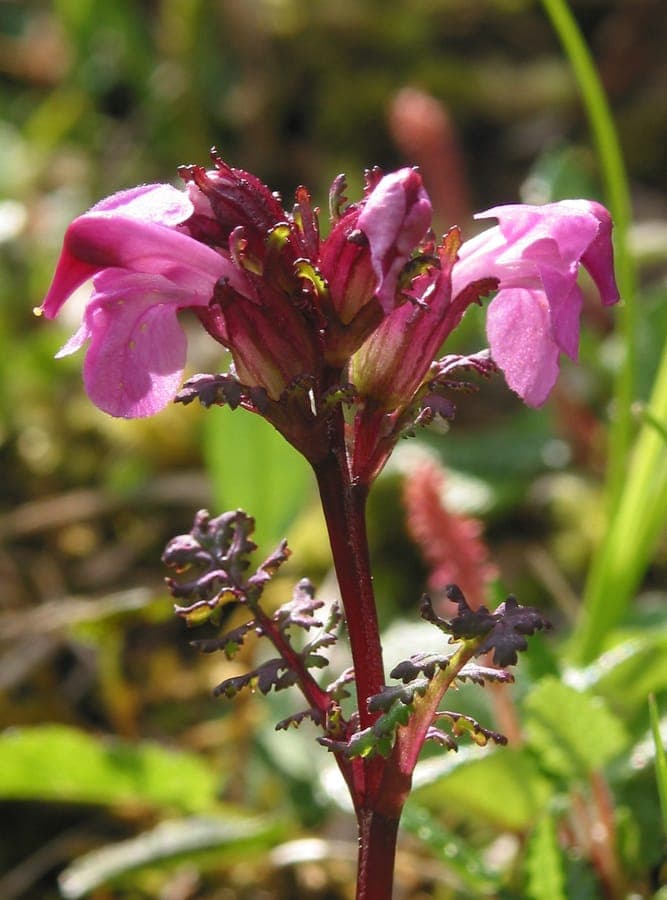
Robert Flogaus-Faust / CC BY 4.0, via Wikimedia Commons
Pedicularis rostratocapitata: complete guide
Pedicularis rostratocapitata
¿Quieres ver Pedicularis rostratocapitata: complete guide en tu jardín?
1 minuto, sin tarjeta de crédito
Overview
Pedicularis rostratocapitata, the beaked lousewort, is a prized alpine wildflower from the central and eastern Alps down to the northwest Balkans. This semi-parasitic plant grows in cool mountain meadows and steep rocky slopes where few others thrive. With intricate leaves and distinctive hooded purple flowers, it rewards the dedicated alpine gardener with spectacular midsummer blooms.
Appearance and bloom
Pedicularis rostratocapitata forms low tufts of finely dissected foliage reaching just 15-25 cm tall. The feathery, ferny leaves are emerald green and highly ornamental even when not flowering. From July through August, dense flower spikes emerge bearing dozens of tiny hooded flowers in shades of deep rose to purple. Each flower sports a characteristic beak-like upper lip, giving the genus its name.
Ideal location
This alpine treasure demands cool, well-drained sites with excellent light. Part shade in afternoon sun is acceptable in warm regions but full sun suits cool mountain climates. Plant on rocky slopes or in raised troughs where drainage is exceptional. Protect from severe wind exposure. This plant absolutely requires cool nights and good air circulation.
Soil
Pedicularis rostratocapitata thrives in gritty, very lean, well-draining alpine compost. pH 5.5-7.0 suits it well. Heavy, fertile soil causes decline. Mix custom alpine compost from grit, sharp sand, and minimal peat. This semi-parasitic nature means it naturally grows among grass roots, so include grass in container culture.
Watering
During active growth from spring through blooming, consistent moisture is essential. Water regularly without waterlogging. After flowering, gradually reduce watering as the plant enters dormancy. In pots, check daily during growth.
Diseño gratis
¿Quieres ver Pedicularis rostratocapitata: complete guide en tu jardín? Crea un diseño gratis ahora.
Pruning
No pruning needed. Remove faded flower spikes after bloom if desired, but leaving them allows seed development. Collect ripe seed for future plants.
Maintenance calendar
- Spring (March-May): Planting and seed sowing time. Stratify seed in cool stratification.
- Summer (June-July): Active growth and flowering. Maintain consistent moisture.
- Autumn (August-September): Seed ripening. Reduce watering gradually.
- Winter (October-February): Complete dormancy. Cold period essential for vigor.
Winter hardiness
Pedicularis rostratocapitata is fully hardy in truly cold climates where it receives proper winter dormancy. Temperatures to -25 Celsius cause no damage. However, warm winters without snow cover or extended frosts cause decline and poor performance. This plant truly needs Alpine winter conditions.
Companion plants
Group with other choice alpines like edelweiss, alpine forget-me-nots, and cushion saxifrages. Combine with silver-leaved draba and arctic poppy for stunning color and textural contrast. Plant in groups of three to five for maximum impact.
Closing
Pedicularis rostratocapitata is a mountain treasure for the experienced alpine gardener. Success requires understanding of true alpine conditions: cool nights, good drainage, lean soil, and winter dormancy. Source seed or plants from specialist alpine nurseries. Patience and attention reward you with midsummer spectacles of rare mountain beauty. Visit gardenworld.app for alpine garden design and gardenworld.app for challenging alpine plant combinations.
¿Quieres ver Pedicularis rostratocapitata: complete guide en tu jardín? Crea un diseño gratis ahora.
Sube una foto, elige un estilo y obtén un diseño fotorrealista con lista de plantas en menos de un minuto.
Más de 10.000 jardines diseñados
Sin tarjeta de crédito


Plantas similares
Northwestern Indian paintbrush: complete guide
Castilleja angustifolia
All about Castilleja angustifolia, the northwestern Indian paintbrush from dry western US steppes. Growing, care, and companion plant advice.
Wavyleaf Indian paintbrush: complete guide
Castilleja applegatei
Everything about Castilleja applegatei, the wavyleaf paintbrush from Oregon and California. Host plants, care, location, and garden use covered.
Bushy bird's-beak: complete guide
Cordylanthus ramosus
Complete guide to Cordylanthus ramosus, the hemiparasitic annual of western US steppes: ecology, host plants, cultivation and uses.