
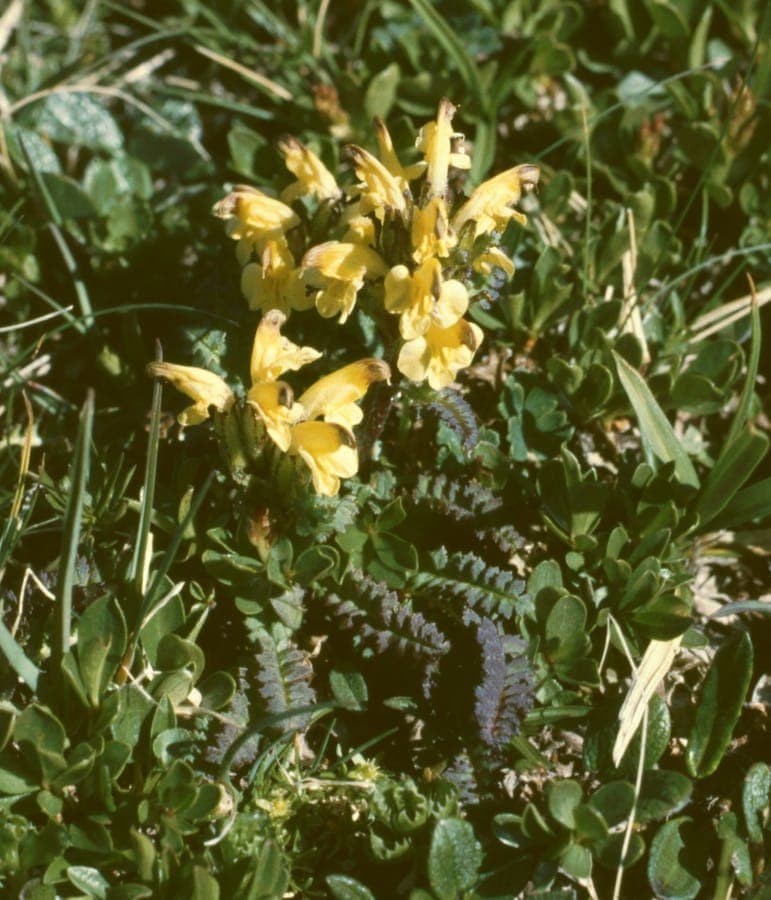
Franz Xaver / CC BY-SA 3.0, via Wikimedia Commons
Pedicularis oederi: complete guide
Pedicularis oederi
¿Quieres ver Pedicularis oederi: complete guide en tu jardín?
1 minuto, sin tarjeta de crédito
Overview
Pedicularis oederi is a remarkable alpine plant from the Orobanchaceae family found in subarctic and subalpine regions of the Northern Hemisphere. This rare mountain dweller is celebrated for its delicate yellow flowers and compact growth habit. The plant represents a prized addition to alpine enthusiasts' collections and offers a rewarding though demanding cultivation challenge.
Appearance and Bloom Time
Pedicularis oederi remains a low compact perennial typically reaching only 30 centimeters in height. The plant forms dense rosette-like clusters with finely dissected foliage displaying an elegant, almost fern-like structure. The flowers are small but distinctive, bright yellow, arranged in dense inflorescences appearing from June through August.
The blooming period aligns with the brief growing season of alpine regions, with the plant entering dormancy quickly after flowering concludes in late summer.
Ideal Location
This mountain herb requires full sun to lightly shaded positions. In warmer climates, afternoon shade provides beneficial protection. The plant thrives in open, well-ventilated locations with excellent air circulation preventing moisture-related problems. Avoid low-lying, waterlogged sites entirely.
Pedicularis oederi excels in rock gardens, along walkway borders, between stones, and on shallow alpine troughs. This plant is unsuitable for wet, poorly drained locations.
Soil
The plant demands exceptionally well-draining, rocky soil. Heavy clay is completely unsuitable. An ideal growing medium consists of 50 percent coarse sand, 30 percent stone chips, and 20 percent peat or compost. Neutral to slightly acidic pH is optimal.
In natural mountain settings, the plant grows on skeletal, nutrient-poor substrates. This indicates that artificial fertilization is usually unnecessary and potentially harmful.
Diseño gratis
¿Quieres ver Pedicularis oederi: complete guide en tu jardín? Crea un diseño gratis ahora.
Watering
Although originating from mountain regions receiving substantial precipitation, water must never stagnate around the plant. The planting area requires excellent drainage. Water regularly during the growing period while carefully preventing waterlogging. Extra drainage attention is critical during wet winters.
The plant demonstrates good drought tolerance once established.
Pruning
Pedicularis oederi requires minimal pruning. Remove spent flowers after the blooming period and dead material in autumn. The plant naturally tidies itself at season's end.
Maintenance Calendar
- May: New foliage appears, monitor nutritional needs
- June-August: Blooming period, enjoy yellow flower clusters
- September: Gradually reduce watering as plant enters dormancy
- October-March: Winter dormancy, minimal watering
- April: Plant resumes active growth
Winter Hardiness
Pedicularis oederi is extremely winter hardy, tolerating extremely low temperatures. This is advantageous in Northern Europe. The primary challenge is not frost but moisture excess during wet winters. Ensure excellent drainage around plantings.
Companion Planting
This alpine herb pairs perfectly in rock gardens with other mountain plants like saxifraga, primula, and alpine sedum species. Yellow flowers contrast beautifully with purple alpines. In larger alpine gardens, the plant also performs well when planted in clusters of three to five specimens.
Closing Thoughts
Pedicularis oederi represents a rare jewel for alpine gardeners. With attention to excellent drainage and careful cultivation, this plant rewards you with years of delicate beauty and reliable performance. Discover with gardenworld.app how to design a beautiful alpine garden where this exceptional plant truly shines.
With gardenworld.app, you can design your complete front garden with professional guidance. Learn how to successfully integrate rare alpine plants and receive expert recommendations for your perfect garden composition.
¿Quieres ver Pedicularis oederi: complete guide en tu jardín? Crea un diseño gratis ahora.
Sube una foto, elige un estilo y obtén un diseño fotorrealista con lista de plantas en menos de un minuto.
Más de 10.000 jardines diseñados
Sin tarjeta de crédito


Plantas similares
Northwestern Indian paintbrush: complete guide
Castilleja angustifolia
All about Castilleja angustifolia, the northwestern Indian paintbrush from dry western US steppes. Growing, care, and companion plant advice.
Wavyleaf Indian paintbrush: complete guide
Castilleja applegatei
Everything about Castilleja applegatei, the wavyleaf paintbrush from Oregon and California. Host plants, care, location, and garden use covered.
Bushy bird's-beak: complete guide
Cordylanthus ramosus
Complete guide to Cordylanthus ramosus, the hemiparasitic annual of western US steppes: ecology, host plants, cultivation and uses.