
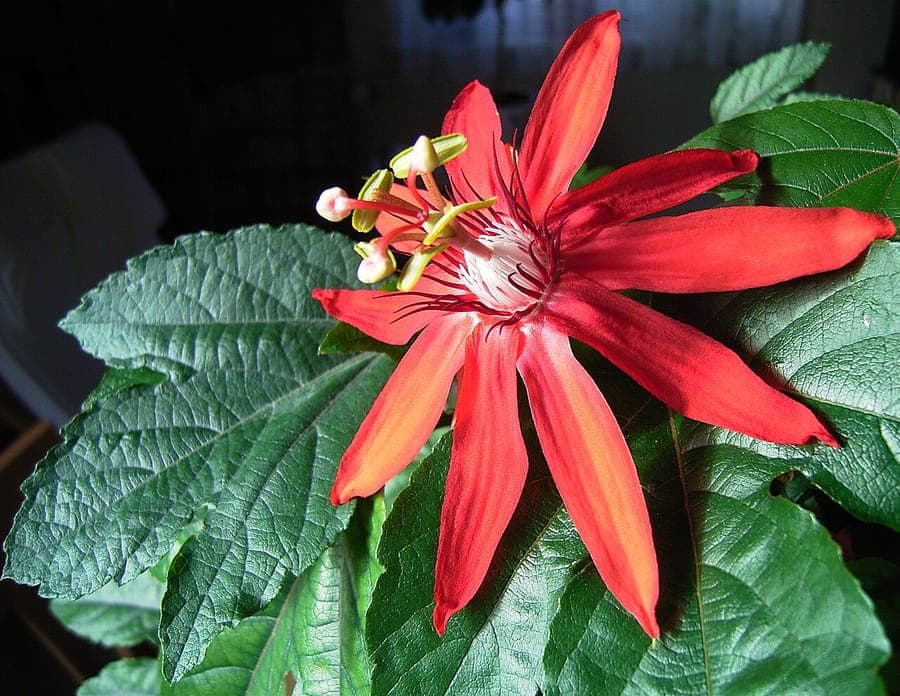
Density / CC BY-SA 2.5, via Wikimedia Commons
Passiflora vitifolia: complete guide
Passiflora vitifolia
¿Quieres ver Passiflora vitifolia: complete guide en tu jardín?
1 minuto, sin tarjeta de crédito
Overview
Passiflora vitifolia, commonly called Red Passionflower or Perfumed Passionflower, is a stunning tropical vine native to Colombia, Ecuador, Peru, and other South American regions. This plant is renowned for its striking cardinal-red flowers, its fragrant aroma especially prominent in evening hours, and its distinctive grape-like leaves - hence the botanical name vitifolia (vine-leafed).
This is a spectacular plant for those in warm, subtropical climates or for greenhouse cultivation. The flowers are truly extraordinary - thick, stiff, and exotic. The plant grows rapidly once established and can cover structures within seasons. For those who crave botanical drama, this is your plant.
Appearance and Bloom
Passiflora vitifolia forms a fast-growing deciduous or semi-evergreen vine reaching 5 to 10 meters or more in favorable conditions. The leaves are large and broad, 10 to 20 centimeters long, with three lobes (trilobate) that truly resemble grape foliage. The leaves display prominent red-tinted veins.
The flowers are genuinely spectacular. They measure approximately 8 to 10 centimeters across, are cardinal-red to deep red in color, with striking white corona filaments radiating outward. The flower possesses a powerfully fragrant aroma, especially intense during evening and night hours. Bloom occurs during warm seasons (May through October in temperate climates where outdoor cultivation is possible).
Following pollination, elongated yellowish fruits develop roughly egg-sized. These contain edible seeds, though valued more for form than flavor.
Ideal Location
Passiflora vitifolia demands abundant sun. Position it where it receives six to eight hours of direct sunlight daily. More sun is always superior. In hot regions, partial afternoon shade is acceptable, though full sun is optimal.
This vine requires robust support - a trellis, pergola, or railing. Never allow it to sprawl on ground or excessively drape other plants as it will overwhelm them. Plant where you can experience the flower fragrance, ideally near a terrace or sitting area.
Soil
Passiflora vitifolia thrives in nutrient-rich, well-draining soil abundant in organic matter. Incorporate substantial compost or humus at planting. The plant performs optimally in soil with pH between 6 and 7. Regular feeding promotes abundant blooming.
Heavy water-retaining soils are unsuitable. Ensure excellent drainage. Container cultivation with rich potting mix works excellently for those in cooler climates seeking winter greenhouse protection.
Diseño gratis
¿Quieres ver Passiflora vitifolia: complete guide en tu jardín? Crea un diseño gratis ahora.
Watering
Passiflora vitifolia is no desert plant. Water regularly, especially during growth and flowering periods. Soil should remain nutrient-rich but never waterlogged. In winter (for temperate climates), reduce watering correspondingly.
During dry periods, daily misting may be necessary, especially for young plants and container-grown specimens. This plant tolerates limited drought poorly.
Pruning
Pruning is important for management. After flowering, cut long vines back to desired form. This also stimulates branching and more flower buds. Overgrown wood can be removed entirely for regeneration.
If increasing plant size is your goal, provide more support and prune less severely.
Maintenance Calendar
March-April: Begin growth period. Install support structures and commence regular feeding.
May-October: Peak bloom and growth. Heavy feeding, regular watering, frequent formative pruning.
November-February: Rest period (temperate climates). Reduced water, minimal feeding, light pruning.
Winter Hardiness
This plant is absolutely not frost tolerant. Temperatures below 5 degrees Celsius are fatal. In temperate climates, bring the plant indoors in autumn for greenhouse protection.
In USDA zones 9b and warmer, outdoor year-round growth is possible. In zones 8 and colder, container culture with seasonal movement is required.
Companion Plants
Plant other tropical vines nearby for full, dense growth. Fellow Passiflora species (some hardier), Clematis varieties, and wisterias create magnificent combinations. Together, create a truly tropical atmosphere.
In containers, combine with other tropical foliage plants for layered effect.
Closing
Passiflora vitifolia is definitively a plant for enthusiasts in warm climates or for greenhouse gardeners. With its spectacular cardinal-red flowers, fragrant aroma, and rapid growth, it constitutes an unforgettable addition to any warmer garden. Source seed or young plants online or through specialized suppliers. Don't restrict yourself to common passionflower varieties - this is a genuinely exotic ornament. Visit gardenworld.app for additional garden inspiration. With adequate warmth, nutrition, and support, this Passiflora grows increasingly vigorous annually, producing progressively abundant bloom.
¿Quieres ver Passiflora vitifolia: complete guide en tu jardín? Crea un diseño gratis ahora.
Sube una foto, elige un estilo y obtén un diseño fotorrealista con lista de plantas en menos de un minuto.
Más de 10.000 jardines diseñados
Sin tarjeta de crédito


Plantas similares
Passiflora antioquiensis: complete guide
Passiflora antioquiensis
Passiflora antioquiensis is a Colombian banana passionflower with hanging pink blooms. Discover trellising, soil and winter care.
Purple passionflower: complete guide to growing Passiflora incarnata
Passiflora incarnata
Full growing guide for Passiflora incarnata, the hardy purple passionflower for zones 5-9. Planting, pruning, winter care and companion plants included.
Passiflora tenuiloba: complete guide
Passiflora tenuiloba
Birdwing passionflower blooms exotically and grows rapidly. Learn how to cultivate this passion flower in your garden as a vine or container plant.