
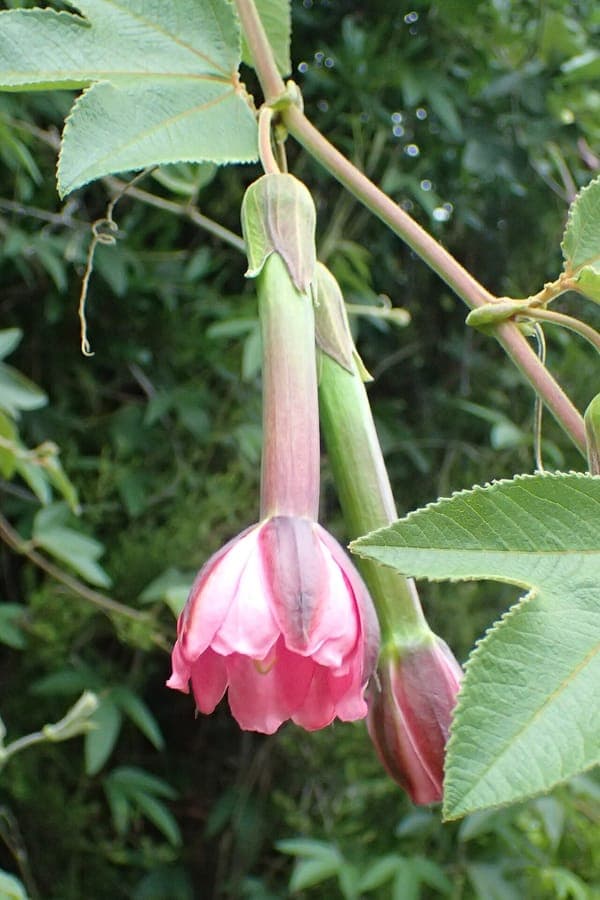
Krzysztof Ziarnek, Kenraiz / CC BY-SA 4.0, via Wikimedia Commons
Passiflora tripartita: complete guide
Passiflora tripartita
¿Quieres ver Passiflora tripartita: complete guide en tu jardín?
1 minuto, sin tarjeta de crédito
Passiflora tripartita, better known as banana passionflower, banana poka, or tacso, is a fascinating tropical climbing vine from the Passifloraceae family, native to the mountain regions from Panama through Bolivia. This plant is renowned for its spectacular flowers and especially for its edible banana-like fruits. Passiflora tripartita is a vigorous, woody vine that can grow 5 to 8 meters long with adequate support. The plant naturally occurs in mountain tropics at elevations of 1500 to 3000 meters. The plant is highly valued for its spectacular flowers and distinctive banana-shaped fruits. The leaves of Passiflora tripartita are trilobed or composed of three leaflet divisions, giving the species its scientific name. The flowers are exceptionally spectacular, featuring long, slender crown filaments in red, purple, and white. Flower size reaches 8 to 10 centimeters in diameter. Blooming extends from May through September in most climates. After flowering, yellowish, oval fruits develop, reaching 8 to 10 centimeters in length. Passiflora tripartita thrives in positions with bright, indirect light or lightly filtered sunlight. The plant tolerates full sun but may suffer leaf scorch in very hot, dry conditions. A location with morning sun and afternoon shade is ideal. The plant grows best in well-draining, nutrient-rich soil with pH between 6.0 and 7.0. A mixture of horticultural peat, compost, and perlite works excellently. Passiflora tripartita requires regular water, especially during growth and flowering periods. The soil must never dry completely but should not become waterlogged. Regular misting during dry periods helps. In winter, reduce watering frequency. The plant responds well to pruning to maintain shape and encourage bushier growth. Prune in early spring before the growth period. Support with trellises or pergolas is essential for optimal growth. May to September growth and flowering period with regular watering, October to April quieter period with reduced watering, March pruning and maintenance. Passiflora tripartita is not frost-hardy and does not tolerate temperatures below 13 to 15 degrees Celsius well. The plant is only outdoor-hardy in USDA zones 10 to 12. For English gardens, this plant suits only sheltered locations or cultivation in heated conservatories. Passiflora tripartita combines beautifully with other tropical climbers. In conservatory cultivation, combine this plant with other tropical specimens for lush displays. Passiflora tripartita is a spectacular plant for gardeners willing to venture into tropical cultivation. With its impressive flowers and edible fruits, this plant offers a unique combination of aesthetic and practical value.
¿Quieres ver Passiflora tripartita: complete guide en tu jardín? Crea un diseño gratis ahora.
Sube una foto, elige un estilo y obtén un diseño fotorrealista con lista de plantas en menos de un minuto.
Más de 10.000 jardines diseñados
Sin tarjeta de crédito


Plantas similares
Passiflora antioquiensis: complete guide
Passiflora antioquiensis
Passiflora antioquiensis is a Colombian banana passionflower with hanging pink blooms. Discover trellising, soil and winter care.
Purple passionflower: complete guide to growing Passiflora incarnata
Passiflora incarnata
Full growing guide for Passiflora incarnata, the hardy purple passionflower for zones 5-9. Planting, pruning, winter care and companion plants included.
Passiflora tenuiloba: complete guide
Passiflora tenuiloba
Birdwing passionflower blooms exotically and grows rapidly. Learn how to cultivate this passion flower in your garden as a vine or container plant.