
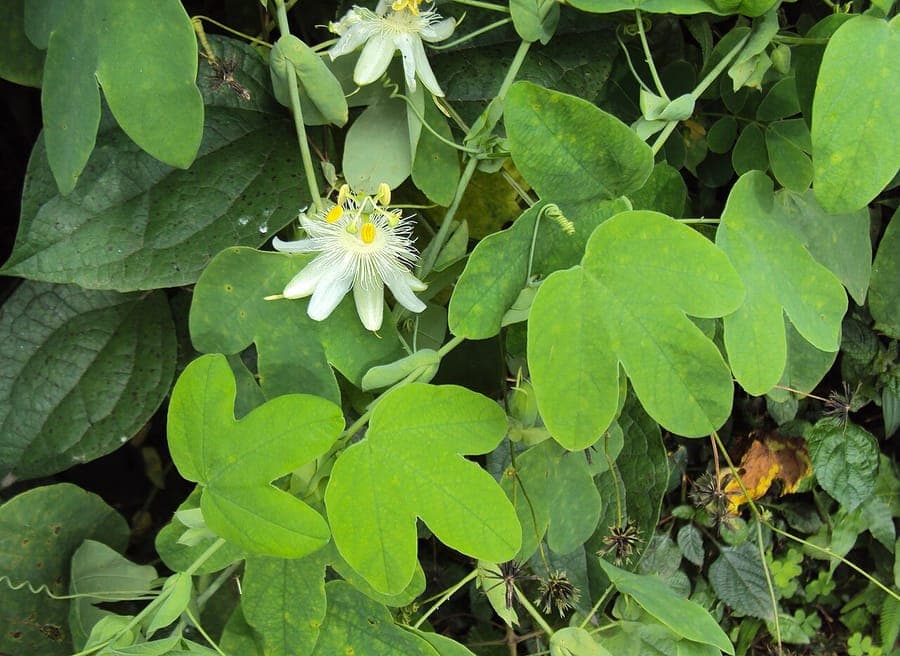
Vinayaraj / CC BY-SA 3.0, via Wikimedia Commons
Passiflora subpeltata: complete guide
Passiflora subpeltata
¿Quieres ver Passiflora subpeltata: complete guide en tu jardín?
1 minuto, sin tarjeta de crédito
Overview
Passiflora subpeltata, commonly known as white passionflower or white passionfruit, is a magnificent, vigorous climbing vine native to Central and South America. The plant ranges from Mexico through Venezuela and belongs to the beloved Passifloraceae family. This species distinguishes itself through predominantly white flowers, contrasting beautifully with the red and purple blooms of many other Passiflora species. The plant has also naturalized as an ornamental and pollinator support throughout many global regions.
In Netherlands cultivation, this plant thrives best in container culture or protected environments. The spectacular white blooms and robust growth make it a favorite among passionflower enthusiasts.
Appearance and Bloom
Passiflora subpeltata is a robust climbing vine capable of substantial growth, often reaching 4 to 6 meters. The stems are sturdy, greenish-brown smooth lianas with characteristic spiral tendrils. The leaves are large and alternately arranged, typically 12 to 20 centimeters long, oblong to heart-shaped with rounded apexes. Leaves display smooth surfaces and are dark green with prominently visible veins.
The flowers are exquisite white with five white sepals and five white petals forming an open structure. Within lie long, delicate corona filaments that are white with purple bands or tinges, creating intricate beauty. The flower center contains distinctly visible stamens and stigmas with contrasting yellow or orange hues. Flowers reach 6 to 8 centimeters in diameter and are sweetly fragrant.
The flowering period extends from May through November under favorable conditions, with peak blooming from June through September. Successful pollination produces attractive, round fruits.
Ideal Location
Passiflora subpeltata thrives optimally on warm, sunny sites receiving 5 to 7 hours direct sunlight daily. Full sun to light partial shade are both acceptable. The plant demands warmth and tolerates no frost; temperatures below 10 degrees Celsius limit growth, and frost destroys all above-ground parts.
In Netherlands cultivation, this vine is best grown in greenhouses, conservatories, or protected outdoor locations in warmer southern regions. The plant excels in large containers that can reside outdoors during summer and move indoors for winter protection.
The plant requires sturdy support for its robust growth: a strong trellis, substantial climbing frame, or permanently installed support system.
Soil
Passiflora subpeltata grows optimally in nutrient-rich, well-draining potting mix. A blend of 50% horticultural potting soil, 30% compost, and 20% sand or perlite works excellently. The plant accepts pH ranges of 5.8 to 7.5, which suits standard Dutch garden soil.
Excellent drainage is absolutely crucial; waterlogging causes root rot and other serious problems. Ensure ample drainage holes in containers. Annually replenishing compost to the soil surface helps maintain nutrition and structure.
Fertilization is important during the growing season. Apply monthly balanced fertilizer, emphasizing balance between nitrogen for foliage and phosphorus for flower initiation.
Diseño gratis
¿Quieres ver Passiflora subpeltata: complete guide en tu jardín? Crea un diseño gratis ahora.
Watering
Passiflora subpeltata requires regular, copious watering during the growing season. In warm weather, the plant may need watering daily. It is essential to regularly check soil moisture several centimeters deep.
As autumn progresses toward winter, gradually reduce water applications. During dormant winter months, watering can be substantially limited, though complete soil drying must be avoided. Very dry potting mix can cause serious root damage.
High-quality water is preferred. Soft water is better tolerated than very hard water.
Pruning and Maintenance
Passiflora subpeltata requires regular pruning for shaping and growth control. Early spring is ideal timing, before growth resumes. Cut the plant back to approximately half its previous size; this stimulates branching and denser, more regular growth.
During the growing season, continuously remove weak or diseased stems and trim wild runners. After the flowering period, excessively long stems can be shortened to encourage more compact growth.
Watch for insect pests that can occur in warm conditions. Regular inspection and early treatment with biological controls prevents spread.
Maintenance Calendar
JANUARY-MARCH: Dormant period. Minimize watering. Light pruning for shape in March.
APRIL-MAY: Growing season begins. Gradually increase watering. Start monthly fertilization.
JUNE-OCTOBER: Peak growth and flowering period. Optimal watering and feeding. Regular inspection and pruning of overly long stems.
NOVEMBER-DECEMBER: Prepare for dormancy. Slowly reduce watering. Decrease fertilization.
Winter Hardiness
Passiflora subpeltata is not winter-hardy in Netherlands conditions. The plant will suffer serious damage under frost and all above-ground growth will die. For permanent cultivation, indoor overwintering is essential. This occurs in a heated greenhouse or well-lit room at minimum temperatures of 8 to 12 degrees Celsius.
With container culture, the plant can be placed outdoors during summer and relocated indoors at the first frost warning. This system works well for Dutch gardeners.
Except in very warm southern areas (extreme southern Limburg under very favorable conditions), permanent outdoor cultivation is not possible without plant loss.
Companion Plants
Passiflora subpeltata combines beautifully with other climbing and structural plants in greenhouses and conservatories. In large containers, it can be grown with other heat-loving exotics such as bougainvillea, hibiscus, and other passionflower species.
The spectacular white flowers appear particularly lovely against the dark green foliage of companion plants and shadows. It works beautifully as a solitary climbing specimen on a prominently placed trellis.
Avoid companions creating excessive shade.
Closing Thoughts
Passiflora subpeltata represents one of the most attractive Passiflora species for the Dutch potted plant enthusiast. The white blooms are more refined than the colored flowers of many other species, and their fragrance adds an extra sensory dimension. The plant requires some effort, but the reward is continuously spectacular.
This species is ideal for those wishing to distinguish themselves in passionflower cultivation. Availability may be limited, so it is advisable to seek specialized online plant retailers. With attention to temperature, feeding, and structural needs, one can enjoy years of blooming beauty.
See gardenworld.app for inspiration in designing gardens that can accommodate this beautiful climber.
¿Quieres ver Passiflora subpeltata: complete guide en tu jardín? Crea un diseño gratis ahora.
Sube una foto, elige un estilo y obtén un diseño fotorrealista con lista de plantas en menos de un minuto.
Más de 10.000 jardines diseñados
Sin tarjeta de crédito


Plantas similares
Passiflora antioquiensis: complete guide
Passiflora antioquiensis
Passiflora antioquiensis is a Colombian banana passionflower with hanging pink blooms. Discover trellising, soil and winter care.
Purple passionflower: complete guide to growing Passiflora incarnata
Passiflora incarnata
Full growing guide for Passiflora incarnata, the hardy purple passionflower for zones 5-9. Planting, pruning, winter care and companion plants included.
Passiflora tenuiloba: complete guide
Passiflora tenuiloba
Birdwing passionflower blooms exotically and grows rapidly. Learn how to cultivate this passion flower in your garden as a vine or container plant.