
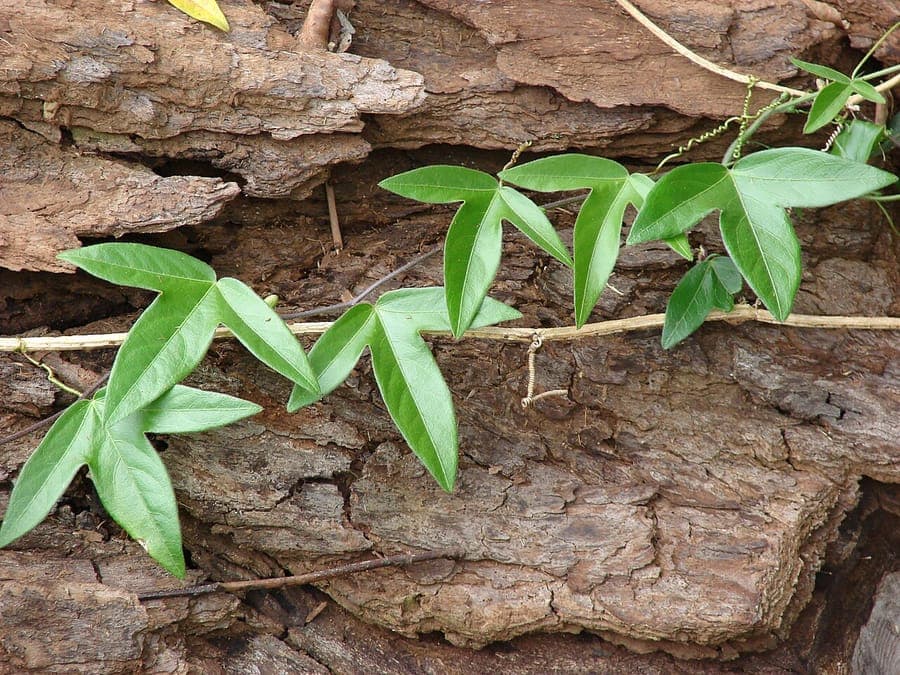
Forest & Kim Starr / CC BY 3.0, via Wikimedia Commons
Passiflora suberosa: complete guide
Passiflora suberosa
¿Quieres ver Passiflora suberosa: complete guide en tu jardín?
1 minuto, sin tarjeta de crédito
Overview
Passiflora suberosa, known as cork passionflower or devil's pumpkin, is a fascinating climbing plant that originates from tropical America. This species grows wild from Mexico to Argentina and has since been introduced to many tropical and subtropical regions worldwide. The plant owes its preference to the corky texture of its stems, explaining its characteristic appearance.
This is a compact climbing plant ideal for pergolas, fences, wall coverings, and other vertical surfaces. The plant produces small but highly charming flowers in diverse colors, from purple to white. The fruits are small but interesting and can be eaten by birds in some regions.
Appearance and bloom
Passiflora suberosa grows as a slender vine with woody stems that can reach several meters in length. The leaves are typically triangular to heart-shaped, with a deep green color and glossy surface. The characteristic corky texture of the stems is most noticeable during the growing season.
The flowers are very characteristic of the Passiflora genus, with their striking crown of colored filaments around the center. The flowers are usually 2-4 centimeters in diameter and appear from May to October. Colors can vary from purple-white to completely white, depending on the variety and growing conditions.
The fruits are small, dark purple to black berries that reach about the size of a grape. These are not edible for humans but valuable for birds.
Ideal location
Passiflora suberosa grows best in locations with plenty of sunlight, at least four to six hours directly per day. The plant can also manage with light shade but will produce fewer flowers. For maximum flower production, a sunny south-west or south-facing position is ideal.
The plant is not suitable for very windy locations as the thin stems can break. Choose a sheltered but sunny location for optimal growth.
Soil
Passiflora suberosa grows well in various soil types but prefers well-draining, moderately nutrient-rich soils. The pH can range from acidic to neutral (pH 5.5-7.0). The plant tolerates dry soils better than many other tropical plants, although regular moisture is ideal.
Soil preparation with organic material such as compost is recommended. The plant is not very nutrient-hungry but appreciates moderate feeding.
Diseño gratis
¿Quieres ver Passiflora suberosa: complete guide en tu jardín? Crea un diseño gratis ahora.
Watering
Passiflora suberosa needs regular moisture, especially during the growing season from May to October. Water when the soil surface feels dry. In dry periods, daily misting may be necessary, especially in the growing season.
In winter, you can drastically reduce watering if the plant goes dormant. However, ensure the soil does not dry out completely.
Pruning
Pruning is important for Passiflora suberosa to maintain shape and compactness. Prune the plant in early spring (February-March) before the flowering season begins. This stimulates branching and denser growth. You can shorten side shoots mid-season if you want a neater plant form.
Remove dead or damaged stems throughout the year. This improves the health and appearance of the plant.
Maintenance calendar
In winter (December-January), the plant goes dormant. Minimal watering is needed.
In early spring (February-March), you can apply pruning and fertilization.
In the growing season (April-October), regular watering and possible support are needed.
In autumn (October-November), growth slows and flowering begins to decline.
Winter hardiness
Passiflora suberosa is only slightly cold-hardy and can suffer frost damage in temperate climates (zones 8-11). In colder regions, you should protect the plant against frost or grow it as an annual.
In warm regions (zones 10-12), the plant grows year-round. For extra winter protection in zones 8-9, mulching can help.
Companion plants
Passiflora suberosa combines well with other climbing plants and hanging plants. Possible combinations are clematis, jasmine, and other Passiflora species. These combinations can create beautiful mixed-like coverings on pergolas.
The plant also works well as a solitary climbing plant on a facade or wall.
Conclusion
Passiflora suberosa is a beautiful choice for gardeners wanting to introduce exotic beauty with a compact, low-maintenance climbing plant. The characteristic flowers, corky stems, and bird-food-producing fruits make this a valuable addition to modern gardens. Whether you want to cover a pergola, fence, or wall, this Passionflower offers charm and interest throughout the entire growing season.
Want to learn more about exotic plants? Visit gardenworld.app for personalized garden designs and advice for your specific growing conditions.
¿Quieres ver Passiflora suberosa: complete guide en tu jardín? Crea un diseño gratis ahora.
Sube una foto, elige un estilo y obtén un diseño fotorrealista con lista de plantas en menos de un minuto.
Más de 10.000 jardines diseñados
Sin tarjeta de crédito


Plantas similares
Passiflora antioquiensis: complete guide
Passiflora antioquiensis
Passiflora antioquiensis is a Colombian banana passionflower with hanging pink blooms. Discover trellising, soil and winter care.
Purple passionflower: complete guide to growing Passiflora incarnata
Passiflora incarnata
Full growing guide for Passiflora incarnata, the hardy purple passionflower for zones 5-9. Planting, pruning, winter care and companion plants included.
Passiflora tenuiloba: complete guide
Passiflora tenuiloba
Birdwing passionflower blooms exotically and grows rapidly. Learn how to cultivate this passion flower in your garden as a vine or container plant.