
H. Zell / CC BY-SA 3.0, via Wikimedia Commons
Passiflora miniata: complete guide
Passiflora miniata
¿Quieres ver Passiflora miniata: complete guide en tu jardín?
1 minuto, sin tarjeta de crédito
Overview
Passiflora miniata, commonly called red granadilla or red passionflower, is a spectacular climbing vine native to western South America, ranging from Colombia to west-central Brazil. This plant belongs to the Passifloraceae family, a collection of mostly tropical vines renowned for their exotic, intricately structured flowers. The name "miniata" references the red coloring of the flowers, though these blooms are anything but diminutive. This species combines dramatic floral architecture with tropical vigor.
While not native to the Netherlands, this vine is gaining popularity throughout the region, particularly among enthusiasts seeking botanical distinction. With proper climate management, gardeners can successfully cultivate this jewel.
Appearance and Bloom
Passiflora miniata is a vigorous climbing vine that readily achieves 2 to 3 meters or more in favorable conditions. The stems are slender with tendrils that firmly grasp supporting structures. The leaves are oblong to elliptical, typically 8 to 15 centimeters long, glossy green, and firmly textured. Leaves arrange alternately along the stems, creating an attractive rhythm.
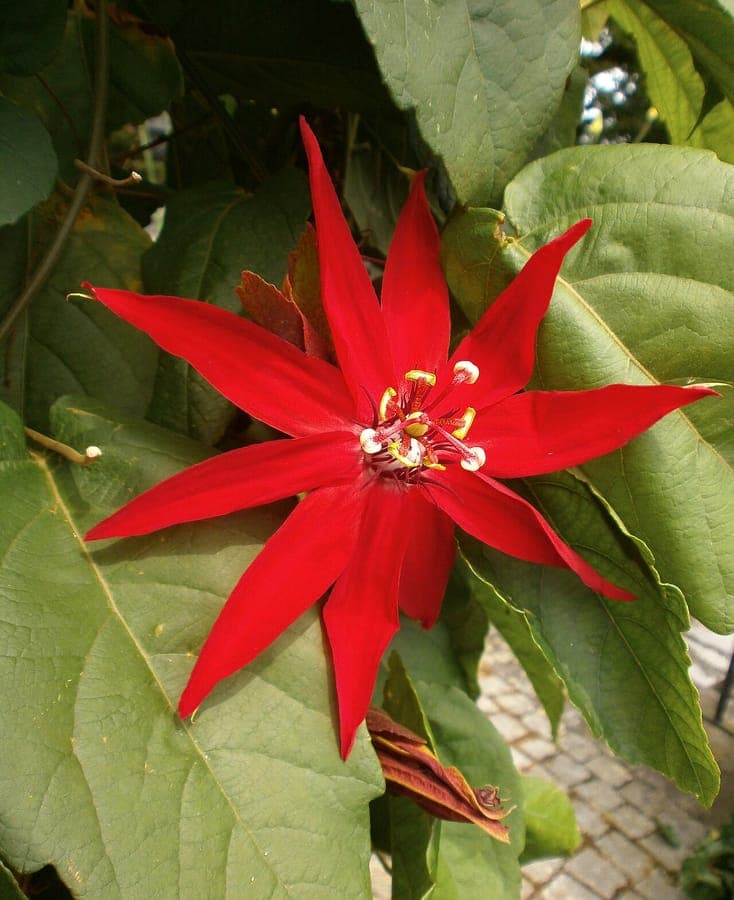
The flowers are absolutely breathtaking. Reaching 7 to 10 centimeters in diameter, they feature five sepals and five petals forming a base structure. Crowning this arrangement is a prominent corona of long, delicate filaments colored red to orange. This corona imparts an artistic, almost surreal quality to the bloom. Centrally positioned stamens and stigmas display contrasting colors.
The flowering period is extended, typically May through October with peak production during summer. Successful pollination yields attractive fruits: small, speckled berries with gelatinous centers.
Ideal Location
Passiflora miniata thrives optimally on warm, sunny sites receiving 6 to 8 hours direct sunlight daily. Full sun is ideal, though the plant tolerates afternoon shade in extremely hot climates. The plant demands warmth; temperatures below 15 degrees Celsius halt growth, and frost destroys all above-ground parts.
In Netherlands cultivation, this plant is best grown in greenhouses, conservatories, or heated garden rooms where temperature and light can be controlled. During summer months in warmer southern areas, outdoor cultivation is possible, but frost protection is essential to prevent loss.
The plant requires sturdy support: a trellis, strong framework, or climbing structure upon which the vine can wind and find purchase.
Soil
Passiflora miniata grows optimally in nutrient-rich, well-draining compost. Standard horticultural potting mix amended with organic matter works well. pH should range between 6.0 and 7.5 for optimal development.
Excellent drainage is crucial; the plant refuses heavy clay or dense soils. Addition of sand, gravel, or perlite dramatically improves drainage. Container specimens thrive in large pots (minimum 30 liters) with ample drainage holes.
Fertilization is important during the growing season. Apply monthly balanced fertilizer, with slightly elevated phosphate content to encourage flowering.
Diseño gratis
¿Quieres ver Passiflora miniata: complete guide en tu jardín? Crea un diseño gratis ahora.
Watering
Passiflora miniata requires regular, copious watering during the growing season, particularly in warm weather. The soil must remain consistently moist but never waterlogged. Regularly check whether the top centimeter feels dry before rewatering.
As autumn progresses toward winter, gradually reduce water applications as growth and transpiration decline. During winter, watering can be substantially reduced, though complete drying must be avoided.
Water quality may matter: hard water can be problematic in certain regions. Rainwater or distilled water sometimes prevent nutrient issues.
Pruning and Maintenance
Passiflora miniata requires regular pruning to encourage shape and control exuberant growth. Early spring is ideal timing, before growth resumes. Cut the plant back to approximately one-third its previous size; this stimulates branching and denser development.
During the growing season, remove weak or diseased stems and trim wild growth. After flowering, excessively long stems can be shortened. Regular pruning stimulates continued flower production.
Watch for insect pests and fungal infections, which can occur in warm, humid conditions. Biological treatments often prove effective.
Maintenance Calendar
JANUARY-MARCH: Winter period. Minimize watering. Light pruning and shaping in March.
APRIL-MAY: Growing season begins. Gradually increase watering. Start monthly fertilization.
JUNE-AUGUST: Peak growing season. Optimal watering and feeding. Trim wild stems.
SEPTEMBER-OCTOBER: Flowering continues. Gradually reduce watering. Prepare for dormancy.
NOVEMBER-DECEMBER: Winter dormancy. Minimal watering. Cooler temperatures beneficial.
Winter Hardiness
Passiflora miniata is not winter-hardy in northern Europe. The plant will suffer serious damage or death under frost conditions. For permanent cultivation in Netherlands, indoor overwintering is essential. This occurs in a heated greenhouse or well-lit room at minimum temperatures of 12 to 15 degrees Celsius.
In southern Netherlands, occasional mild winters might permit outdoor survival with substantial protection, but this is unreliable. The safest approach is container cultivation with relocation to protected environments by autumn.
Mature, well-established plants tolerate frost exposure better than younger specimens. By late October, the plant should be moved indoors.
Companion Plants
Passiflora miniata combines beautifully with other heat-loving plants such as other passionflower species, bougainvillea, trachelospermum, jasmine, and clematis. In greenhouse situations, it mingles well with other tropical vines.
As a decorative element, it can be grown in large containers with other structural plants. It appears particularly striking as a solitary climber on a sturdy structure.
Avoid companions creating excessive shade, as this can promote fungal diseases.
Closing Thoughts
Passiflora miniata represents the pinnacle of exotic plant cultivation for the Dutch enthusiast. While frost-free overwintering is necessary, the plant rewards this effort with absolutely spectacular flowers that deliver surprise and joy year after year.
This plant is not for beginners, but for experienced gardeners willing to stretch themselves, this magnificent vine is absolutely worth the effort. Availability is limited; seek specialized online plant retailers or tropical plant centers. Investment in good climate management pays dividends in years of fascinating blooms and growth.
Note that gardenworld.app provides an excellent platform for designing and visualizing landscapes featuring this spectacular climber.
¿Quieres ver Passiflora miniata: complete guide en tu jardín? Crea un diseño gratis ahora.
Sube una foto, elige un estilo y obtén un diseño fotorrealista con lista de plantas en menos de un minuto.
Más de 10.000 jardines diseñados
Sin tarjeta de crédito


Plantas similares
Passiflora antioquiensis: complete guide
Passiflora antioquiensis
Passiflora antioquiensis is a Colombian banana passionflower with hanging pink blooms. Discover trellising, soil and winter care.
Purple passionflower: complete guide to growing Passiflora incarnata
Passiflora incarnata
Full growing guide for Passiflora incarnata, the hardy purple passionflower for zones 5-9. Planting, pruning, winter care and companion plants included.
Passiflora tenuiloba: complete guide
Passiflora tenuiloba
Birdwing passionflower blooms exotically and grows rapidly. Learn how to cultivate this passion flower in your garden as a vine or container plant.