
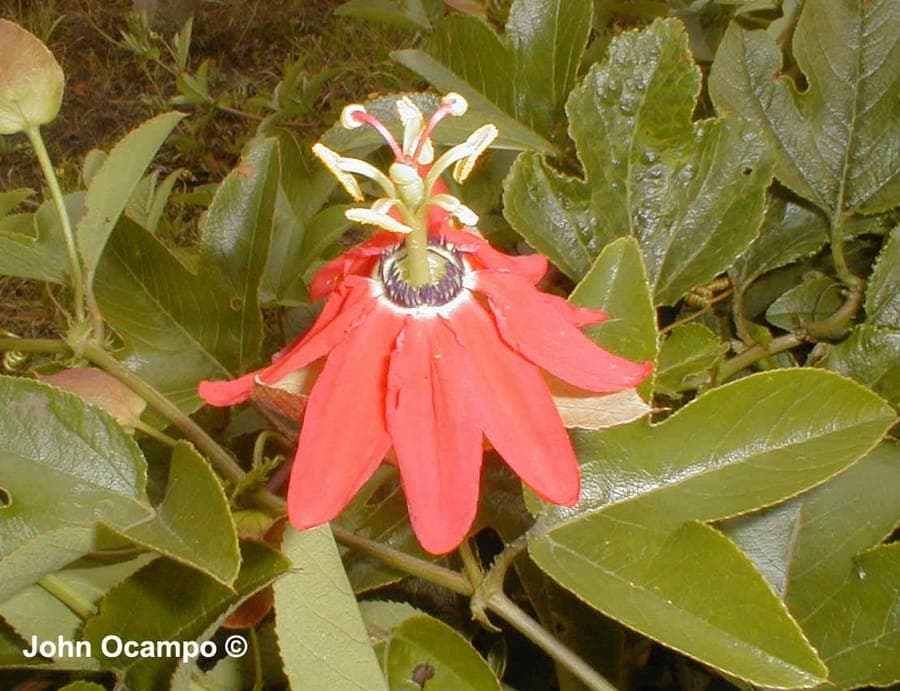
John Ocampo / Public domain, via Wikimedia Commons
Passiflora manicata: complete guide
Passiflora manicata
¿Quieres ver Passiflora manicata: complete guide en tu jardín?
1 minuto, sin tarjeta de crédito
Overview
The red passionflower (Passiflora manicata) is a spectacular and fascinating climbing vine native to the Andean regions of Colombia and Venezuela. This plant is celebrated for its extraordinary red flowers and elegant climbing shoots.
Passiflora manicata belongs to the Passifloraceae family (passion flower family), a diverse group of highly decorative climbing plants. In its natural habitat, this plant climbs high into rainforest trees, where it extends with vigor and displays spectacular blooms.
The plant is a favorite among exotic plant enthusiasts and passionflower collectors, as it is one of the most beautiful red species with robust growth.
Appearance and Bloom
Passiflora manicata is a vigorous climbing plant that can reach many meters in its natural environment. In cultivation, it typically grows 2-4 meters high, depending on available space.
The leaves are large, deeply lobed green leaves with intriguing shape. They can grow up to 15-20 centimeters long.
The flowers are the true highlight: large, deep red flowers with characteristic filaments (tendrils) in red tones. These filaments form an impressive crown around the center, making them very recognizable among passionflower species.
The blooming period is long, from summer through fall, making this plant highly valuable for visual interest. After flowering, orange fruits (passion fruit) may form, although these rarely ripen in temperate climates.
Ideal Location
Passiflora manicata grows best in a location with plenty of light. The plant prefers full sun or lightly shaded environment with at least 6+ hours of direct sunlight daily.
The plant requires space to grow - provide sturdy support such as a trellis or pergola. The climbing shoots become quite heavy when mature.
Protection from strong winds is important, especially in warm climates. A south-facing microclimate is ideal in temperate areas.
Soil
Passiflora manicata grows best in a nutrient-rich, well-draining soil. Mix organic material such as compost for optimal growth.
The plant prefers a slightly acidic to neutral pH (pH 6-7). Good drainage is important - waterlogging can lead to root rot.
When growing in pots, use humus-rich potting soil with good drainage, such as orchid or tropical potting soil mixed with compost.
Diseño gratis
¿Quieres ver Passiflora manicata: complete guide en tu jardín? Crea un diseño gratis ahora.
Watering
During the growing season, Passiflora manicata should be watered regularly. The soil should feel moist but not soggy. Water deeply and thoroughly.
In winter, when the plant dormant or growth slows, you can significantly reduce watering frequency.
Note: In pot cultivation, soil dries out faster than in ground. Check regularly and water when the top inch is dry.
Pruning
Pruning is useful for controlling form and keeping the plant compact. After flowering, you can cut back excess branches.
Pruning stimulates new growth and blooming, so aggressive pruning early in the growing season can improve flower production.
Remove all dead branches and diseased wood to prevent disease.
Maintenance Calendar
Spring (March-May): Plant or repot, begin feeding as growth starts. Summer (June-August): Water regularly, stimulate blooming with pruning, apply fertilizer. Fall (September-October): Continue feeding and watering, enjoy the blooms, collect seed if possible. Winter (November-February): Reduce watering, stop feeding, let plant rest.
Winter Hardiness
Passiflora manicata is not winter-hardy in temperate climates. The plant cannot tolerate frost and will die at temperatures below 5-7°C.
In cold regions, the plant must be kept indoors or in a heated greenhouse during winter. Temperatures between 12-18°C are ideal for the dormant period.
In tropical and subtropical regions, the plant can remain outdoors as long as protected from heavy frost.
Companion Plants
In a greenhouse or garden setting, other climbing plants grow well alongside passionflower:
- Other Passiflora species (passionflower)
- Clematis (clematis)
- Bougainvillea
- Ipomea (morning glory)
- Hoya (wax flower)
Compose an exotic climbing plant ensemble.
Final Words
Red passionflower is certainly a spectacular and rewarding plant for those with space and warm conditions. With its beautiful red flowers and elegant climbing structure, this plant brings true tropical beauty to your greenhouse or garden.
Find young plants or seeds at specialized exotic nurseries. Visit gardenworld.app for more guides on passionflowers and exotic climbing plants.
Want to learn more about passionflowers? Visit gardenworld.app for detailed plant guides and tips for tropical vines.
¿Quieres ver Passiflora manicata: complete guide en tu jardín? Crea un diseño gratis ahora.
Sube una foto, elige un estilo y obtén un diseño fotorrealista con lista de plantas en menos de un minuto.
Más de 10.000 jardines diseñados
Sin tarjeta de crédito


Plantas similares
Passiflora antioquiensis: complete guide
Passiflora antioquiensis
Passiflora antioquiensis is a Colombian banana passionflower with hanging pink blooms. Discover trellising, soil and winter care.
Purple passionflower: complete guide to growing Passiflora incarnata
Passiflora incarnata
Full growing guide for Passiflora incarnata, the hardy purple passionflower for zones 5-9. Planting, pruning, winter care and companion plants included.
Passiflora tenuiloba: complete guide
Passiflora tenuiloba
Birdwing passionflower blooms exotically and grows rapidly. Learn how to cultivate this passion flower in your garden as a vine or container plant.