
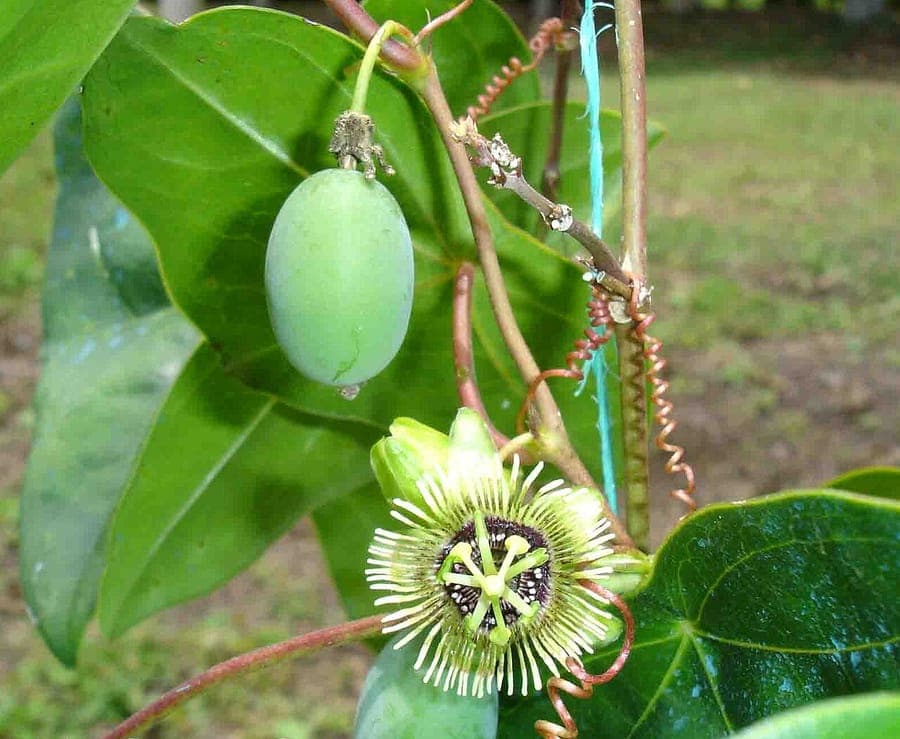
John Ocampo Johnocampo / CC BY-SA 3.0, via Wikimedia Commons
Passiflora coriacea: complete guide
Passiflora coriacea
¿Quieres ver Passiflora coriacea: complete guide en tu jardín?
1 minuto, sin tarjeta de crédito
Overview
Passiflora coriacea, known as the bat-leaf passionflower or murciélago, is an exotic climbing vine from Central America and northern South America. The plant is especially noted for its highly distinctive, bat-shaped leaves that are a true eye-catcher. The flowers, by contrast, are bird-like in nature and attract hummingbird-like birds.
This is not a plant for cold climates. In most parts of Europe, it is grown indoors in a greenhouse or conservatory, or outdoors only during very warm summer months. For those interested in exotic plants and warm regions, this passionflower offers a unique addition.
Appearance & bloom
Passiflora coriacea grows as a vigorous climbing vine and can, when supported, form structures several meters tall. The leaves are truly highly characteristic: they have a bird-like silhouette reminiscent of bat wings, hence the English name. The leaves are leathery (coriacea means "leathery"), dark green, and striking.
The flowers are small to medium-sized and have the complex appearance typical of passionflowers with their crown of colorful filaments. Flowers can vary in color from purple to white and red.
Ideal location
This plant requires abundant light and warmth. As an outdoor plant, it grows well only in very warm summer regions (southern Spain, southern France). Indoors, it must be in a very bright, warm window, preferably in a greenhouse or conservatory.
Temperatures above 15 degrees Celsius are necessary, but the plant prefers at least 20 degrees for optimal growth. Temperatures below 5 degrees Celsius can be fatal.
Soil
Passiflora coriacea requires very well-draining, nutrient-rich soil. A mixture of two parts universal potting soil and one part perlite or orchid bark works well. pH should be between 6.0 and 7.0.
Ensuring good drainage is crucial as this plant is susceptible to root rot in overly wet conditions. Repotting is needed every two years.
Diseño gratis
¿Quieres ver Passiflora coriacea: complete guide en tu jardín? Crea un diseño gratis ahora.
Watering
During the growing season (April to September), keep the soil consistently moist but not waterlogged. Water when the top inch of soil feels dry. Reduce watering significantly in winter when the plant grows more slowly.
Using rainwater or distilled water is better for this tropical plant, as it can be sensitive to chlorinated tap water.
Pruning
Regular pruning helps maintain shape and encourage bushiness. Remove the top growing tips regularly to promote lateral branching. Prune in early spring before the growth season begins. Remove any dead, damaged, or diseased wood whenever observed.
For vigorous vines, cut back by up to one-third in early spring to keep the plant manageable.
Maintenance calendar
Spring (March-May): Repot if necessary. Begin regular watering. Monitor for new growth. Prune to shape. Summer (June-August): Provide consistent moisture. Mist regularly for humidity. Watch for pests. Apply dilute fertilizer monthly. Fall (September-October): Gradually reduce watering as days shorten. Continue misting for humidity. Winter (November-February): Water sparingly. Maintain warm temperatures. Keep humidity moderate. Rest period for the plant.
Winter hardiness
Passiflora coriacea is not frost-hardy. It must be protected from temperatures below 10 degrees Celsius. In northern European climates, this plant must be grown indoors or moved indoors before autumn. In frost, the entire plant will likely die.
Companion plants
When grown indoors, pair with other tropical foliage plants like philodendrons, monsteras, or pothos. In warm outdoor locations, combine with other heat-loving vines or tender plants. Use trellises or supports to display the climbing nature of the plant beautifully.
Closing
The bat-leaf passionflower is a spectacular choice for enthusiasts of exotic tropical plants. While it requires warmth and protection in cooler climates, the unique foliage and intricate flowers make it a worthwhile addition to a greenhouse or conservatory collection.
Find Passiflora coriacea at specialty tropical plant nurseries or online retailers. For innovative garden design ideas, visit gardenworld.app. At gardenworld.app, explore how tropical specimens can enhance your garden vision.
¿Quieres ver Passiflora coriacea: complete guide en tu jardín? Crea un diseño gratis ahora.
Sube una foto, elige un estilo y obtén un diseño fotorrealista con lista de plantas en menos de un minuto.
Más de 10.000 jardines diseñados
Sin tarjeta de crédito


Plantas similares
Passiflora antioquiensis: complete guide
Passiflora antioquiensis
Passiflora antioquiensis is a Colombian banana passionflower with hanging pink blooms. Discover trellising, soil and winter care.
Purple passionflower: complete guide to growing Passiflora incarnata
Passiflora incarnata
Full growing guide for Passiflora incarnata, the hardy purple passionflower for zones 5-9. Planting, pruning, winter care and companion plants included.
Passiflora tenuiloba: complete guide
Passiflora tenuiloba
Birdwing passionflower blooms exotically and grows rapidly. Learn how to cultivate this passion flower in your garden as a vine or container plant.