
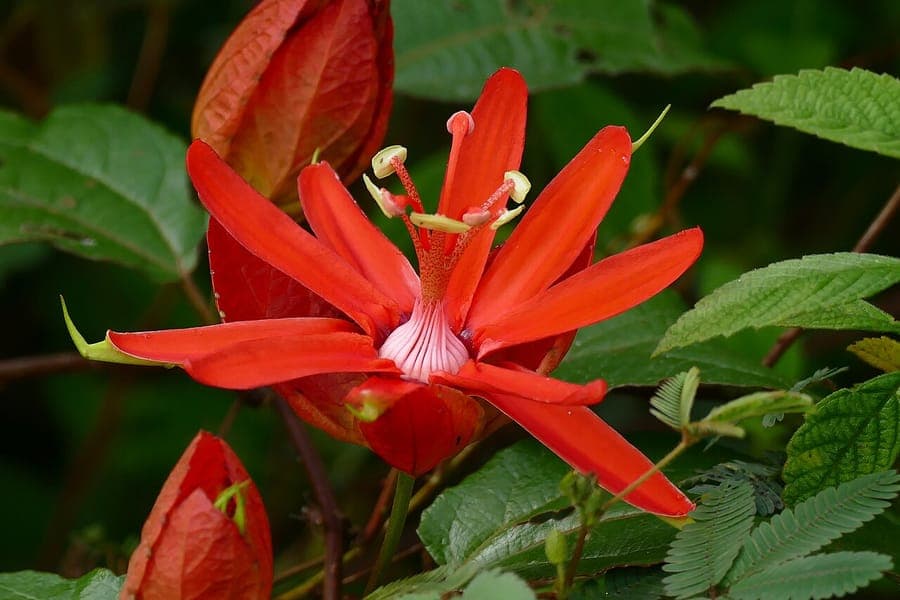
Bernard DUPONT from FRANCE / CC BY-SA 2.0, via Wikimedia Commons
Passiflora coccinea: complete guide
Passiflora coccinea
¿Quieres ver Passiflora coccinea: complete guide en tu jardín?
1 minuto, sin tarjeta de crédito
Overview
Passiflora coccinea, commonly known as Scarlet Passionflower or Red Passion Vine, is a spectacular tropical climbing plant from the Passifloraceae family. Native to South America, including Colombia, Venezuela, Guyana, Suriname, Brazil, and French Guiana, this vine thrives against trees in tropical rainforests.
The Scarlet Passionflower is a vigorous, fast-growing vine that quickly fills vertical spaces with dense foliage. The plant is most celebrated for its striking deep-red, exotic flowers that exude mystical beauty. These blooms appear from June through October, attracting pollinators and hummingbirds alike.
For gardenworld.app users, this vine offers a unique opportunity to achieve tropical flowering in temperate climates through greenhouse and conservatory cultivation. However, the vine requires specific care to thrive optimally.
Appearance and Bloom
Passiflora coccinea grows as a strong, branching climbing vine capable of reaching 4-6 meters in ideal conditions. Leaves are deeply lobed, approximately 8-12 centimeters long, featuring olive-green coloration with distinctly fine texture.
The flowers are the plant's true jewels. Measuring 6-8 centimeters in diameter, these showcase deeply scarlet-red petals forming a perfect circle. At the centre, striking, precisely-ordered corona filaments in purple-white and yellow create a hypnotic effect. Styles extend rigidly from the centre like delicate threads.
Following pollination, golden-brown fruits develop, approximately 4-5 centimeters large. The flesh is edible but not particularly palatable; the plant is cultivated primarily for its flowers.
Ideal Location
The Scarlet Passionflower requires very warm, bright growing conditions. In temperate climates, this must always be grown in a heated greenhouse or conservatory with minimum 6-8 hours direct sunlight daily.
The plant grows best against a support structure - wall trellis, mesh, or rope support. Ensure sturdy infrastructure to bear heavy vines and foliage. In greenhouse conditions, horizontal wires or espaliers work excellently.
Temperature is critical. Minimum nighttime temperature must be 15 degrees Celsius; ideally 18-25 degrees. Avoid temperature fluctuations that might disrupt blooming. Good ventilation is essential to prevent fungal diseases.
Soil
The Scarlet Passionflower grows optimally in nutrient-rich, well-draining soil. Ideal composition combines garden soil with organic material in 1:1 ratio. Adding extra compost or leaf-mold improves water retention.
PH value should be slightly acidic: 5.5 to 6.5 is ideal. In alkaline soils, the plant develops yellow foliage, indicating iron deficiency. Acidic soil amendments may prove necessary in chalky regions.
For container cultivation, use large pots (minimum 30 liters) with drainage holes. Add coarse organic material to potting mix: minimum 30% compost. This improves both drainage and moisture infiltration simultaneously.
Diseño gratis
¿Quieres ver Passiflora coccinea: complete guide en tu jardín? Crea un diseño gratis ahora.
Watering
During the growing season (May-October), soil must remain consistently moist. Water when the top 2-3 centimeters feel dry. Ensure water drains properly; stagnant water causes root rot.
In winter, when the plant grows minimally, reduce watering significantly. Water only enough to prevent complete root desiccation. Never allow waterlogging in winter dormancy.
High humidity requirements: daily misting with cool water helps tremendously. This mimics tropical conditions and promotes blooming. Use lukewarm water; cold water may cause leaf problems. In greenhouses, humidify air through wet floors or misting systems.
Pruning
The Scarlet Passionflower blooms on young growth, so pruning to encourage branching stimulates flowering. After winter (March-April), cut the plant back to approximately half its original size. This promotes dense, branched growth.
Throughout the growing season, remove excess vines that distort the desired form. Work carefully; the plant can be fragile in early growth stages. Tie in new growth along support structure as it emerges.
Following bloom (November), remove all dead, damaged, or excessively wild vines. This prepares the plant for winter dormancy.
Maintenance Calendar
January-February: Winter rest. Minimal moisture, no feeding. March-April: Growth initiation. Prune for form, begin regular feeding (monthly). May-June: Growth at full strength. Weekly feeding, consistent moisture, daily misting. July-August: Bloom preparation. Potassium-rich feeding, very consistent moisture. September-October: Flowering in full swing. Continue feeding, frequent misting. November-December: Bloom fades, dormancy begins. Taper feeding, reduce water.
Winter Hardiness
The Scarlet Passionflower is extremely frost-sensitive; temperatures below 10 degrees Celsius prove harmful. The plant cannot tolerate frost; even brief exposure to temperatures around zero degrees causes defoliation and severe damage.
In all temperate climates, this plant must overwinter indoors. A heated greenhouse or conservatory with minimum 15 degrees Celsius nighttime temperature is essential.
In very mild subtropical areas (southern French coast), outdoor cultivation with heavy winter protection may be possible, but carries significant risk.
Companion Plants
The Scarlet Passionflower grows well alongside other tropical vines and bloomers in greenhouse settings. Passion fruit varieties, tropical Clematis, and other Passiflora species create interesting combinations.
Smaller ornamental plants can grow beneath the passionflower's foliage, benefiting from shade and water drip zones. Bromeliads and small orchids thrive in these microclimates.
Also consider: In mixed borders outdoors (warm regions), the plant can work alongside fast-growing vines like Mandevilla or Bougainvillea for tropical effect.
Closing Thoughts
Passiflora coccinea is a true show-stopper for gardeners daring to pursue tropical cultivation. The spectacular red flowers and vigorous growth make this an investment that rewards over many years. With careful attention to warmth, light, feeding, and moisture, you'll enjoy years of these enchanting blooms.
At specialty nurseries, you'll find greenhouse plant feeders, potting soil, and garden supplies. For conservatory and greenhouse gardening advice, consult gardenworld.app, where experts help realize your tropical blooming dreams.
Add this deep-red Passionflower to your greenhouse collection - it guarantees admiration and lasting pleasure.
¿Quieres ver Passiflora coccinea: complete guide en tu jardín? Crea un diseño gratis ahora.
Sube una foto, elige un estilo y obtén un diseño fotorrealista con lista de plantas en menos de un minuto.
Más de 10.000 jardines diseñados
Sin tarjeta de crédito


Plantas similares
Passiflora antioquiensis: complete guide
Passiflora antioquiensis
Passiflora antioquiensis is a Colombian banana passionflower with hanging pink blooms. Discover trellising, soil and winter care.
Purple passionflower: complete guide to growing Passiflora incarnata
Passiflora incarnata
Full growing guide for Passiflora incarnata, the hardy purple passionflower for zones 5-9. Planting, pruning, winter care and companion plants included.
Passiflora tenuiloba: complete guide
Passiflora tenuiloba
Birdwing passionflower blooms exotically and grows rapidly. Learn how to cultivate this passion flower in your garden as a vine or container plant.