
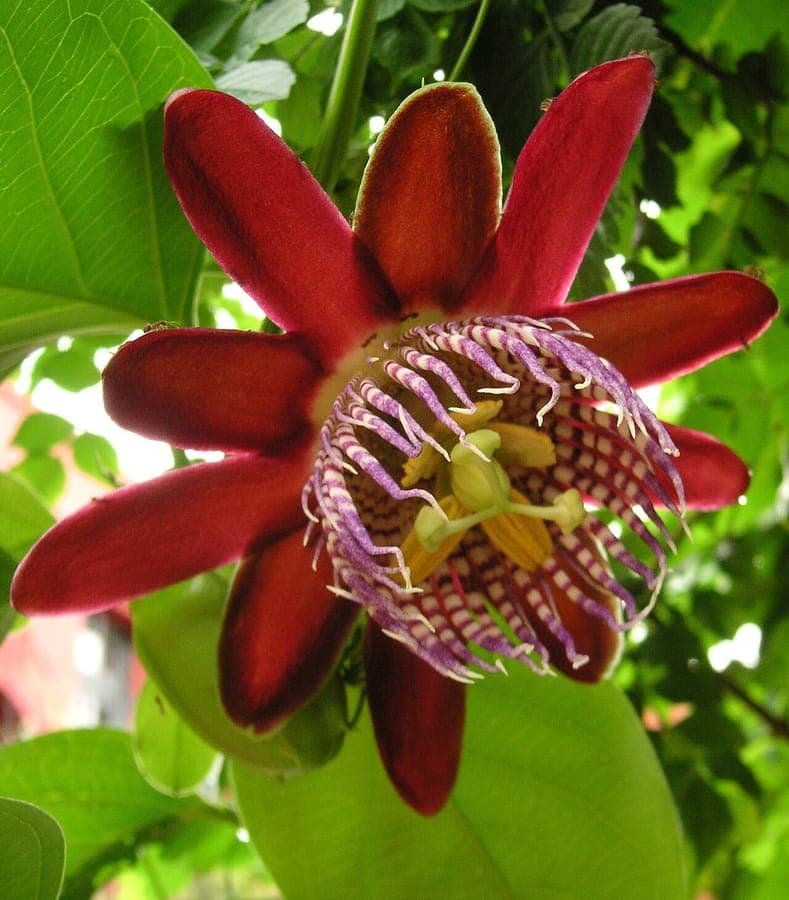
Beatrice Murch from Buenos Aires, Argentina / CC BY-SA 2.0, via Wikimedia Commons
Passiflora alata: complete guide
Passiflora alata
¿Quieres ver Passiflora alata: complete guide en tu jardín?
1 minuto, sin tarjeta de crédito
Overview
Passiflora alata, commonly known as Wingstem Passionflower or Winged Passion Flower, is an exotic climbing plant in the Passifloraceae family. This vigorous vine grows naturally in tropical rainforests from Ecuador to Brazil. With spectacular flowers that are also wonderfully fragrant, Passiflora alata is a sensational addition to warm greenhouses, patios and sheltered gardens in warm regions.
This is no ordinary passionflower. Wingstem Passionflower distinguishes itself through characteristic winged stems, large fragrant flowers and large, tasty fruits. In the Netherlands and Germany, this is a greenhouse plant, but in warmer areas (South Spain to south France) the plant can grow outdoors.
Appearance and Bloom
Passiflora alata forms vigorous vines with striking, broad wings along the stems. These wings give the plant its name and appearance. The leaf is ovate-oblong, glossy, with distinct veins. During warm season (May to October), large, highly fragrant flowers appear.
The flowers are spectacular: 8-12 cm in diameter, with red-orange sepals and an impressive crown of purple, white and red-orange filaments. The flowers also feature beautiful stamen and pistil structures in the center. After pollination, large, oval fruits (passion fruits) form, 7-10 cm, initially green, ripening to yellow-brown. The fruits are very aromatic and edible.
Ideal Location
Passiflora alata is a warmth-loving plant needing abundant light. Ideal situation:
- Warm greenhouse or conservatory (minimum 15°C in winter, preferably 18-22°C)
- Sunny, sheltered patios in South Netherlands or German regions (USDA zone 9b+)
- Against south or west-facing wall for maximum warmth
- In containers on wheels, moveable indoors/outdoors
The plant can grow outdoors in warm summer months (June-September), but must overwinter indoors. In Netherlands, planting outdoors is only possible in very warm gardens in South Limburg.
Soil
Passiflora alata prefers moist, nutrient-rich soil. Ideal mix:
- Garden soil 50% + incorporated compost or peat substitutes 30% + perlite/grit 20%
- Neutral to slightly acidic pH (6.0-7.0)
- Loose, well-draining structure
- Regularly fed soil
For containers: use high-quality potting soil with extra compost. Ensure drainage holes. The plant grows fast and needs abundant feeding.
Diseño gratis
¿Quieres ver Passiflora alata: complete guide en tu jardín? Crea un diseño gratis ahora.
Watering
Passiflora alata needs abundant water, especially during growth period. Regular watering is essential.
Guideline:
- Growth period (May-October): Water when top centimeter feels dry, regularly
- Winter in greenhouse (November-April): Less water, soil can be drier
- Summer outdoors: Daily water may be needed
- In containers: Check frequently, daily in hot periods
Avoid water stagnation around roots, but don't let it dry out. Misting leaves in hot periods helps.
Pruning
Passiflora alata can grow aggressively and requires regular maintenance:
- Remove weak, diseased or tangled shoots
- After flowering (October-November) prune back carefully
- Train shoots along support structures
- In greenhouse: regularly pinch tips to encourage branching
- Don't prune severely - plant recovers slowly from heavy pruning
Maintenance Calendar
Spring (March-April): Plant begins regrowing, increase watering and feeding, move outdoors after frost danger. Summer (May-October): Feed every two weeks, regular watering, enjoy bloom, support growth. Autumn (October-November): Cease feeding, prune carefully, prepare for entry. Winter (December-February): Minimal water, no feeding, ensure good ventilation in greenhouse against fungus.
Winter Hardiness
Passiflora alata is cold-sensitive and cannot tolerate below 10°C. In Netherlands and Germany the plant MUST overwinter indoors. Prolonged cold causes lethal damage.
Winter care:
- Move indoors before first frost (October)
- Provide minimum 12-15°C (preferably 18-20°C)
- Reduce water in winter
- Ventilate regularly against fungal issues
- Check for pests
Companion Plants
Passiflora alata works well with:
- Climbing plant partners: Clematis, Solanum jasminoides, Mandevilla
- Warmth-loving plant combinations: Begonia, Impatiens at base
- Summer plants: Jasminum polyanthum, Stephanotis, shade-loving Hosta
- Standalone: Perfect as specimen climber
Closing
Passiflora alata is a spectacular, exotic climbing plant for those with space in greenhouse, conservatory or warm greenhouse. With regular water, feeding and support, the plant grows vigorously and blooms abundantly. The fragrance alone makes this plant worthwhile. The passion fruits are the dessert. You'll find exotic climbing plants regularly at garden centers.
This plant is ideal for those loving exotic, fragrant plants and having opportunity to provide support and shelter. Passiflora alata deserves place in every warm greenhouse or temperate greenhouse space.
Visit gardenworld.app for ideas on how to optimally use this spectacular passionflower in greenhouse or patio designs, making it part of your tropical garden dream.
¿Quieres ver Passiflora alata: complete guide en tu jardín? Crea un diseño gratis ahora.
Sube una foto, elige un estilo y obtén un diseño fotorrealista con lista de plantas en menos de un minuto.
Más de 10.000 jardines diseñados
Sin tarjeta de crédito


Plantas similares
Passiflora antioquiensis: complete guide
Passiflora antioquiensis
Passiflora antioquiensis is a Colombian banana passionflower with hanging pink blooms. Discover trellising, soil and winter care.
Purple passionflower: complete guide to growing Passiflora incarnata
Passiflora incarnata
Full growing guide for Passiflora incarnata, the hardy purple passionflower for zones 5-9. Planting, pruning, winter care and companion plants included.
Passiflora tenuiloba: complete guide
Passiflora tenuiloba
Birdwing passionflower blooms exotically and grows rapidly. Learn how to cultivate this passion flower in your garden as a vine or container plant.