
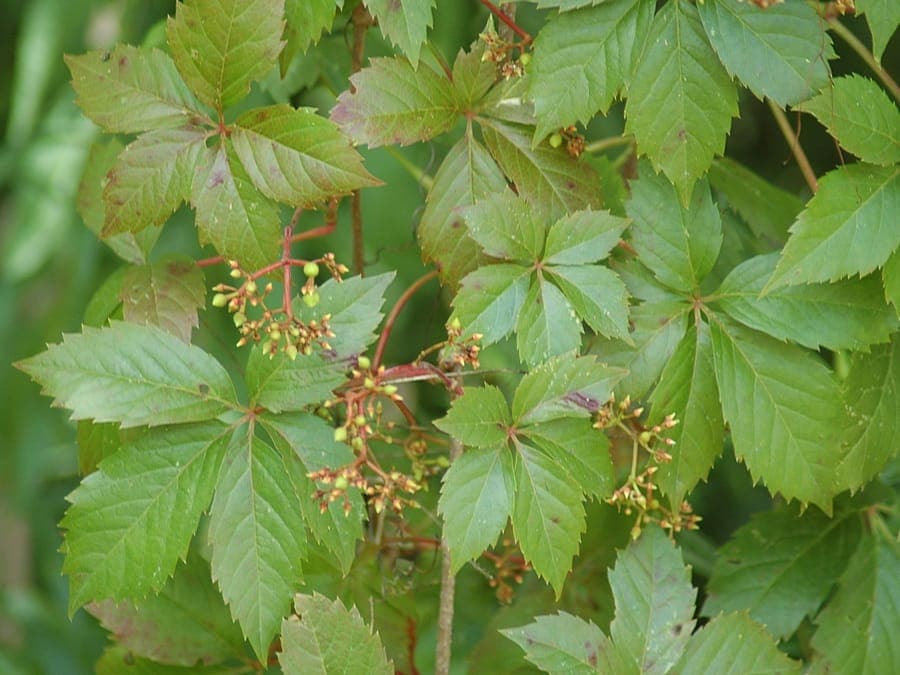
Linnaeus / CC BY-SA 3.0, via Wikimedia Commons
Virginia creeper: complete guide
Parthenocissus quinquefolia
¿Quieres ver Virginia creeper: complete guide en tu jardín?
1 minuto, sin tarjeta de crédito
Overview
Virginia creeper (Parthenocissus quinquefolia), also called woodbine, is a vigorous, fast-growing climber from the Vitaceae family. This North American plant reaches 10 to 15 meters and clings via self-adhesive disc-tipped tendrils. Perfect for covering large walls, sheds, and pergolas, this plant offers stunning autumn color and minimal maintenance.
Appearance & Growth
Parthenocissus quinquefolia forms a lush canopy with five to seven small, hand-shaped leaflets per leaf. Each leaflet measures 3 to 10 centimeters long with fine serration. During growing season, foliage is bright green; autumn (September-November) brings spectacular red to purple transformation.
The plant climbs via self-adhesive suction disc tendrils requiring no support or tying. These discs adhere directly to brick, concrete, wood, and other surfaces without causing damage.
Summer produces small, green flowers in clusters, followed by dark blue, inedible berries (8-10mm diameter) that attract birds.
Ideal Location
Virginia creeper grows in both full sun and partial shade but prefers sunny sites where rich autumn colors develop. The plant suits:
- Coverage of tall, bare walls
- Pergolas and garden gates
- Wooden shed walls
- Fences and trellis structures
- Historic buildings (non-damaging)
Soil Requirements
Virginia creeper is undemanding regarding soil type and grows in virtually all soils. The plant tolerates acidic (pH 5.0) through alkaline soils (pH 8.0). Good drainage matters, but the plant tolerates moisture better than many climbers.
At planting, incorporate compost for improved moisture retention. Mature plants are highly drought-tolerant.
Watering
During first growing season (first year post-planting), water regularly to establish roots. Thereafter, Virginia creeper is very drought-tolerant, requiring water only during extended dry spells (over 3 weeks without rain).
Walls and outbuildings may receive less rainwater; provide supplemental watering during dry summers.
Diseño gratis
¿Quieres ver Virginia creeper: complete guide en tu jardín? Crea un diseño gratis ahora.
Support & Initial Installation
Virginia creeper needs no initial support - it adheres directly via tendrils. Place young plants against walls, sheds, or structures and loosely tie initial shoots. Once growth reaches 30-50 centimeters, binding becomes unnecessary.
Ensure the surface is clean (free of fungi or loose paint) for optimal adhesive force.
Pruning
Virginia creeper requires minimal maintenance. In spring (March-April), trim wayward shoots. After several years, heavy pruning may be needed:
- Cut shoots to desired size
- Reduce thick growth by removing some older stems
- Never remove more than one-third of total growth annually
Maintenance Calendar
- March-April: Light formative pruning, check ties
- May-July: Growth stimulation, water during drought
- August-September: No active maintenance
- September-October: Peak autumn colors, photograph
- November-December: Heavy pruning possible, winter preparation
Winter Hardiness
Virginia creeper is hardy to USDA zone 3 (approximately -40°C). The plant survives unprotected across Netherlands, Belgium, Germany, and France. Winter damage is rare.
Adhesive Force & Maintenance
After years of growth, tendrils can loosen aging mortar. Prevention includes:
- Regular maintenance and pruning
- Preventing growth in extremely damp conditions
- Inspecting masonry condition before planting on old buildings
Companion Structures
Virginia creeper pairs beautifully with:
- Heavy wooden structures (pergolas, arches)
- Stone walls and brick buildings
- Ornamental grasses beneath
- Low shrubs for visual balance
Pests & Diseases
Virginia creeper stays generally healthy. Fungal diseases can occur in very wet seasons; prevent through good ventilation of dense growth. Spider mites may appear but rarely cause damage.
Closing
Virginia creeper is an invaluable, fast-growing climber for large surfaces. With self-adhesive tendrils, minimal maintenance, and spectacular autumn color, this plant deserves space on every exterior wall. Visualize your front facade with Virginia creeper on GardenWorld. Read more climber advice on GardenWorld for further inspiration.
¿Quieres ver Virginia creeper: complete guide en tu jardín? Crea un diseño gratis ahora.
Sube una foto, elige un estilo y obtén un diseño fotorrealista con lista de plantas en menos de un minuto.
Más de 10.000 jardines diseñados
Sin tarjeta de crédito


Plantas similares
Catbird grape: complete guide
Vitis palmata
Discover the Catbird grape (Vitis palmata), a hardy wild grapevine that draws songbirds. Learn about location, pruning, and year-round care.
Monkshoodvine: complete guide
Ampelopsis aconitifolia
Discover Monkshoodvine. Learn how to care for this plant in your garden.
Vitis girdiana: complete guide to this resilient desert wild grape
Vitis girdiana
Discover Vitis girdiana, the Desert Wild Grape: a resilient native vine from California and Mexico. Perfect for dry, warm gardens and pergola screening.