
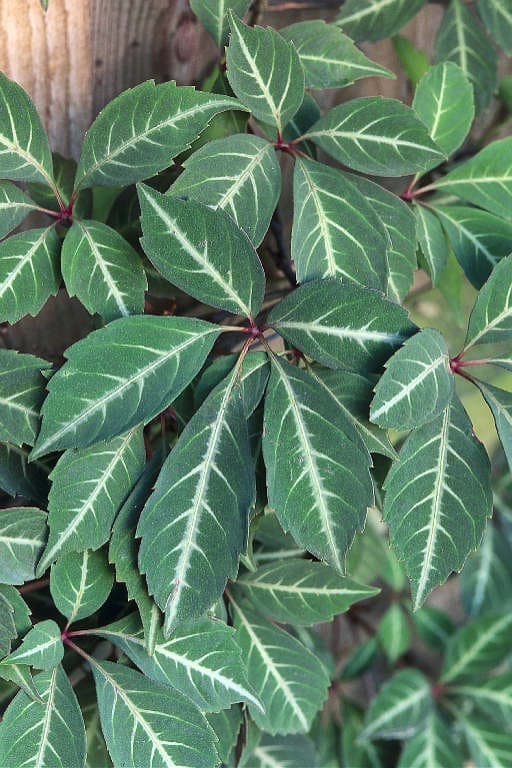
Rachida Boutboul / CC0, via Wikimedia Commons
Chinese Virginia-creeper: complete guide
Parthenocissus henryana
¿Quieres ver Chinese Virginia-creeper: complete guide en tu jardín?
1 minuto, sin tarjeta de crédito
Overview
The Chinese Virginia-creeper, scientifically Parthenocissus henryana, is a beautiful self-clinging climbing plant from the grape family. This Asian beauty distinguishes itself through striking leaves with silvery veins that contrast beautifully against deep green. In your garden, this plant brings elegance and texture, especially in shaded corners where few other plants thrive.
Appearance and bloom
Parthenocissus henryana grows as a slender, vigorous climber with palmate leaves reaching up to 15 centimeters wide. The silvery veins give the leaf an almost quilted appearance. The plant attaches via adhesive discs to surfaces and needs no support structure. In spring, inconspicuous greenish flowers appear, followed by blue berries in autumn that attract birds. Foliage turns reddish-orange in fall, creating a beautiful autumn display.
Ideal location
This plant feels most at home in part-shade to shade. While it tolerates shade, it grows faster with indirect daylight. Avoid direct afternoon sun, especially in warm climates, as this can cause leaf scorch. Ideal for north-facing walls, shaded structures, and beneath deciduous trees where it can do its work quietly.
Soil
Well-draining, humus-rich soil is essential. The plant prefers soil rich in organic matter. Add compost or leaf mould when planting. A pH between 6.0 to 7.5 is ideal. Ensure good drainage to prevent root rot.
Watering
Consistency is key here. Keep soil consistently moist but not waterlogged. During the growing period (spring-summer), water regularly. As temperatures drop in fall-winter, reduce watering significantly. Check soil moisture with your finger (to 2 cm deep) before watering.
Diseño gratis
¿Quieres ver Chinese Virginia-creeper: complete guide en tu jardín? Crea un diseño gratis ahora.
Pruning
Pruning is important for shape and health. Perform major pruning in late winter before new growth begins. Cut back overly long shoots and remove dead or damaged parts. Regular pinching during the growing season promotes denser, more branched growth. Do not be afraid to prune aggressively; this plant recovers well.
Maintenance calendar
Spring: Check for winter damage, prune, provide extra feeding with slow-release fertilizer. Summer: Water regularly, monitor for pest infestations, feed monthly. Fall: Reduce watering frequency, enjoy color change, prepare for winter. Winter: Minimal maintenance, protect from extreme frost, no feeding needed.
Winter hardiness
Parthenocissus henryana is reasonably winter hardy to approximately -10 to -15 degrees Celsius. In cold regions (zone 6 and colder), it prefers protected locations. In very severe winters, above-ground growth may die back, but root systems usually survive. A mulch layer around the base helps protect roots.
Companion plants
This climbing vine combines well with shade-loving understory plantings such as helleborus, hostas, and astilbe. Against walls, you can plant low ferns or bergenia beneath it. Allow adequate space around the plant so it is not smothered by aggressive neighbors.
Closing
The Chinese Virginia-creeper is a valuable addition to any shaded garden. Thanks to its self-clinging properties, elegant foliage, and low maintenance needs, it invites creation of green walls without fuss. Start with a healthy plant, and enjoy years of its quiet beauty. Find your settings for temperature, water, and nutrition, and reward yourself with a healthy, flourishing plant. Discover more inspiration on gardenworld.app.
Visit gardenworld.app for a complete garden design where climbing plants like this can truly shine.
¿Quieres ver Chinese Virginia-creeper: complete guide en tu jardín? Crea un diseño gratis ahora.
Sube una foto, elige un estilo y obtén un diseño fotorrealista con lista de plantas en menos de un minuto.
Más de 10.000 jardines diseñados
Sin tarjeta de crédito


Plantas similares
Catbird grape: complete guide
Vitis palmata
Discover the Catbird grape (Vitis palmata), a hardy wild grapevine that draws songbirds. Learn about location, pruning, and year-round care.
Monkshoodvine: complete guide
Ampelopsis aconitifolia
Discover Monkshoodvine. Learn how to care for this plant in your garden.
Vitis girdiana: complete guide to this resilient desert wild grape
Vitis girdiana
Discover Vitis girdiana, the Desert Wild Grape: a resilient native vine from California and Mexico. Perfect for dry, warm gardens and pergola screening.