
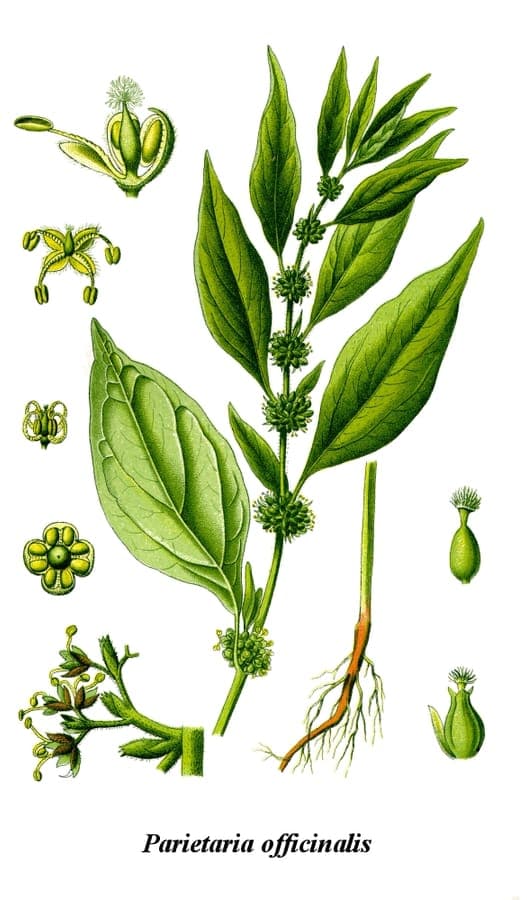
User:Chrizz / CC BY-SA 3.0, via Wikimedia Commons
Parietaria officinalis: complete guide
Parietaria officinalis
¿Quieres ver Parietaria officinalis: complete guide en tu jardín?
1 minuto, sin tarjeta de crédito
Overview
Parietaria officinalis, well-known as wall glasswork or muraria plant, is a traditional herb that has been cultivated in gardens for centuries. This Urticaceae family member grows naturally from Central to Southern Europe through to Iran and Turkmenistan. The name 'officinalis' indicates this plant has medicinal applications. In modern front garden designs, it offers not only greenery on difficult-to-reach spots, but also practical value as food for butterflies and bees.
Appearance and Bloom
Parietaria officinalis grows as an elegant, delicately branched plant reaching 20 to 40 centimeters high. Its leaves are small, glossy green, and densely packed, creating a beautiful green mass. The flowers are extremely small and group themselves between the leaves; they are greenish and not particularly showy. The plant is evergreen, so you have nine months of green on your wall annually. From May to October, the minuscule blooms are in full activity.
Ideal Location
This plant thrives best in semi-shade to full sun, though it prefers locations with some afternoon shade in very hot climates. In Northern Europe, it performs perfectly on the north or west side of buildings. Against shaded walls, in crevices, on stairs, and in cracks between stones, Parietaria officinalis feels completely at home. The plant is particularly suited to old gardens where it settles into generations of ancient stonework.
Soil
Parietaria officinalis is equally tolerant of poor nutrition as its relative P. judaica. The plant grows in very poor, chalky or stony soil. Actually, the barer the soil, the better. Drainage is crucial; waterlogging leads to rot. In traditional wall-plant cultivation, this plant is often planted with merely some sand between the stones. A thin layer of compost can be beneficial, but is absolutely not necessary.
Watering
Once well-established, Parietaria officinalis can manage quite long without water. During the first growing season, water regularly to support root development; thereafter favor dry periods. Potted specimens require more attention and regular watering. Moisture stress is generally well-tolerated; overwatering is the true enemy of this plant.
Diseño gratis
¿Quieres ver Parietaria officinalis: complete guide en tu jardín? Crea un diseño gratis ahora.
Pruning
Parietaria officinalis can be shaped to fine detail thanks to its slender growth. In spring, gentle pruning can occur to encourage dense growth. Replace dead material by checking regularly and carefully cutting away. The plant responds well to drastic pruning and quickly forms new shoots after removal of older stems. In narrow spaces, the plant can be deliberately shaped for optimal wall coverage.
Maintenance Calendar
Spring (March-May): Begin gentle shaping and check winter damage. Water regularly for good root development.
Summer (June-August): Minimal maintenance. Water only in dry periods. Enjoy the flowers and insects.
Autumn (September-November): Prune old stems back for fresh foliage. Stop feeding. Plant prepares for winter.
Winter (December-February): Preserve evergreen character. Minimal care. Protect against extreme frost periods.
Winter Hardiness
Parietaria officinalis is frost-hardy to approximately -10 degrees Celsius, slightly less robust than P. judaica. In Southern Europe, it survives winter completely without protection. In milder climates, protection with mulch benefits very cold years. However, the plant regrows quickly from the roots, even after light frost damage.
Companion Plants
Parietaria officinalis combines elegantly with fine-leafed plants such as Asplenium or refined ferns. In stone-wall environments, it harmonizes well with Sedum, Sempervivum, and delicate mosses. Other wall herbs such as Saxifraga and small Aubrieta fit well in combination. This plant supports micro-plant communities that belong together.
Conclusion
Parietaria officinalis brings traditional garden magic to your front garden. With its slender growth, modest beauty, and practically zero maintenance needs, this plant is ideal for those wanting nature to do the free work. Plant it in crevices and cracks, and let it take care of itself.
Find Parietaria officinalis seed or young plants at local garden centers. Discover more plant combinations on gardenworld.app. Gardenworld.app helps you design a front garden that feels like home.
¿Quieres ver Parietaria officinalis: complete guide en tu jardín? Crea un diseño gratis ahora.
Sube una foto, elige un estilo y obtén un diseño fotorrealista con lista de plantas en menos de un minuto.
Más de 10.000 jardines diseñados
Sin tarjeta de crédito


Plantas similares
False nettle (Boehmeria cylindrica): complete guide
Boehmeria cylindrica
Full guide to Boehmeria cylindrica, false nettle: origin, appearance, ideal location, soil, watering and care for this wetland perennial.
Pumpwood: complete guide
Cecropia schreberiana
Complete guide to Cecropia schreberiana: origins, appearance, care requirements and growing tips for this tropical pioneer tree.
Laportea canadensis: complete guide
Laportea canadensis
Discover Laportea canadensis (Wood-nettle), a fascinating woodland plant. Thrives in moist shaded areas. Complete growing and care guide for this unique species.