
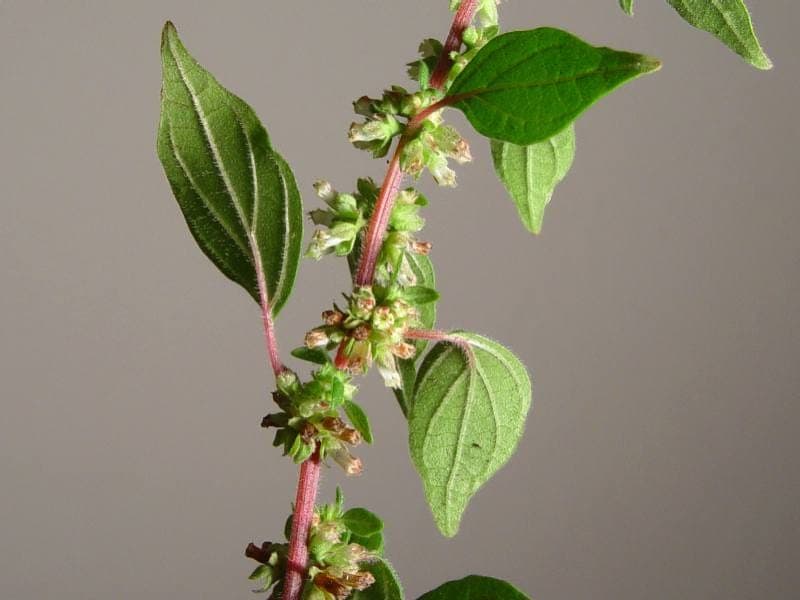
Franco Folini / CC BY 2.5, via Wikimedia Commons
Parietaria judaica: complete guide
Parietaria judaica
¿Quieres ver Parietaria judaica: complete guide en tu jardín?
1 minuto, sin tarjeta de crédito
Overview
Parietaria judaica, commonly known as rustic glasswork or pellitory, is a remarkable plant that thrives in the most unlikely locations. This compact species from the Urticaceae family grows naturally across North Africa, Europe, and Central Asia. The name 'judaica' references its Mediterranean origins. In front gardens, it provides decorative value and practical use as a groundcover or wall clothing.
Appearance and Bloom
Parietaria judaica grows as a fine, much-branched groundcover reaching maximum heights of thirty centimeters. Its leaves are small, lance-shaped, and softly hairy, giving the plant attractive texture. Flowers are inconspicuous greenish blooms appearing from May to September. The plant achieves full beauty through massing: the more plants you place together, the better the visual effect.
Ideal Location
This plant thrives optimally in sunny to semi-shaded locations. In Northern European conditions, choose a sunny spot where the plant receives at least six hours of daylight. Against walls where heat reflects, Parietaria judaica grows exceptionally well. The plant is perfectly suited for stone walls, between steps, or in crevices where conventional greenery would normally struggle.
Soil
A major advantage of Parietaria judaica is its complete lack of soil demands. The plant grows in virtually any soil, even shallow earth with abundant stone or moisture-poor ground. Optimal is well-draining earth; waterlogging must absolutely be avoided. A stony environment with minimal soil is actually ideal. When planting directly, add some sand for better drainage, but nothing more is needed.
Watering
Parietaria judaica is very drought-tolerant once established. During the first growing season, water regularly; thereafter only during extreme dry periods. The plant benefits from natural moisture from vapor and night dew. In container culture, water more frequently; as soon as the top layer feels dry, add water. Overwatering leads to fungal damage and must absolutely be avoided.
Diseño gratis
¿Quieres ver Parietaria judaica: complete guide en tu jardín? Crea un diseño gratis ahora.
Pruning
Parietaria judaica requires no regular pruning. Gentle shaping can occur in spring to keep the plant compact. Replace dead or damaged stems by carefully cutting them away. The plant will quickly form new branches after this gentle pruning. In narrow spaces or against walls, you can direct growth by removing weak shoots in particular directions.
Maintenance Calendar
Spring (March-May): Begin with guided shaping. Check for winter damage and carefully add compost.
Summer (June-August): Water only during drought. Enjoy the plant; no further maintenance needed.
Autumn (September-November): Stop feeding. The plant prepares itself for rest.
Winter (December-February): Protection in very severe winters using dry leaves. No care needed.
Winter Hardiness
Parietaria judaica is frost-hardy to approximately -15 degrees Celsius. In regions with harsher winters, protection is advisable by stacking plant material or mulching the planting area. The plant usually regenerates from the roots when foliage is frozen. In continental climates with heavy snow, the plant easily survives under the snow layer.
Companion Plants
Parietaria judaica combines well with other wall plants such as Sedum, Sempervivum, and moss. Together they form a green tapestry in unusual locations. At ground level, low-growing relatives such as Soleirolia soleirolii and fine-leaved Hedera hellix work well. Avoid vigorous growers that would overwhelm this delicate plant.
Conclusion
Parietaria judaica is a surprising choice for those wanting to grow green in improbable places. With minimal care, a preference for lean conditions, and quiet beauty, this plant fits perfectly into modern minimalist designs. Find your spot on a wall or between stones and let this independent plant do its work.
Find Parietaria judaica at garden centers. Visit gardenworld.app for more plant combinations and inspiration. Gardenworld.app helps you design spaces that fit your style perfectly.
¿Quieres ver Parietaria judaica: complete guide en tu jardín? Crea un diseño gratis ahora.
Sube una foto, elige un estilo y obtén un diseño fotorrealista con lista de plantas en menos de un minuto.
Más de 10.000 jardines diseñados
Sin tarjeta de crédito


Plantas similares
False nettle (Boehmeria cylindrica): complete guide
Boehmeria cylindrica
Full guide to Boehmeria cylindrica, false nettle: origin, appearance, ideal location, soil, watering and care for this wetland perennial.
Pumpwood: complete guide
Cecropia schreberiana
Complete guide to Cecropia schreberiana: origins, appearance, care requirements and growing tips for this tropical pioneer tree.
Laportea canadensis: complete guide
Laportea canadensis
Discover Laportea canadensis (Wood-nettle), a fascinating woodland plant. Thrives in moist shaded areas. Complete growing and care guide for this unique species.