
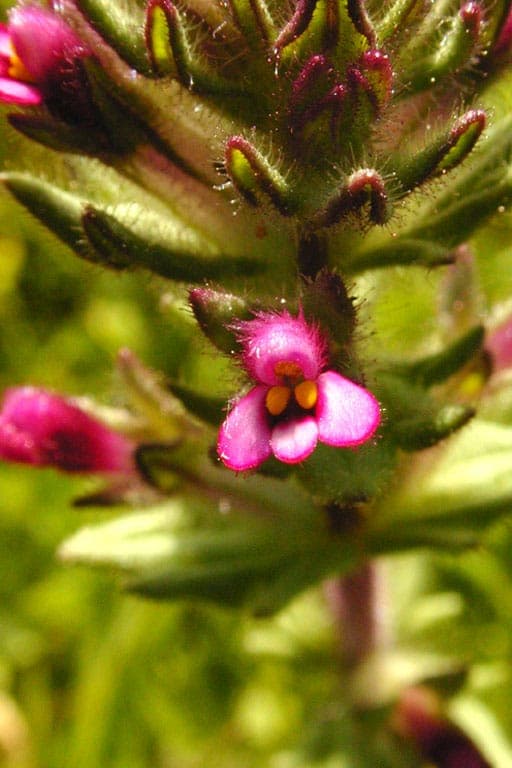
Bart and Susan Eisenberg / CC BY 3.0, via Wikimedia Commons
Parentucellia latifolia: complete guide
Parentucellia latifolia
¿Quieres ver Parentucellia latifolia: complete guide en tu jardín?
1 minuto, sin tarjeta de crédito
Overview
Parentucellia latifolia, commonly known as broadleaf glandweed, is a fascinating annual flowering plant from the Orobanchaceae family. This plant is native to Mediterranean and East African regions and is grown primarily as an annual in temperate climates. The plant distinguishes itself through its bright yellow flowers and compact growth habit.
Parentucellia latifolia reaches heights of 20-50 centimeters with broad, deeply divided foliage and abundant bright yellow blooms. The flowering period extends from May through September. The plant is highly suitable for front borders, rock gardens and container plantings in gardens.
Appearance & Bloom
The flowers of Parentucellia latifolia are strikingly beautiful. They are small, approximately 1-1.5 centimeters long, but appear in profusion. The flowers display a characteristic two-lipped form in bright yellow-brown to red-yellow coloring. Some specimens show red spots or stripes.
The foliage is elegant and practical. The leaves are broad and deeply divided, giving the plant a voluptuous appearance. The plant grows compactly and densely flowered, making it ideal for front borders.
Ideal Location
Parentucellia latifolia thrives best in full sun to partial shade locations. Four to five hours of direct sunlight daily ensures optimal bloom and compact growth. In southern regions, afternoon shade can prevent excessive heat stress.
Plant in shelter from strong winds. The plant can grow close against walls where warmth is reflected. Avoid very shaded locations, as these result in weak growth and sparse flowering.
Soil
Parentucellia latifolia has modest soil requirements. Well-draining, slightly acidic to neutral soil is ideal. The plant tolerates poor soils well and even thrives in sandy, lean soils. A pH between 5.5 and 7.0 is acceptable.
Ensure good drainage by adding sand or fine gravel to heavy clay soils. The plant prefers relatively dry conditions and faces more problems from excess moisture than deficiency. Organic improvement is less important for this plant than drainage.
Diseño gratis
¿Quieres ver Parentucellia latifolia: complete guide en tu jardín? Crea un diseño gratis ahora.
Watering
Parentucellia latifolia prefers moderately moist soil, especially during the growth period. Water regularly but avoid excess. Once established, the plant can tolerate limited drought. Water deeply at planting, thereafter less frequently.
Ensure the soil does not become waterlogged. The plant prefers moderately moist soil. Excessive water can lead to root rot.
Pruning
Parentucellia latifolia requires very minimal pruning. Deadhead spent flowers regularly to promote continuous blooming. Remove dead or damaged leaves and stems as soon as noticed.
For annual plants, autumn pruning is unnecessary. Allow the plant to naturally decline in fall.
Maintenance Calendar
May: Plant out or direct sow in full ground. Water well after planting. Begin regular watering.
June-July: Flowering begins. Ensure regular watering. Deadhead spent flowers.
August-September: Peak bloom period. Increase watering frequency during dry spells. Apply light feeding.
October: Bloom diminishes. Reduce watering. Plant completes annual growth cycle.
November-March: Plant is finished for the season.
Winter Hardiness
Parentucellia latifolia is not winter hardy in temperate to cold climates. The plant is grown exclusively as an annual in moderate temperature zones. In warm regions with winters above 10 degrees Celsius, the plant may potentially overwinter and reseed.
In all other regions, allow the plant to wilt in late October and remove the remains for composting.
Companion Plants
Parentucellia latifolia combines beautifully with other summer bloomers. Pair with purple verbena or pink diascia for contrasting colors. Silvery Senecio cineraria provides elegant contrast with the yellow flowers.
In front borders, glandweed works well with low-growers like Bacopa and lobelia. For rock gardens, combine with alpine sedums and sempervivums.
Conclusion
Parentucellia latifolia deserves greater attention from gardeners wanting refined, delicate summer bloomers. With minimal care, appropriate location and reasonable watering, this plant delivers months of bloom. Whether positioning a few plants along garden paths or filling entire borders, glandweed adds warm yellow accents. Plant is available at garden centers. Visit gardenworld.app for more inspiration with summer bloomers.
¿Quieres ver Parentucellia latifolia: complete guide en tu jardín? Crea un diseño gratis ahora.
Sube una foto, elige un estilo y obtén un diseño fotorrealista con lista de plantas en menos de un minuto.
Sin tarjeta de crédito


Plantas similares
Northwestern Indian paintbrush: complete guide
Castilleja angustifolia
All about Castilleja angustifolia, the northwestern Indian paintbrush from dry western US steppes. Growing, care, and companion plant advice.
Wavyleaf Indian paintbrush: complete guide
Castilleja applegatei
Everything about Castilleja applegatei, the wavyleaf paintbrush from Oregon and California. Host plants, care, location, and garden use covered.
Bushy bird's-beak: complete guide
Cordylanthus ramosus
Complete guide to Cordylanthus ramosus, the hemiparasitic annual of western US steppes: ecology, host plants, cultivation and uses.