
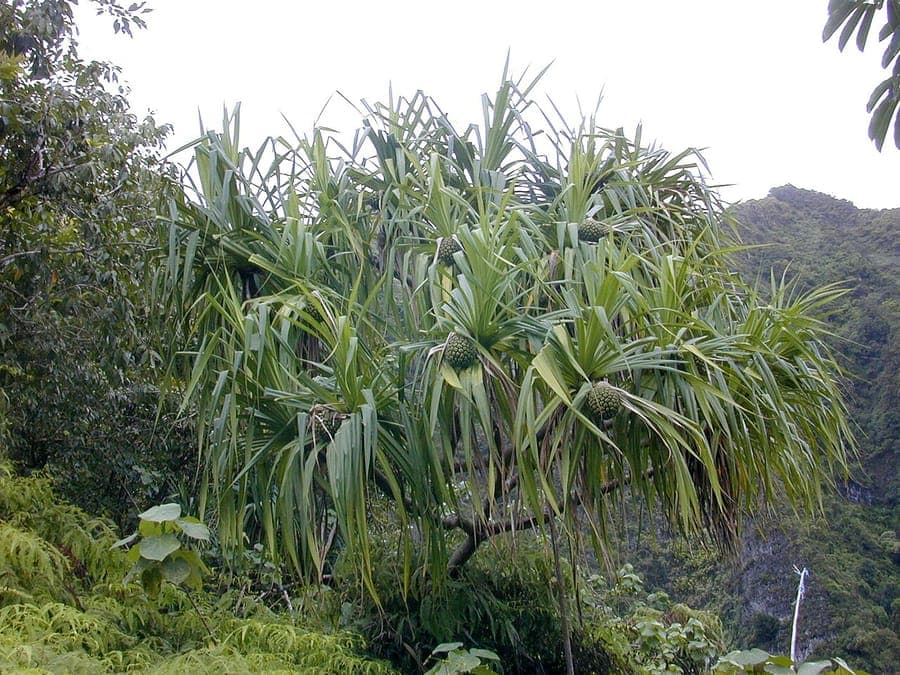
No machine-readable author provided. Marshman~commonswiki assumed (based on copyright claims). / CC BY-SA 3.0, via Wikimedia Commons
Tahitian screwpine: complete guide
Pandanus tectorius
¿Quieres ver Tahitian screwpine: complete guide en tu jardín?
1 minuto, sin tarjeta de crédito
Overview
The Tahitian screwpine, scientifically Pandanus tectorius, is a striking tropical plant bringing direct Pacific island accent. This plant originating from Polynesia and Southeast Asia is instantly recognizable by its characteristic spiral arrangement of long, narrow leaves. In warm climates it develops into an impressive shrub or tree.
On gardenworld.app, see how this exotic plant transforms Mediterranean gardens in warm Southern Europe. For northern regions, Pandanus tectorius offers a fascinating summer container plant, overwintered indoors. The plant delivers incredible structure and texture to any garden design.
Appearance and growth
Pandanus tectorius grows vigorously with characteristic spiral fan arrangement of long, narrow leaves. These leaves reach 60-150 cm long and 4-8 cm wide. Color ranges from yellow-green to grey-green. Leaf margins and undersides have sharp teeth - wear gloves during care!
The plant forms strong aerial root supports as it matures, contributing to dramatic appearance. In warm climates, fragrant flowers may appear, followed by orange-red fruit-like structures.
Ideal location
Pandanus tectorius thrives in very sunny locations. The plant tolerates no shade - at least 6-8 hours direct sunlight daily is essential. In southern gardens position it center-front as striking specimen element.
On gardenworld.app see how this plant rises dramatically against blue Mediterranean backgrounds. For northern regions: use as strong container plant for summer terrace use.
Soil
Pandanus tectorius is not fussy about soil type but demands excellent drainage. In container growing use quality potting mix blended with extra perlite (30%). In gardens work the planting area with sand and gravel.
The plant thrives in slightly acidic to neutral soils. In very alkaline soils leaf yellowing may appear. The plant prefers nutrient-rich soil - add organic matter at planting.
Diseño gratis
¿Quieres ver Tahitian screwpine: complete guide en tu jardín? Crea un diseño gratis ahora.
Watering
During growing season (spring-summer) water regularly. Top soil layer should never completely dry. In container cultivation check moisture daily during warm weeks.
In autumn and winter gradually reduce water, especially for container plants. Overwatering causes root rot. Spray foliage regularly to remove dust and increase humidity.
Pruning
Pruning is optional. Remove only dead outer leaves. Damaged leaf tips can be trimmed for neater appearance, but this is purely cosmetic. The plant forms attractive shape naturally.
Indoors you may gently remove lower leaves to allow light penetration to plant center.
Maintenance calendar
May to August: Growth season; water regularly and feed monthly. September to October: Gradually reduce feeding. November to April: Minimal feeding, less water (containers). May: Check root growth.
Winter hardiness
Pandanus tectorius is frost-sensitive and must not be exposed to temperatures below 10 degrees Celsius. In Southern France and Southern Spain it can stay outdoors if protected. For northern regions: definitely container plant - overwinter indoors at minimum 15 degrees.
Companion plants
In Mediterranean gardens, Pandanus tectorius pairs beautifully with other exotic greenery such as Aeonium or Agave. In containers it works well with yellow flowering plants and purple foliage as underplanting.
On gardenworld.app design tropical-inspired borders where this plant plays lead role.
Closing
The Tahitian screwpine is for those who dare! This exotic plant delivers drama and structure. In warm climates a spectacular permanent plant, for northern regions an elegant summer container. With minimal care it provides years of pleasure.
¿Quieres ver Tahitian screwpine: complete guide en tu jardín? Crea un diseño gratis ahora.
Sube una foto, elige un estilo y obtén un diseño fotorrealista con lista de plantas en menos de un minuto.
Más de 10.000 jardines diseñados
Sin tarjeta de crédito


Plantas similares
Acer pycnanthum: complete guide
Acer pycnanthum
Acer pycnanthum, the Japanese swamp maple, is a fast-growing tree with early red flowers and brilliant autumn color, ideal for damp garden settings.
Freeman maple: complete guide
Acer × freemanii
Everything about the Freeman maple (Acer x freemanii): a fast-growing shade tree with spectacular autumn colour for large gardens.
Silver vine: complete guide
Actinidia polygama
Discover silver vine (Actinidia polygama): a hardy climbing plant with silvery foliage, loved by gardeners and cats alike.