
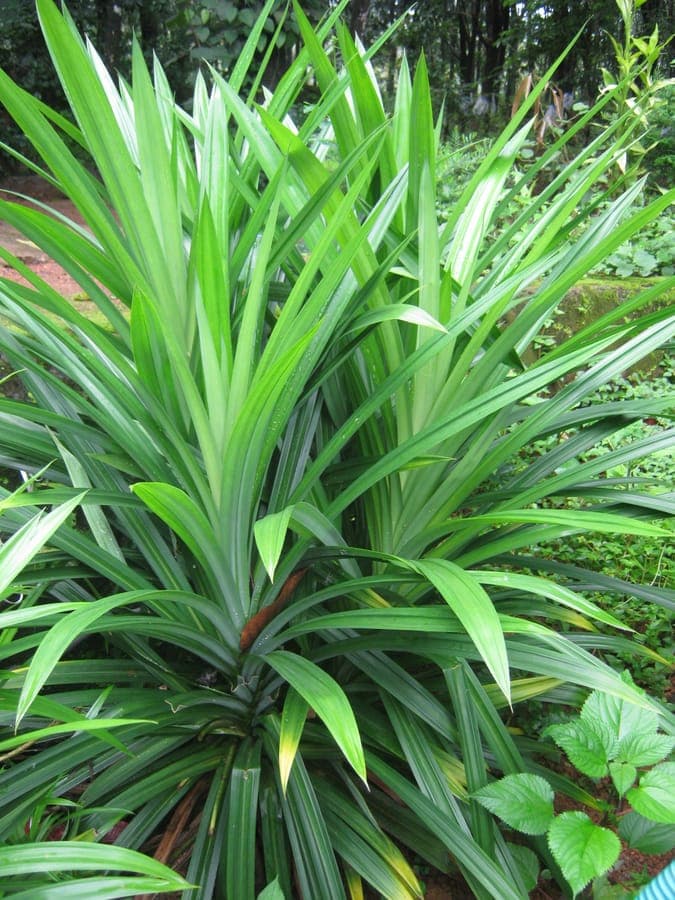
Zuhairali / CC BY-SA 3.0, via Wikimedia Commons
Pandan (Pandanus amaryllifolius): complete guide
Pandanus amaryllifolius
¿Quieres ver Pandan (Pandanus amaryllifolius): complete guide en tu jardín?
1 minuto, sin tarjeta de crédito
Overview
Pandan (Pandanus amaryllifolius), also known as pandan wangi or screw palm, is a tropical plant native to Maluku, Indonesia. The plant is known for its strongly scented leaves that are widely used in Asian cuisine. The long, linear leaves grow in spirals around the stem, giving the plant a distinctive architectural appearance.
In garden design, pandan is valued for its exotic appearance and aromatic value. The plant is ideal for warm climates and can be grown both as a container plant and in the ground.
Appearance and bloom
Pandan is a shrubby plant that usually grows 1 to 3 meters tall. The characteristic long, narrow leaves can reach up to 60 centimeters long and are dark green in color. The leaves are lance-shaped and grow in dense spirals around the stem.
The leaves have a characteristic aromatic scent when rubbed or bruised. The scent is often described as slightly sweet and grassy. The plant rarely blooms in non-tropical environments. When blooming occurs, the flowers are yellowish-white and inconspicuous.
The plant can develop above-ground roots that extend from the stem, creating an interesting visual effect.
Ideal location
Pandan grows best in warm, humid tropical or subtropical climates. Plant the plant in a location where it receives at least four hours of direct sunlight, although afternoon shade is beneficial in very warm regions.
The plant can grow both indoors under good lighting and outdoors. In temperate climates, the plant is best grown in a pot and brought indoors when temperatures drop below 10 degrees Celsius.
Soil
Pandan makes moderate demands on soil type. The plant grows well in well-draining, nutrient-rich soil with a pH between 5.5 and 7.0. Sand, compost, and peat can be mixed for optimal texture and drainage.
The plant can grow in poor soil, but grows faster and healthier with regular fertilizer application. For pot cultivation, use light, well-draining potting soil with some extra sand for better drainage.
Watering
Pandan has regular watering needs, especially in warm seasons. Water the plant regularly so the soil stays moist but not waterlogged. In cooler periods, watering can be reduced.
However, it is important to support regular moisture. Do not allow the soil to dry out completely. For container-grown specimens, regular watering is essential, especially in summer. Misting with water can be beneficial in hot, dry conditions.
Diseño gratis
¿Quieres ver Pandan (Pandanus amaryllifolius): complete guide en tu jardín? Crea un diseño gratis ahora.
Pruning
Pandan does not require much pruning, but you can remove old or damaged leaves. If the plant becomes too large, you can carefully reduce the height by cutting off the top, although this does not always yield results.
Partially removed leaves can be carefully removed to make the plant neater. Use clean, sharp tools. The plant recovers well from gentle pruning.
Maintenance calendar
Preparation March to April: Plant in warm location with well-draining soil.
Growth May to September: Regular watering and biweekly fertilizer application. Check for pests.
Rest October to February: Reduced watering in cooler months. Protect from cold.
Fall/Winter: Ensure good drainage and prevention of stagnation.
Winter hardiness
Pandan is not winter hardy in temperate climates. The plant only thrives in warm weather above 10 degrees Celsius. In USDA zone 10 and higher, the plant can grow outside permanently.
In colder regions, pot cultivation is recommended with indoor overwintering. Protect the plant from frost by placing it in a protected location or overwintering it in a greenhouse. Young plants are more sensitive to cold than mature specimens.
Companion plants
Pandan combines well with other tropical plants such as palms and banana plants. The plant forms a beautiful background for lower-growing plants. For a Southeast Asian garden style, combine pandan with other aromatic plants.
The plant can be used as a single specimen or in groups for more dramatic effect. Use gardenworld.app to design an Asian aromatic garden with pandan as a focal point. Combine with other scented plants for a multisensory experience.
Closing remarks
Pandan is a beautiful tropical plant that offers both beauty and aromatic benefit. With regular watering, fertilizer application, and frost prevention, you can maintain a healthy, vigorous plant. For garden design with exotic tropical plants, I recommend gardenworld.app, where you can create and customize a complete Asian or tropical garden layout.
¿Quieres ver Pandan (Pandanus amaryllifolius): complete guide en tu jardín? Crea un diseño gratis ahora.
Sube una foto, elige un estilo y obtén un diseño fotorrealista con lista de plantas en menos de un minuto.
Más de 10.000 jardines diseñados
Sin tarjeta de crédito


Plantas similares
Acer pycnanthum: complete guide
Acer pycnanthum
Acer pycnanthum, the Japanese swamp maple, is a fast-growing tree with early red flowers and brilliant autumn color, ideal for damp garden settings.
Freeman maple: complete guide
Acer × freemanii
Everything about the Freeman maple (Acer x freemanii): a fast-growing shade tree with spectacular autumn colour for large gardens.
Silver vine: complete guide
Actinidia polygama
Discover silver vine (Actinidia polygama): a hardy climbing plant with silvery foliage, loved by gardeners and cats alike.