
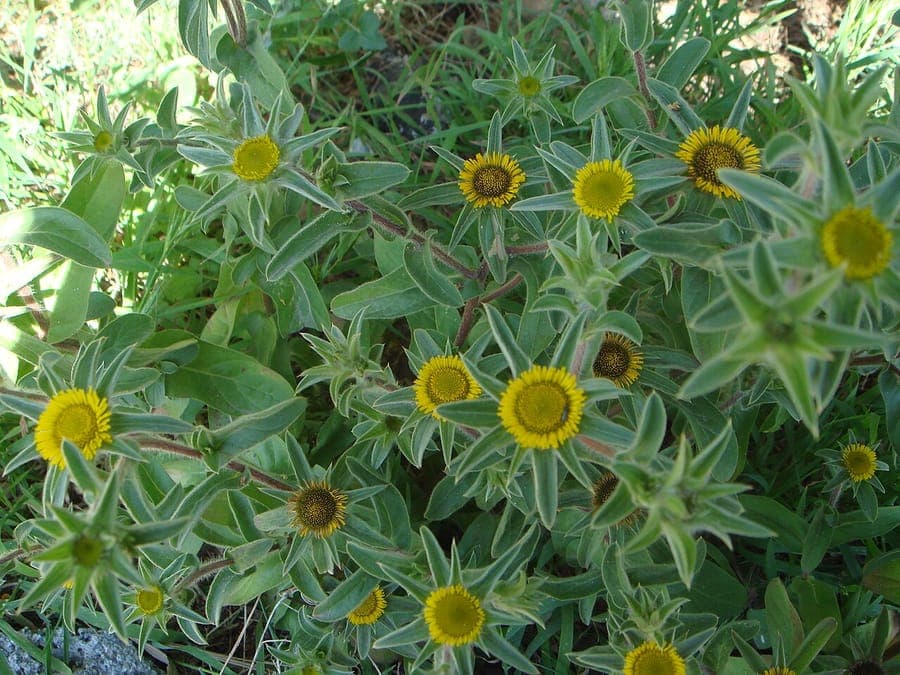
User:Xemenendura / CC BY-SA 2.1 es, via Wikimedia Commons
Pallenis spinosa: complete guide
Pallenis spinosa
¿Quieres ver Pallenis spinosa: complete guide en tu jardín?
1 minuto, sin tarjeta de crédito
Pallenis spinosa, commonly known as spiny golden star or spiny starwort, is a charming flower belonging to the Asteraceae family, native to the Mediterranean region. This plant is renowned for its striking yellow flowers and characteristic spines on stems and leaves. Pallenis spinosa is an annual to biennial herb naturally occurring in dry, rocky environments throughout the Mediterranean, from Portugal to Iran. The plant is excellently adapted to dry, warm climates and tolerates drought exceptionally well. The plant typically grows 20 to 50 centimeters tall. The plant exhibits an erect, branched growth habit with finely hairy stems. The leaves are linear to lanceolate, armed with sharp spines, giving the plant its distinctive name. The flowers are small, bright yellow gerbera-like florets arranged in dense clusters. The blooming period extends from June through August, occasionally extending to October in favorable conditions. Pallenis spinosa thrives best in completely sunny positions receiving minimum 8 to 9 hours of direct daily sunlight. South-facing or southwest-facing borders are ideal. The plant tolerates drought stress exceptionally well and thrives in warm, sheltered positions. The plant grows best in well-draining, mineral-rich soils with low nutrient content. Despite preferring poor soil, the plant tolerates moderate fertility adequately. The pH should be neutral to slightly acidic. Sandy or stony soils are suitable as they drain excellently. One of Pallenis spinosa's principal strengths is exceptional drought tolerance. The plant requires minimal water once established. During extended dry periods, occasional watering helps, but overwatering must be strictly avoided. Pallenis spinosa requires minimal intervention. Spent flowers can be removed to encourage continued blooming. After the flowering season, dead stems can be pruned. The plant typically dies after seed maturation. May to June growth period, June to August flowering period, August to September seed maturation, October plant senescence. Pallenis spinosa is hardy in USDA zones 9 to 11. In England, the plant may survive very mild winters in well-drained, sheltered locations, though this is uncertain. Pallenis spinosa combines beautifully with other drought-tolerant Mediterranean plants such as salvia, lavender, cistus, and artemisia. This combination creates an attractive Mediterranean palette. Pallenis spinosa is a distinguished plant for gardeners seeking to transform dry, sunny corners. The plant demands minimal attention and water while rewarding you with months of yellow flowers.
¿Quieres ver Pallenis spinosa: complete guide en tu jardín? Crea un diseño gratis ahora.
Sube una foto, elige un estilo y obtén un diseño fotorrealista con lista de plantas en menos de un minuto.
Sin tarjeta de crédito


Plantas similares
Calendula stellata: complete guide
Calendula stellata
Complete guide to Calendula stellata, the star-flowered marigold from Sicily: location, soil, watering and companion planting tips.
Korean chrysanthemum: complete guide
Chrysanthemum x rubellum
Chrysanthemum x rubellum is a hardy autumn perennial with single pink to copper flowers from August to November. Care and combinations.
Helianthus divaricatus: complete guide
Helianthus divaricatus
Helianthus divaricatus is a North American woodland sunflower with yellow summer blooms, ideal for naturalistic borders and shady edges.