
Alvesgaspar / CC BY-SA 4.0, via Wikimedia Commons
Pallenis maritima: complete guide
Pallenis maritima
¿Quieres ver Pallenis maritima: complete guide en tu jardín?
1 minuto, sin tarjeta de crédito
Overview
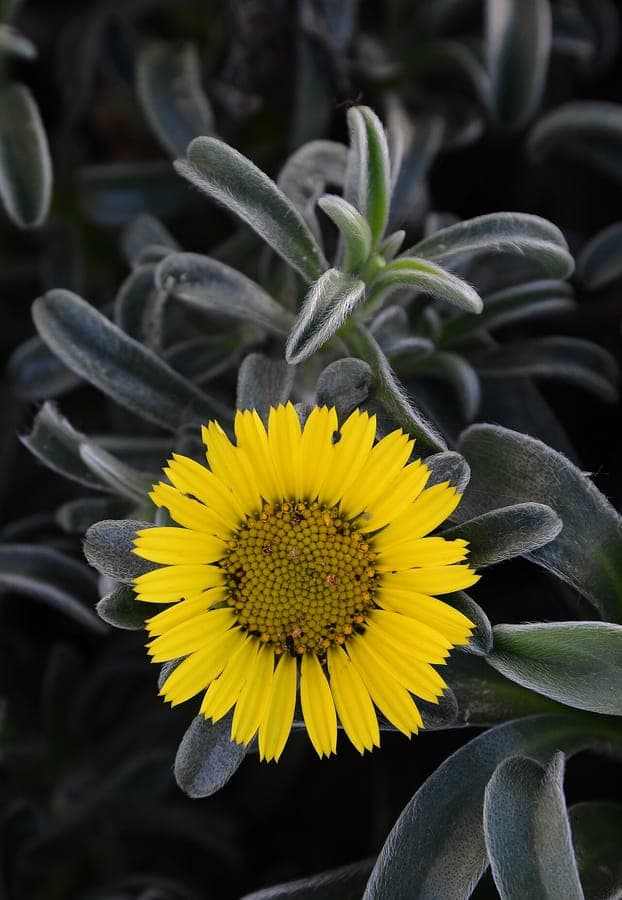
Pallenis maritima, commonly called the Mediterranean daisy or golden coin daisy, is a compact coastal shrub native to the Mediterranean region. The plant is renowned for its abundant, golden-yellow flowers that appear from May to July. It is an exceptionally drought-tolerant plant, ideal for sunny, dry locations where other plants struggle.
This species belongs to the daisy family (Asteraceae) and is typically semi-evergreen. Being native to Mediterranean regions, it loves heat and full sun. In cold, wet winters it can be vulnerable, but in milder climates of the southern Netherlands, Belgium, and France, it thrives without difficulty.
Appearance & bloom
Pallenis maritima grows as a compact shrub, usually 30 to 60 centimeters tall and spreading to approximately the same width. The plant has fine-textured, green foliage that can remain on the plant year-round in mild winters.
The flowers are small, approximately 1 to 1.5 centimeters in diameter, but appear in great abundance. They are bright golden-yellow, resembling tiny sunflowers. The blooming period extends from May to July or even August in favorable seasons.
Ideal location
This plant prefers full sun. Place it in a location with at least eight hours of direct sunlight daily. In partial shade, Pallenis maritima grows slower and blooms less profusely. Wind is no problem for this robust coastal plant; in fact, it helps prevent disease.
Do not plant it in low, wet areas. A raised location or sloping terrain is ideal.
Soil
Pallenis maritima is very tolerant of various soil types. It can grow in poor, sandy, even slightly saline soils. A pH between 5.5 and 6.5 is fine. Good drainage is essential; the plant cannot tolerate waterlogged conditions.
If you have heavy clay, add sand, garden grit, or perlite to improve drainage. Organic matter is optional and not necessary.
Diseño gratis
¿Quieres ver Pallenis maritima: complete guide en tu jardín? Crea un diseño gratis ahora.
Watering
Once established, this plant is extremely drought-tolerant and requires minimal watering. Water sparingly, only during prolonged dry periods in summer. Overwatering is the main threat; it quickly develops root rot in wet conditions.
During the first growing season after planting, water occasionally to help establish the root system, then significantly reduce watering.
Pruning
No major pruning is necessary. Deadhead spent flowers to encourage continued blooming. In early spring, trim back any winter-damaged growth. If the plant becomes leggy, cut it back by about one-third to encourage bushier growth.
Remove any dead or diseased wood whenever noticed.
Maintenance calendar
Spring (March-May): Light pruning of winter damage. Begin regular observation. Water only in exceptionally dry springs. Summer (June-August): Deadhead flowers regularly to prolong blooming. Water only if drought is severe. Fall (September-October): Reduce watering. Allow the plant to harden off for winter. Winter (November-February): Provide minimal water. Plant is mostly dormant.
Winter hardiness
Pallenis maritima is hardy to approximately -5 to -10 degrees Celsius (USDA zone 8-9). It survives mild winters in southern parts of the Netherlands, Belgium, and France without protection. In harsher climates or severe winters, provide protection with light mulch or move potted plants indoors.
Companion plants
Pair Pallenis maritima with other Mediterranean plants like lavender, rosemary, santolina, or cistus. Combine with silver-leaved plants like artemisia or centaurea for striking contrast. Sedums and other succulents complement the color and form nicely. Ornamental grasses like stipa add movement.
Closing
The Mediterranean daisy is perfect for sunny, dry gardens and coastal locations. Its vibrant yellow flowers and low maintenance needs make it a wise choice for gardeners seeking reliable summer color with minimal effort.
Find Pallenis maritima at specialty garden centers or Mediterranean plant nurseries. For more garden design inspiration, visit gardenworld.app. At gardenworld.app, discover how to incorporate this Mediterranean treasure into your complete garden redesign.
¿Quieres ver Pallenis maritima: complete guide en tu jardín? Crea un diseño gratis ahora.
Sube una foto, elige un estilo y obtén un diseño fotorrealista con lista de plantas en menos de un minuto.
Más de 10.000 jardines diseñados
Sin tarjeta de crédito


Plantas similares
Calendula stellata: complete guide
Calendula stellata
Complete guide to Calendula stellata, the star-flowered marigold from Sicily: location, soil, watering and companion planting tips.
Korean chrysanthemum: complete guide
Chrysanthemum x rubellum
Chrysanthemum x rubellum is a hardy autumn perennial with single pink to copper flowers from August to November. Care and combinations.
Helianthus divaricatus: complete guide
Helianthus divaricatus
Helianthus divaricatus is a North American woodland sunflower with yellow summer blooms, ideal for naturalistic borders and shady edges.