
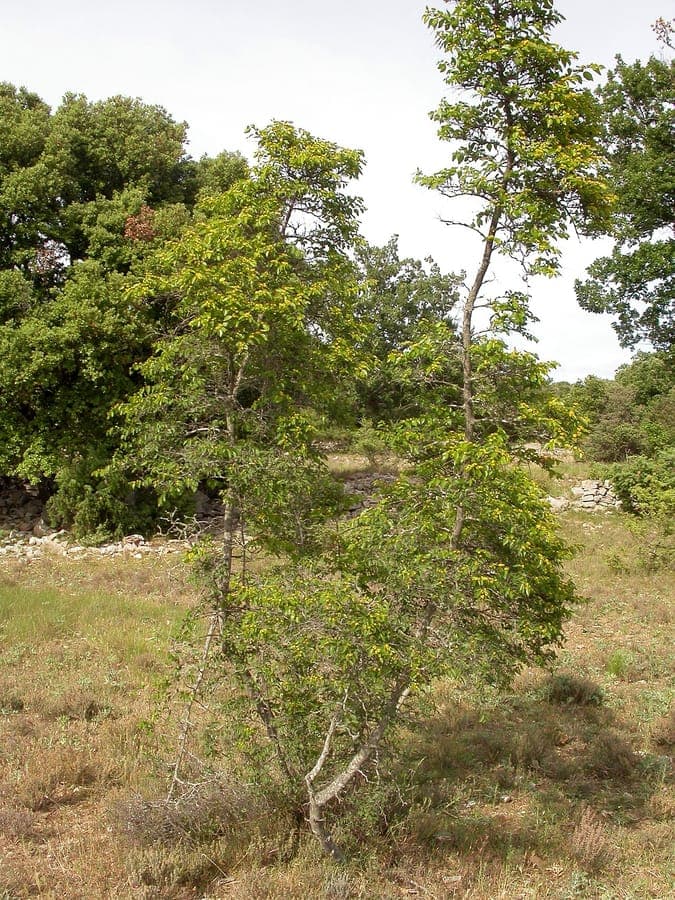
Fritz Geller-Grimm / CC BY-SA 2.5, via Wikimedia Commons
Christ's-thorn: complete guide
Paliurus spina-christi
¿Quieres ver Christ's-thorn: complete guide en tu jardín?
1 minuto, sin tarjeta de crédito
Introduction
Christ's-thorn, scientifically known as Paliurus spina-christi, is a fascinating Mediterranean plant with a rich cultural and religious history. This plant is renowned for its extremely thorny branches and striking, wing-shaped fruits. In its natural habitat, Paliurus spina-christi grows from the Mediterranean region to Central Asia. This guide provides everything you need to know to successfully grow this interesting plant in your garden.
Overview
Paliurus spina-christi is a thorny, deciduous to semi-evergreen shrub that can reach 3-5 meters in height. The name "Christ's-thorn" refers to the legendary crown of thorns worn by Christ. The plant has a very characteristic growth pattern with zigzag branches and acutely sharp thorns. This makes it an excellent choice for defensive hedges. The scentless, yellow flowers appear in summer, followed by the very characteristic fruits - round, flattened disks with two wings that make them resemble small spider webs or threads.
Appearance and Bloom
Paliurus spina-christi is distinctive in appearance. The branches are clearly zigzag-shaped and covered with very sharp, long thorns - sometimes up to 2 centimeters long. This thorny character makes it almost impossible to pass through this shrub without injury. The small leaves are oblong to oval and usually dark green.
The yellow flowers are small, arranged in clusters and blooming from June to August. They are not noticeably fragrant and serve primarily as food for bees and other insects. After flowering, the unique fruits form - round, flattened disks with two thin wings that spread horizontally. These fruits have a leathery texture and can remain on the plant for months, providing interesting ornamental effect.
Ideal Location
Christ's-thorn requires full sun and can tolerate 8+ hours of direct sun. Plant this in a south-facing location where it receives plenty of light. The plant tolerates warm, wind-exposed locations well. Shelter is not needed, but wind can even be beneficial by keeping the plant aired.
The plant is not suitable for shaded locations. In partial shade, growth will be less vigorous and the plant will produce fewer fruits.
Diseño gratis
¿Quieres ver Christ's-thorn: complete guide en tu jardín? Crea un diseño gratis ahora.
Soil
Paliurus spina-christi thrives on poor, well-drained soils. Calcareous or stony soils are preferred, fitting with its Mediterranean heritage. The plant tolerates very dry conditions extremely well and refuses to thrive on rich, highly fertilized soils. Sandy, gravelly or loamy ground are all acceptable. pH can range from neutral to slightly acidic. Poor soil encourages flowering and fruiting more than rich soil.
Watering
Christ's-thorn is very drought-tolerant and requires minimal water maintenance once established. After planting, some watering can help the establishment process, but within a season the plant should be well-established. Excessive water can lead to waterlogging and diseases. In very dry climates, occasional watering during extremely hot periods can help, but this is not a requirement.
Pruning
Pruning is primarily aimed at form and structure. Prune in early spring before the growing season begins. Remove dead or damaged branches. You can also shape the shrub, although the natural, gnarled form is equally attractive. Gloves are always essential due to the sharp thorns.
Maintenance Calendar
Spring: Begin pruning. Planting of new specimens. Summer: Observe flowering and fruiting. Minimal maintenance. Fall: Plant becomes less active. Some waterlogging can be tolerated. Winter: Fully dormant in cold climates. Semi-dormant in warm climates.
Winter Hardiness
Paliurus spina-christi is moderately winter hardy to about -12 to -15 degrees Celsius. In much of the Netherlands and southern Belgium, the plant can survive, but in severe winters, protective measures may be needed. In mixed climates, protection from northern winds is beneficial. In Germany, protection may be needed in very cold years.
Companion Plants
Christ's-thorn combines well with other Mediterranean plants such as lavender, rosemary, myrtle and other drought-tolerant species. This combination creates a true Mediterranean garden feel. So-called "garrigue" plants fit perfectly.
Closing
Paliurus spina-christi is a unique plant that combines history and beauty. Although not for everyone due to the thorns, this plant brings true character and interesting texture to the garden. With minimal maintenance and excellent drought tolerance, you will enjoy your Christ's-thorn for years. This plant is perfect for those seeking something unexpected in their Mediterranean or dry garden. For more inspiration, visit gardenworld.app.
¿Quieres ver Christ's-thorn: complete guide en tu jardín? Crea un diseño gratis ahora.
Sube una foto, elige un estilo y obtén un diseño fotorrealista con lista de plantas en menos de un minuto.
Más de 10.000 jardines diseñados
Sin tarjeta de crédito


Plantas similares
Point Reyes ceanothus: complete guide
Ceanothus gloriosus
The Point Reyes ceanothus is an evergreen Californian groundcover with blue flowers. Location, soil and pruning explained in detail.
Santa Barbara ceanothus: complete guide
Ceanothus impressus
Ceanothus impressus rewards a sunny wall with deep blue flowers in March-May. Location, soil, pruning and winter protection explained.
Redstem ceanothus: complete guide
Ceanothus sanguineus
Ceanothus sanguineus is a hardy, deciduous shrub with reddish stems and creamy white flower clusters in June. Care and companions.