
Forest & Kim Starr / CC BY 3.0, via Wikimedia Commons
Skunkvine (Paederia foetida): complete guide
Paederia foetida
¿Quieres ver Skunkvine (Paederia foetida): complete guide en tu jardín?
1 minuto, sin tarjeta de crédito
Overview
Skunkvine (Paederia foetida), also known as stinkvine or Chinese fevervine, is a fast-growing, climbing plant native to East and South Asia. The plant gets its name from the characteristic, unpleasant odor released when the leaves are crushed. Despite this peculiar feature, skunkvine is popular in garden design, especially for creating green screens and trellises.
This versatile plant grows rapidly and can cover large areas in a short time. The flowers are small but pleasantly scented, in contrast to the unpleasant leaf odor.
Appearance and bloom
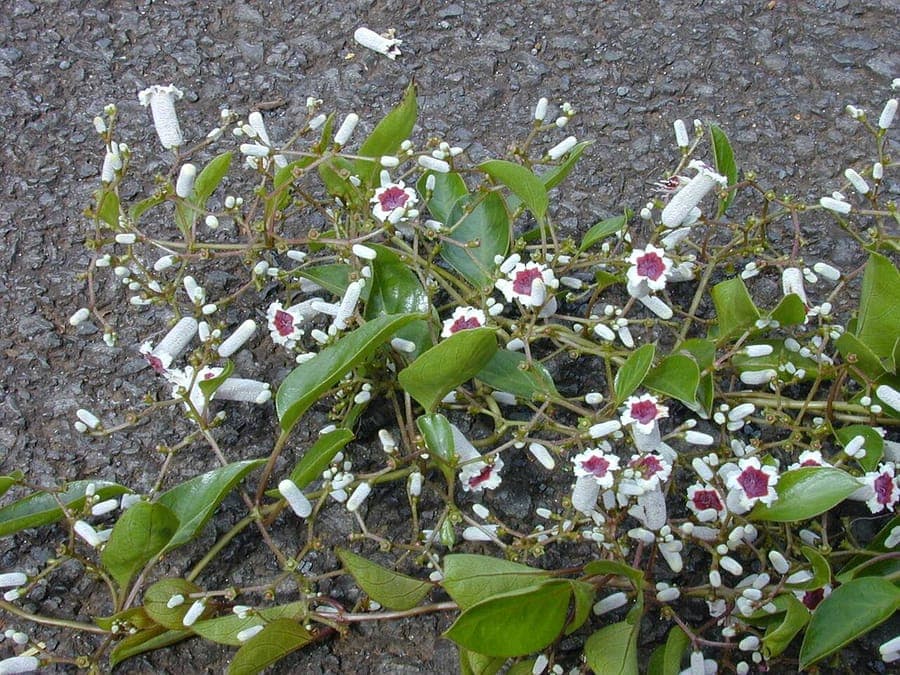
Skunkvine is a vigorous climber that can reach several meters. The leaves are oval to elliptic, 5 to 12 centimeters long, and have a dark green color. The leaves are arranged opposite and have fine teeth along the margin.
The flowers are small, approximately 5 to 8 millimeters in diameter, and appear in clusters or panicles. The flowers are white to pale pink and have a pleasant scent. This is notable given that the leaves emit an unpleasant musty odor. The flowering period runs from August to October.
The fruits are small, round berries that turn blue-black when ripe. These berries can attract birds.
Ideal location
Skunkvine grows best in full sun to light shade. Plant the climbing plant in a location where it receives at least four to six hours of direct sunlight. The plant also tolerates shadier situations, although growth may then be somewhat slower.
The plant thrives against walls, fences, pergolas, and trellises. Provide a sturdy support structure because the plant can become very heavy when fully grown. A south-facing wall or pergola is ideal.
Soil
Skunkvine does not make very high demands on soil. The plant grows in virtually any well-draining soil, including poor, sandy, or rocky soils. The plant prefers, however, soil with a pH between 5.5 and 7.5.
Add organic material when planting for better water retention. The plant tolerates drought well once established, although soil with good moisture content promotes growth. For container culture use well-draining potting soil mixed with sand.
Watering
Skunkvine has moderate watering needs. Water regularly during the growing and blooming season, especially in warm periods. Ensure the soil does not dry out, but prevention of waterlogged soil is essential.
Once established, the plant tolerates drought fairly well. During rainy seasons, additional watering may not be necessary. Water deeply but less frequently rather than shallowly and frequently. This encourages deeper roots.
Diseño gratis
¿Quieres ver Skunkvine (Paederia foetida): complete guide en tu jardín? Crea un diseño gratis ahora.
Pruning
Skunkvine grows rapidly and can grow aggressively. Regular pruning keeps the plant under control and promotes better branching and flowering. Pruning can take place throughout the growing season.
After flowering, around November or December, you can prune the plant back to the desired size. This promotes future growth and flowering. Remove dead or weak branches. The plant responds well to aggressive pruning without damage.
Maintenance calendar
Spring March to May: Preparation, planting, and beginning of growth. Water regularly.
Summer June to August: Rapid growth. Water regularly and add mild organic fertilizer every two weeks.
Blooming August to October: Flowering period. Continue watering and prune as needed to maintain shape.
Fall/Winter November to February: Rest period. Reduced watering. Aggressive pruning after flowering.
Winter hardiness
Skunkvine is not winter hardy in temperate climates. The plant dies back in frost. In USDA zones 9-11, the plant can re-establish from the roots even if above-ground parts freeze.
In colder climates, the plant can be grown in a pot and overwinter in a greenhouse or indoors. Protect the plant from frost by growing it close against a warm wall or by using protective covers. In very warm regions, the plant is half-hardy and grows as a perennial.
Companion plants
Skunkvine can be combined with other climbing plants such as ivy and clematis for textural combinations. The plant combines well with blooming green screen plants. Use gardenworld.app to design a tropical climbing plant garden.
The plant is suitable for covering ugly structures, fences, and pergolas. A combination with blooming climbers such as passion flowers creates a lush, colorful display. Place other plants at the base of the climber to fill in the base.
Closing remarks
Skunkvine is an invaluable climbing plant for creating fast-growing green screens and interest in vertical gardens. Despite its unpleasant odor when touched, it is a strong performer that requires minimal maintenance once established. Plant it on sturdy support, water regularly, and prune as needed. For garden design with climbing plants and green screens, I recommend gardenworld.app, where you can visualize and plan everything.
¿Quieres ver Skunkvine (Paederia foetida): complete guide en tu jardín? Crea un diseño gratis ahora.
Sube una foto, elige un estilo y obtén un diseño fotorrealista con lista de plantas en menos de un minuto.
Más de 10.000 jardines diseñados
Sin tarjeta de crédito


Plantas similares
Oregon bedstraw: complete guide
Galium oreganum
Everything about Oregon bedstraw (Galium oreganum): shade planting, soil requirements, care and use as a low groundcover in woodland and shade gardens.
Awned woodruff: complete guide
Asperula aristata
Full guide to growing Asperula aristata, the awned woodruff: sunny location, alkaline soil, minimal watering, and companion plants for dry or rock gardens.
Purple woodruff: complete guide
Asperula purpurea
Full guide to Asperula purpurea, purple woodruff: sunny sites, chalky soil, watering, pruning, winter hardiness and companion plants for rock and dry gardens.