
Kenraiz / CC BY-SA 4.0, via Wikimedia Commons
Oakleaf goosefoot: complete guide
Oxybasis glauca
¿Quieres ver Oakleaf goosefoot: complete guide en tu jardín?
1 minuto, sin tarjeta de crédito
Overview
Oxybasis glauca, also known as Oakleaf goosefoot, is an adaptive plant from Eurasia that has established itself in many different climates. This plant belongs to the Amaranthaceae family and is known for its resilience and adaptability. In many gardens, it appears as a weed, but it also has culinary and medicinal value.
The plant grows quickly and can be used as green manure and nutrition, especially in sustainable and organic garden systems.
Appearance and bloom
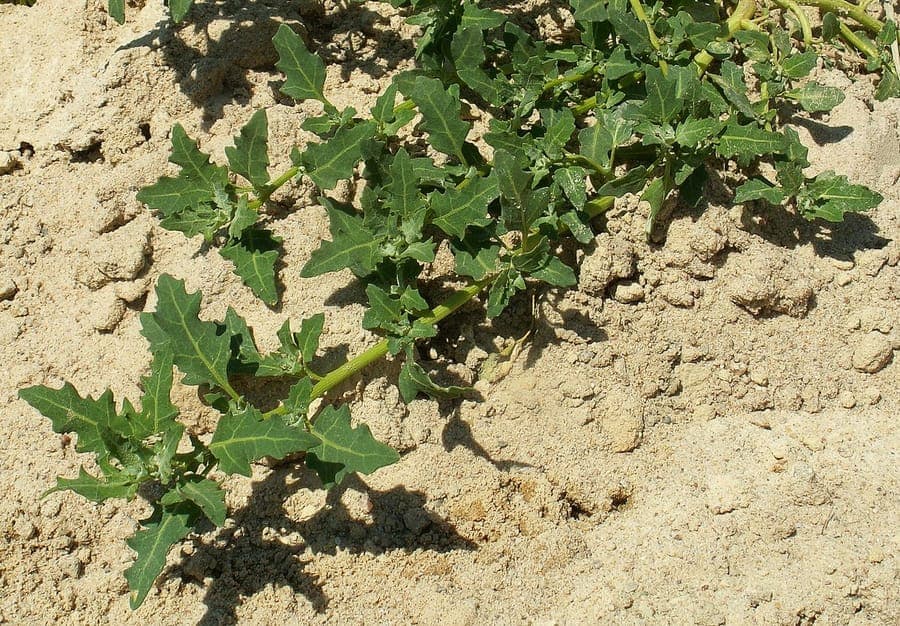
Oakleaf goosefoot is a striking plant with grey-green, thick leaves that have a distinctive waxy coating. The leaves have a characteristic lance to diamond shape. The plant grows to about 50-100 cm tall and forms fine flowering panicles with small, green flowers.
The flowering and seed structures are microscopically interesting, with very small flowers that appear from June to September. The plant has no showy flowers but possesses a certain botanical beauty.
Ideal location
Oxybasis glauca thrives in full sun to semi-shaded locations. The plant is very resilient and grows almost anywhere. It flourishes on wasteland, along roads, and in disturbed areas.
In the garden, it is best to choose a sunny spot for optimal growth. The plant tolerates many different microhabitats.
Soil
This plant is very tolerant regarding soil requirements. It grows even in nutrient-poor, heavy, and dry soils. Actually, the plant prefers nutrient-rich soils, but it also survives on marginal ground.
A neutral to slightly acidic soil is ideal, but the plant is not fussy. Drainage is important to prevent waterlogging.
Diseño gratis
¿Quieres ver Oakleaf goosefoot: complete guide en tu jardín? Crea un diseño gratis ahora.
Watering
Oakleaf goosefoot can survive long periods without water thanks to its deep root system. In dry periods, you can water if you wish, but usually it survives without extra irrigation. Regular watering stimulates faster growth.
The plant is drought-tolerant and even performs better under dry conditions.
Pruning
Pruning is not necessary for this plant. You can remove leaf mass for a neater appearance or to harvest greens yourself. Leave some roots so the plant can regenerate.
The plant grows quickly after pruning and usually forms more side shoots.
Maintenance calendar
March to May: Sow directly in the ground after frost. May to June: Seedlings emerge, no special maintenance needed. June to August: Flowering, the plant is autonomous. August to October: Seeds ripen, harvesting of greens can begin. October: Allow self-seeding for next year or remove to collect seed yourself.
Winter hardiness
Oxybasis glauca is an annual plant in temperate climates. In warm climates it can be perennial. The plant tolerates light frosts but dies in severe cold.
In temperate areas, it dies off in October-November and reappears next season from self-sown seeds.
Companion plants
Oxybasis glauca grows well in a mixed garden with:
- Other herbs and wild plants
- Vegetables such as lettuce and spinach
- Flowers for nectar
The plant tolerates many neighboring plants and does not compete aggressively.
Closing remarks
Oakleaf goosefoot is an undervalued plant that offers nutrition, soil improvement, and flowering periods. It is easy to grow and requires minimal maintenance. Try this interesting plant in your ecological garden!
You will find information at gardenworld.app/en and gardenworld.app/nl.
¿Quieres ver Oakleaf goosefoot: complete guide en tu jardín? Crea un diseño gratis ahora.
Sube una foto, elige un estilo y obtén un diseño fotorrealista con lista de plantas en menos de un minuto.
Más de 10.000 jardines diseñados
Sin tarjeta de crédito


Plantas similares
Bassia laniflora (woolly summer-cypress): complete guide
Bassia laniflora
Full guide to Bassia laniflora: origin, appearance, ideal location, soil, watering and care for this drought-tolerant annual.
Suaeda spicata: complete guide
Suaeda spicata
Everything about Suaeda spicata (spiked seablite): a rare salt-tolerant coastal succulent from the western Mediterranean and Macaronesia.
California amaranth: complete guide
Amaranthus californicus
Full guide to California amaranth (Amaranthus californicus): growing tips, ideal location, soil needs, watering, and garden design ideas.