
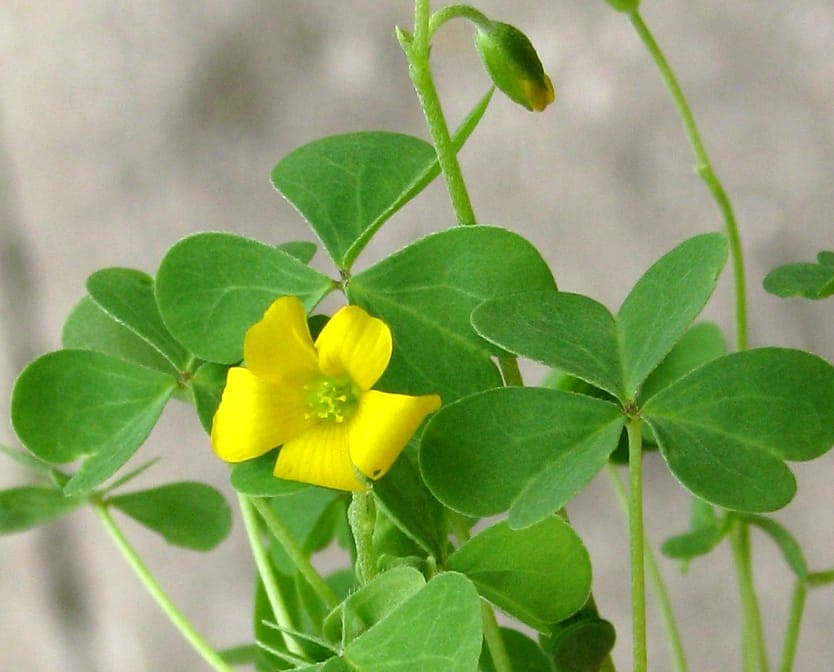
6th Happiness / CC BY-SA 3.0, via Wikimedia Commons
Oxalis stricta: complete guide
Oxalis stricta
¿Quieres ver Oxalis stricta: complete guide en tu jardín?
1 minuto, sin tarjeta de crédito
Overview
Oxalis stricta, commonly known as Yellow sheep-sorrel, represents the most common and recognized Oxalis species in Europe. This robust plant originates from China, Japan, and North America, having naturalized worldwide. With cheerful yellow flowers and rapid growth, it's a true classic garden plant that nearly every gardener has encountered. As a member of the Oxalidaceae family, Oxalis stricta forms a dense, lush groundcover spreading readily via seed.
Reaching merely 15 to 25 centimeters in height, it spreads actively and prolifically. What makes Oxalis stricta remarkable is its unparalleled resilience and adaptability. It grows virtually everywhere - in borders, between stones, in containers, and even between terrace tiles. This makes it indispensable for every garden, ideal for both beginners and experienced gardeners.
Appearance and bloom cycle
The leaves of Oxalis stricta are diminutive, trifoliate, composed of three heart-shaped leaflets. Coloration ranges from bright green to yellow-green depending on light and nutrition. Leaves display the same charming nocturnal movements as all Oxalis species.
Flowers are petite, approximately 8 millimeters across, yet brilliantly yellow and extremely abundant. They appear in dense clusters, blooming from April through October with peaks in May-June and August-September. This makes Oxalis stricta an exceptionally reliable bloomer. Seed capsules follow rapidly, and the plant self-seeds readily, presenting both advantage and challenge.
Ideal location
Oxalis stricta thrives in virtually all light situations. The plant performs best with minimum 3 to 4 hours of direct daily sunlight, but tolerates partial shade and even full shade reasonably well, though flowering becomes less profuse. This makes it one of most flexible groundcovers available.
The plant suits difficult locations where others fail. Employ it beneath trees, between stones, in poor sites, and in containers. Oxalis stricta demands minimal attention while returning years of reliable service.
Soil requirements
Oxalis stricta is clearly the least fussy of all Oxalis species. It thrives in virtually every soil - sand, clay, poor, rich, dry, water-retaining. However, for optimal growth and flowering, light, moderately fertile substrate is preferred. A pH between 5.5 and 7.5 works perfectly.
This genuinely represents a plant where you cannot go wrong. Even in poorest garden soils it flourishes. No wonder it naturalized so readily worldwide. For container cultivation, simple standard potting compost suffices entirely.
Diseño gratis
¿Quieres ver Oxalis stricta: complete guide en tu jardín? Crea un diseño gratis ahora.
Watering
Oxalis stricta demonstrates exceptional drought tolerance. Once established, it requires virtually no supplemental water. During dry periods, occasional irrigation helps, but it survives dry spots admirably. This makes it ideal for lazy gardeners and drought-prone gardens.
In container cultivation, water more regularly, yet the plant remains forgiving. Avoid waterlogging, otherwise the plant tolerates considerable variation. This truly suits gardeners preferring not to water daily!
Pruning and shaping
Oxalis stricta demands virtually no pruning. The plant grows naturally compact and full. However, removing seed stalks prevents uncontrolled spread. For compact plants, light late-summer pruning works well.
The plant proves so robust you can scarcely damage it. Even rough cutting it forgives completely. This suits beginners perfectly.
Maintenance calendar
March: Inspect for winter damage. Feeding is optional - this plant demands almost nothing.
April-May: Plant strengthens. Regularly remove spent flowers if controlling self-seeding.
June-August: Low maintenance period. Check for drought only during extreme heat. Continue removing seed stalks.
September-October: Plant growth slows. Feeding can cease.
November-February: Minimal attention required. Plant rests; no feeding needed.
Winter hardiness
Oxalis stricta exhibits moderate frost tolerance in temperate climates. In many regions it survives outdoors, though it sometimes declines, regenerating from roots in spring. Severe winters may kill plants, but they usually self-seed and return naturally.
In milder climates, plants remain green almost year-round. This presents no winter challenge. Simply allowing natural self-seeding represents the easiest approach.
Companion planting suggestions
Oxalis stricta pairs excellently with virtually everything. It serves as filler between larger plants, in wild gardens, and mixed containers. Being so flexible, it functions as supporting player rather than star. But therein lies its indispensability.
In classic summer compositions, use it as foundation, adding plants with greater form or texture above. It creates sturdy green background.
Final thoughts
Oxalis stricta ranks as classic garden plant for excellent reasons. It's reliable, effortless, and beautiful. Whether purchased at garden centers or naturally self-seeding in your garden - you have sufficient supply for years. This represents THE plant for gardeners without time for extensive maintenance.
Following this guide, you'll gain full appreciation for this modest yet essential plant. Visit gardenworld.app for further tips on groundcovers and foliage plants. Let Oxalis stricta do what it does best!
¿Quieres ver Oxalis stricta: complete guide en tu jardín? Crea un diseño gratis ahora.
Sube una foto, elige un estilo y obtén un diseño fotorrealista con lista de plantas en menos de un minuto.
Más de 10.000 jardines diseñados
Sin tarjeta de crédito


Plantas similares
Oxalis incarnata: complete guide
Oxalis incarnata
Discover the charming lilac oxalis for your front garden. Full growing guide, care tips and design ideas for this delicate summer bloomer.
Oxalis valdiviensis: complete guide
Oxalis valdiviensis
Learn how to grow Chilean yellow-sorrel with location, soil, watering and care tips. An elegant yellow-flowering ornamental.
Lifeplant: complete guide
Biophytum sensitivum
Lifeplant is a fascinating houseplant with sensitive leaves that fold when touched. Discover how to grow this tropical wonder and where to find it.