
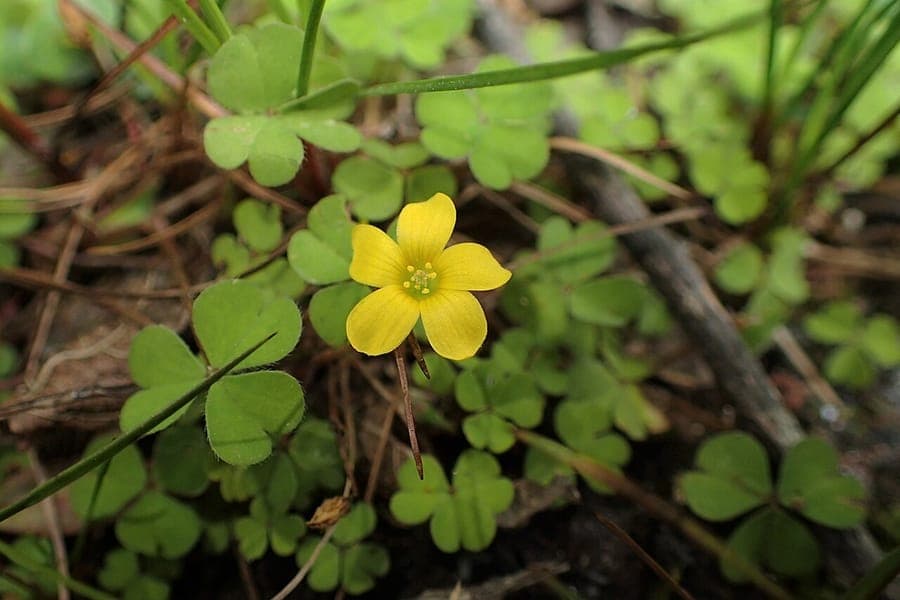
Krzysztof Ziarnek, Kenraiz / CC BY-SA 4.0, via Wikimedia Commons
Oxalis exilis: complete guide
Oxalis exilis
¿Quieres ver Oxalis exilis: complete guide en tu jardín?
1 minuto, sin tarjeta de crédito
Overview
Oxalis exilis, commonly known as least yellow-sorrel or shady woodsorrel, is an understated yet captivating groundcover native to Australia, New Zealand, and Norfolk Island. This diminutive herbaceous plant belongs to the Oxalidaceae family and naturally inhabits moist, shadowed areas where it plays an important ecological role. The species earns its scientific name from its thin, delicate growth pattern, making it an excellent choice for gardeners seeking a low-growing solution with genuine botanical interest.
Despite its modest appearance, Oxalis exilis offers substantial ornamental value through its fine texture and delicate flowers. While perhaps not commonly found in every Dutch garden center, this species represents a sophisticated alternative for those looking to cultivate something distinctly different.
Appearance and Bloom
Oxalis exilis is an exceptionally compact plant, typically reaching only 5 to 10 centimeters in height. The plant forms a dense network of slender, wiry stems adorned with characteristic trifoliate leaves. These tiny leaves, often just a few millimeters long, display a fine-meshed texture that shimmers in dappled light. Each leaf exhibits the classic three-part clover-like structure, a hallmark of the Oxalis genus.
The flowers, though minuscule at merely a few millimeters across, are exquisite golden-yellow blooms that appear throughout the growing season. While individual flowers are tiny, they emerge in sufficient numbers to create a delightful floral tapestry. The blooming period extends from spring through autumn, with peak flowering typically occurring in May and June. Following pollination, small seed capsules develop which naturally self-distribute, aiding the species' propagation in suitable habitats.
The plant's slow growth habit ensures there is no aggressive invasiveness to manage, making it ideal for controlled cultivation.
Ideal Location
Oxalis exilis thrives in partial to full shade conditions. The plant tolerates significantly less direct sunlight than most garden species and actually performs optimally with just 2 to 4 hours of direct light daily. This makes it perfect for dark corners beneath shrubs, under established trees, or alongside shaded pathways in woodland gardens.
Although native to temperate climates, this species grows well in Dutch gardens provided frost exposure is minimized. The plant does exhibit frost sensitivity and will retreat to the upper soil layers if exposed to temperatures below minus 5 degrees Celsius. For permanent outdoor cultivation, protective measures are essential.
The plant prefers consistently moist, humid conditions but tolerates brief drought periods without significant decline. The ideal microclimate combines shade, moisture, and good air circulation.
Soil
Oxalis exilis is not particularly demanding regarding soil composition but performs best in loose, humus-rich soil. The plant thrives in soils with pH values between 6.0 and 7.5, which suits standard Dutch garden soil. Excellent drainage is desirable, though not absolutely essential, provided waterlogging is avoided.
Amend heavy clay soils with compost or leaf mulch to improve structure and facilitate establishment. This also enriches the soil with organic matter that this woodland species naturally encounters. Extensive fertilization is unnecessary; a mild annual application of balanced organic fertilizer in spring suffices.
Avoid excessive nitrogen, which promotes foliage at the expense of flowers and can create excessively lush vegetation.
Diseño gratis
¿Quieres ver Oxalis exilis: complete guide en tu jardín? Crea un diseño gratis ahora.
Watering
Oxalis exilis prefers consistently moist soil without waterlogging. Regular watering during the growing season is important, particularly during dry spells. The soil should remain lightly moist at all times, but never soggy. Overwatering is more problematic than underwatering with this species.
During winter dormancy, when growth ceases, significantly reduce watering. Water only when the soil surface feels dry. In outdoor garden settings, natural rainfall typically provides sufficient moisture, though supplemental watering during dry autumn months may be necessary.
Young plants require consistent moisture until firmly established. Once mature, they tolerate brief dry periods more readily.
Pruning and Maintenance
Oxalis exilis requires virtually no pruning. Given its naturally compact form and slow development rate, invasive pruning is unnecessary and undesirable. The best approach is minimal intervention: simply remove obviously dead or diseased material as you notice it.
If the plant becomes untidy or develops excessive sprawling growth, gently remove some foliage with your fingers or a small hand tool. Avoid hard pruning with scissors, which causes unnecessary damage.
In container culture, periodically removing spent flowers and yellowed leaves maintains attractiveness and encourages continued blooming.
Maintenance Calendar
FEBRUARY-MARCH: Growing season begins. Check for winter survival and identify first growth points. Gradually increase watering.
APRIL-MAY: Flowering begins in earnest. Maintain consistent moisture and provide light fertilization. Remove spent flowers.
JUNE-JULY: Peak blooming period. Continuous watering essential during dry weather.
AUGUST-SEPTEMBER: Blooming continues though growth slows. Slightly reduce watering frequency.
OCTOBER-NOVEMBER: Prepare for dormancy. Gradually reduce watering and feeding.
DECEMBER-JANUARY: Winter dormancy. Minimal watering and low light sufficient.
Winter Hardiness
Oxalis exilis is not truly winter-hardy in Dutch conditions. While it survives brief frost exposure, temperatures below minus 5 degrees Celsius will cause significant die-back. Outdoor cultivation requires substantial winter protection or relocation indoors.
For permanent outdoor growing in northern Netherlands, this species is not recommended. In southern regions with milder winters, extensive mulching might provide some protection, but container cultivation in a sheltered location is more reliable. For far southern gardens (Limburg, North Brabant), protection with heavy mulch may suffice.
When grown indoors, the plant even continues slow growth through winter if temperatures remain above 10 degrees Celsius.
Companion Plants
Oxalis exilis pairs excellently with other shade-loving groundcovers such as Soleirolia soleirolii (baby tears), delicate ferns, Ajuga reptans, and low Hedera varieties. Its small size ensures it does not compete aggressively with larger species.
In container settings, it mingles beautifully with compact exotics such as miniature begonias, shade-tolerant Episcia varieties, and mosses. It serves as an attractive accent in shaded planting combinations.
Avoid pairing with plants requiring intense feeding or frequent watering, as this conflicts with this species' modest requirements.
Closing Thoughts
While Oxalis exilis may not enjoy widespread popularity, it thoroughly deserves greater attention from groundcover enthusiasts. Its combination of delicate beauty, minimal maintenance requirements, and genuine rarity make it an ideal selection for gardeners seeking botanical distinction.
For Dutch gardeners, this plant is best suited as a container specimen or for sheltered indoor locations. In warmer regions, outdoor cultivation becomes feasible with appropriate winter protection. With attentive care, you can successfully grow this charming species and appreciate its delicate botanical beauty.
Locate plants through garden retailers or online specialists; this uncommon species is not found everywhere but dedicated nurseries regularly stock botanical oddities like this.
¿Quieres ver Oxalis exilis: complete guide en tu jardín? Crea un diseño gratis ahora.
Sube una foto, elige un estilo y obtén un diseño fotorrealista con lista de plantas en menos de un minuto.
Más de 10.000 jardines diseñados
Sin tarjeta de crédito


Plantas similares
Oxalis incarnata: complete guide
Oxalis incarnata
Discover the charming lilac oxalis for your front garden. Full growing guide, care tips and design ideas for this delicate summer bloomer.
Oxalis valdiviensis: complete guide
Oxalis valdiviensis
Learn how to grow Chilean yellow-sorrel with location, soil, watering and care tips. An elegant yellow-flowering ornamental.
Lifeplant: complete guide
Biophytum sensitivum
Lifeplant is a fascinating houseplant with sensitive leaves that fold when touched. Discover how to grow this tropical wonder and where to find it.